

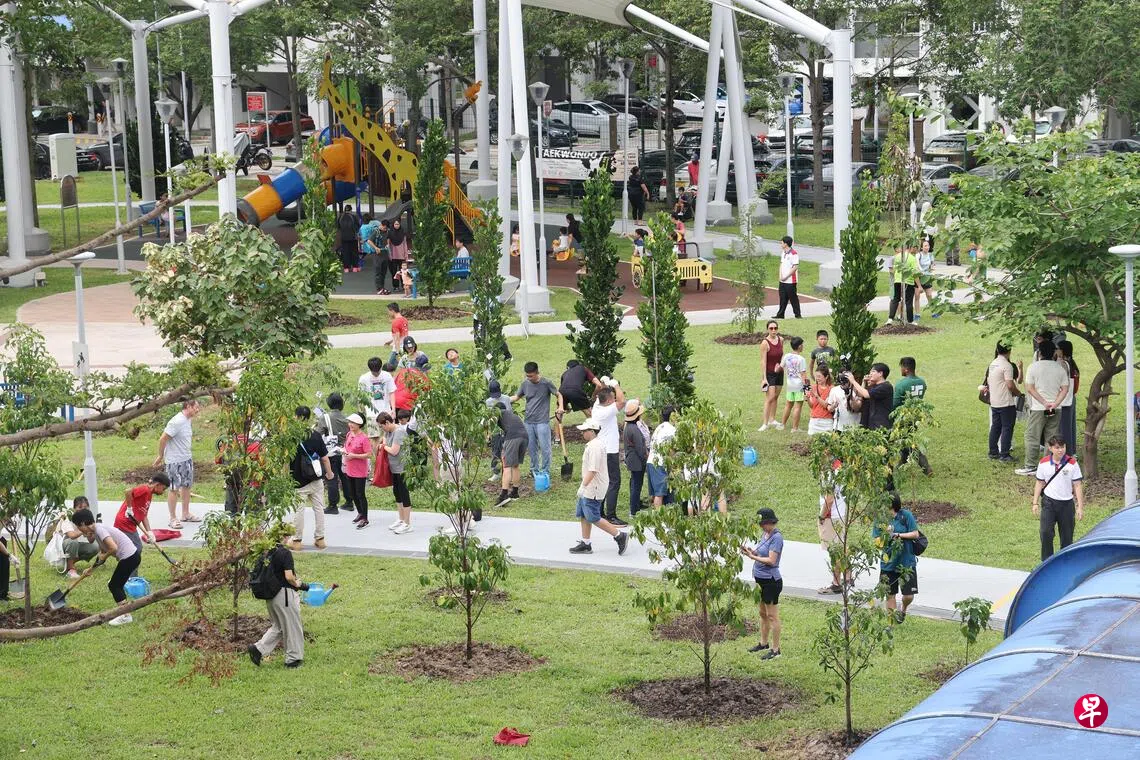
Pasir Ris will progressively develop more than 8km of Nature Ways, with flowering trees and shrubs in colour combinations such as pink and white, and yellow and purple. The planting will reflect the area’s distinctive coastal and river landscapes, bringing residents closer to nature in their daily lives.
MP for Pasir Ris-Changi GRC and Minister, Prime Minister's Office, Second Minister for Finance and Second Minister for National Development, Ms Indranee Rajah announced the plan at a tree-planting event in Pasir Ris on Sunday (15 November).
The National Parks Board will first develop new Nature Ways in western Pasir Ris before progressively extending them to other parts of the town. Different stretches will feature planting colour schemes suited to their natural surroundings, creating distinctive streetscapes.
Nature Ways are roadside corridors planted with layers of trees and shrubs that mimic the vegetation structure of natural forests. They connect green spaces, providing routes for wildlife to forage and move between habitats.
There are currently 57 Nature Ways across Singapore, spanning 260km. The National Parks Board aims to extend their total length to 300km by 2030.
The new Nature Ways in Pasir Ris include a 1.7km stretch along Pasir Ris Drive 3 completed in 2024. Work on the remaining stretches will begin progressively from this month.
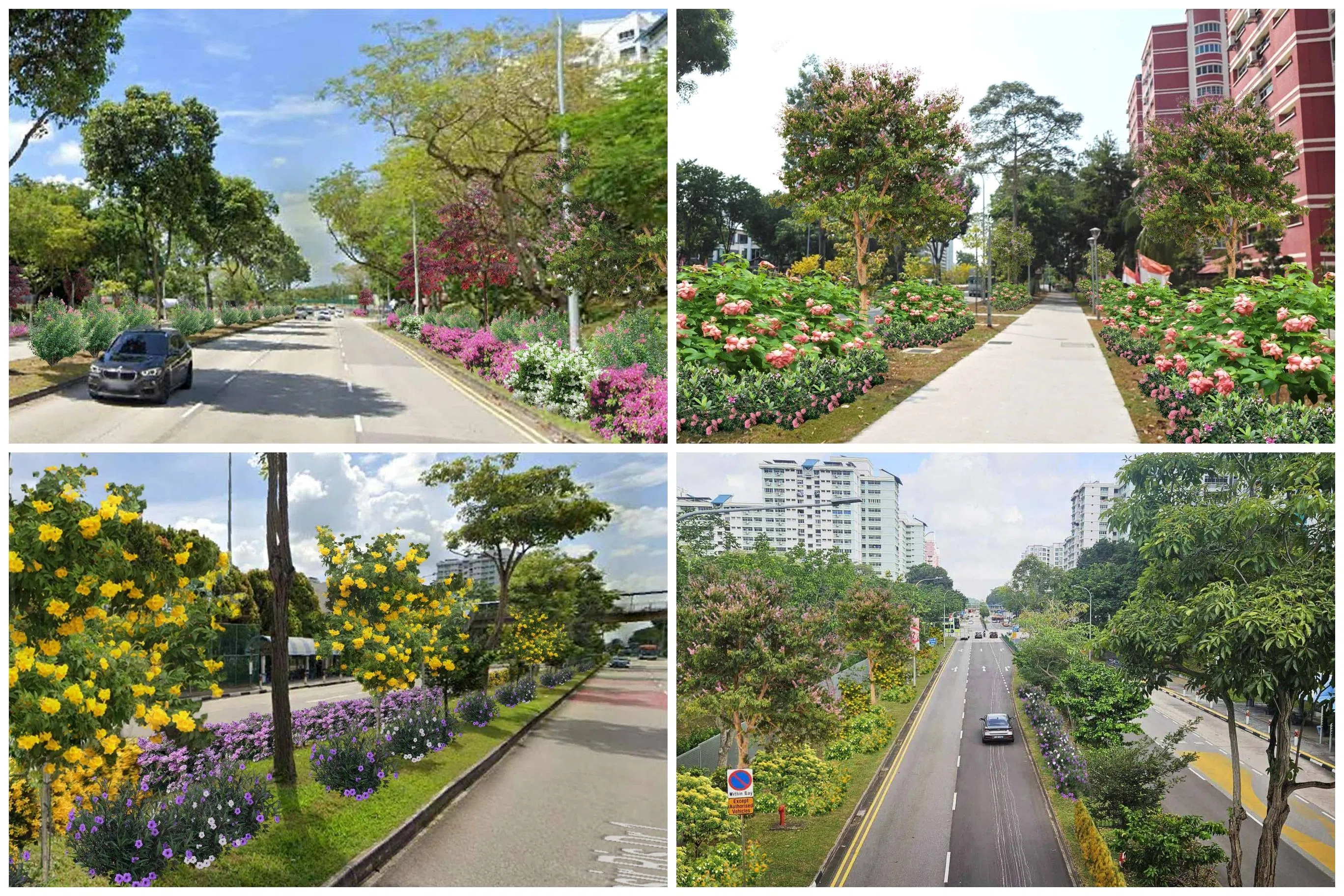
Under the plan, the Nature Way along Pasir Ris Drive 3, near the coast, will feature predominantly pink and white planting. Featured species will include pink mempat, pink kopsia and frangipani.
The Nature Way along Pasir Ris Drive 1, next to Sungei Tampines, will feature mainly yellow and purple planting, including rose of India and cat’s claw ivy, reflecting the riverside landscape.
Along Pasir Ris Drive 12, which links the two Nature Ways, the planting colours will gradually shift from purple near Pasir Ris Drive 1 to pink near Pasir Ris Drive 3.
Meanwhile, the main road gateways into Pasir Ris near the Tampines Expressway (TPE) exits will feature white and silver planting, reflecting the meaning of “Pasir Ris” — “white sand” in Malay.
NParks to plant nectar and host plants to provide food for wildlife
Besides beautifying the streets, these plants will help support the ecosystem. The National Parks Board will plant nectar and host plants that attract birds and butterflies, providing food for wildlife and strengthening ecological connections between green spaces.
Pasir Ris-Changi Town Council will also adopt complementary planting colour schemes in the area and encourage surrounding developments to do likewise, creating a more cohesive green landscape across the town.
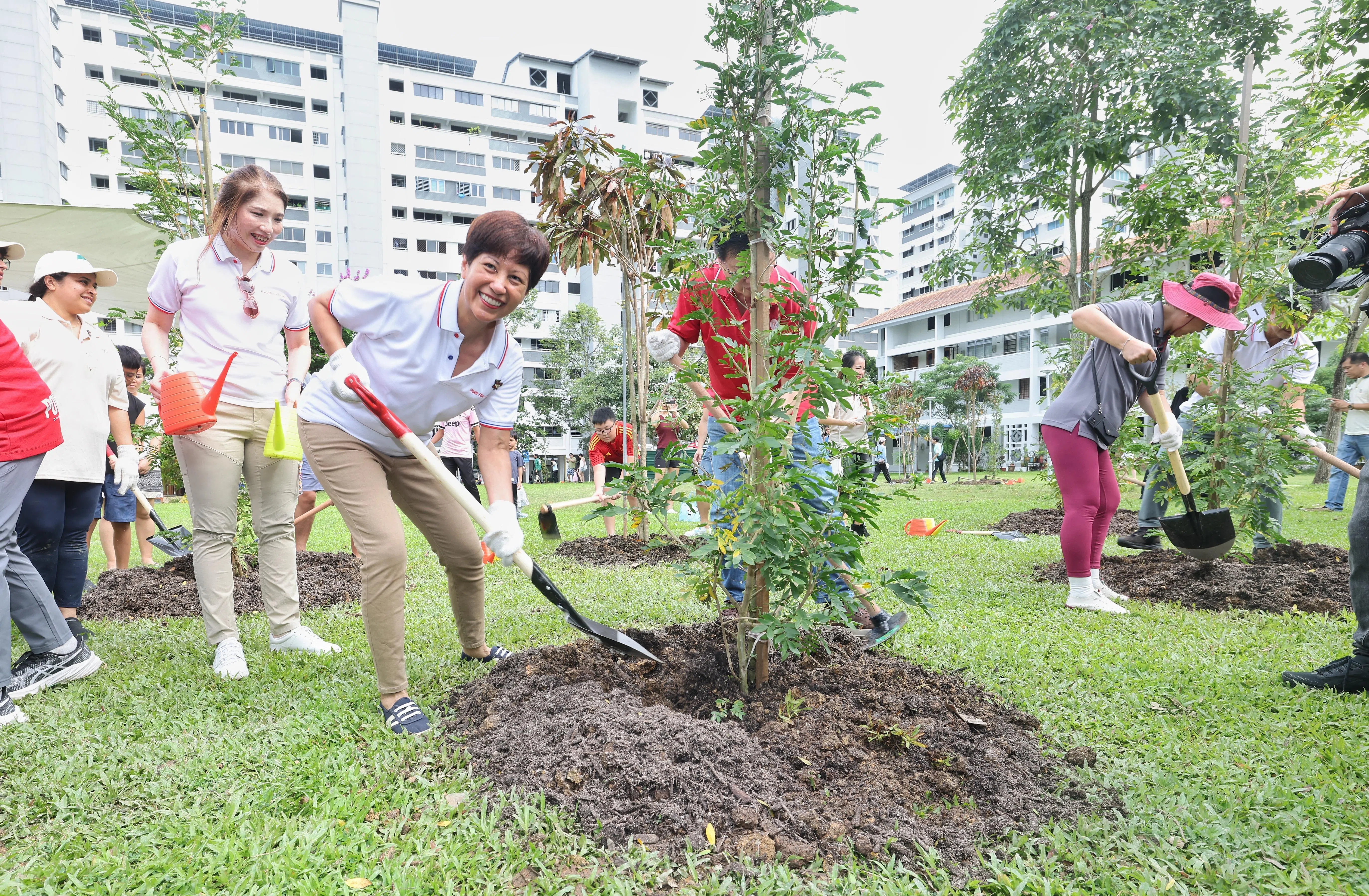
Indranee: Plans for red, yellow and orange planting in Changi
In her speech, Ms Indranee said: “In recent years Pasir Ris has seen quite a bit of construction. As these projects get completed we want to add back more trees and plants. We will therefore continue to weave greenery into Pasir Ris even as our neighbourhoods develop and evolve.”
She also revealed plans for red, yellow and orange planting in Changi to further enrich the area’s green landscape.
Ms Indranee Rajah said: “These Nature Ways will be part of our OneMillionTrees movement and we will be planting them at various events in the coming weeks and months. We will publicise these events ahead of time and I encourage you to join us and bring your family and friends as well.”
