

What worked in the past may not work in the future. Prime Minister Lawrence Wong stressed that businesses and countries alike cannot afford to rest on their achievements. They must keep innovating, adapting and breaking new ground to create better opportunities for the next generation.
For businesses, PM Wong said, this means not only transforming and exploring new markets, but also deliberately nurturing successors so that leaders of different generations can work together and draw on one another’s strengths. Singapore, too, must keep adapting so that the next generation has the confidence and ability to build a better future.
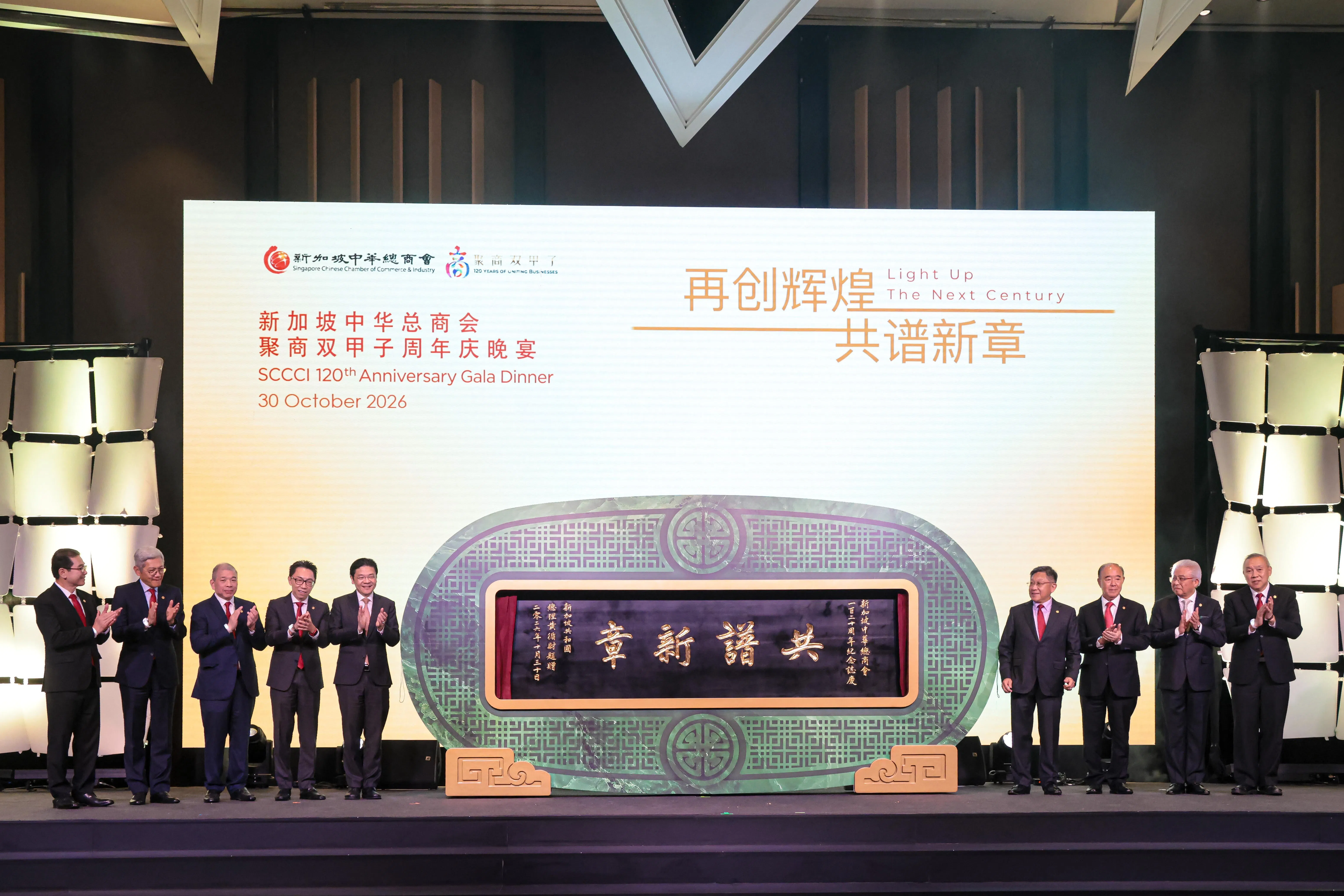
Speaking at the Singapore Chinese Chamber of Commerce and Industry’s 120th anniversary celebration dinner on Friday (30 October), PM Wong said we had inherited a Singapore that was safer, stronger and more prosperous than before. But we could not simply assume that what had worked in the past would continue to work in the future.
PM Wong said succession planning was the biggest challenge across all fields, including politics, and one of the most difficult for many businesses, especially family-owned enterprises. A business founder would have spent decades building the business. The company therefore reflects his judgement, his relationships and often his personal identity. It is not easy to hand over the reins.
But holding on for too long carries its own risks. Younger leaders may not get the chance to develop their capabilities. New ideas may struggle to take root, and the business may find itself less prepared for the future.
“So renewal cannot be left to chance. It must be planned for, and nurtured deliberately,” said PM Wong.
Beyond succession: Leaders of different generations must work together and draw on their strengths
In his Mandarin speech, PM Wong said friction between leaders of different generations was inevitable. Senior business leaders have weathered economic ups and downs and overcome various crises. The valuable experience and judgement they have accumulated cannot be acquired simply by reading books or using artificial intelligence.
Younger leaders, meanwhile, often have fresh ideas. They may feel that some traditional practices are outdated and want more room to try new things.
“We should focus not just on handing over the reins. More importantly, we must find ways for different generations to work together and draw on their respective strengths.”
For example, senior leaders should give younger people the opportunities and space to grow and take on greater responsibilities, while younger leaders should be willing to learn humbly from their predecessors.
According to PM Wong, the younger generation must step forward for society to keep progressing, but this did not mean the older generation should step aside.
“The Yangtze River flows ceaselessly not just because each new wave pushes the one before it forward, but because successive waves come together as one, forming a force that keeps moving ahead.”
China remains an important market, but businesses must explore new markets early
Besides nurturing a new generation of leaders, businesses must keep seeking new opportunities for growth. PM Wong said that as the global economy becomes more fragmented and trade and investment flows shift, Singapore businesses can no longer depend on just a few markets or partners. They must broaden their overseas networks and diversify their markets.
PM Wong acknowledged that China would remain an important market for Singapore businesses. At the same time, new opportunities are opening up across ASEAN, India, the Middle East, Africa and Latin America. He urged businesses to carry forward the pioneering spirit they had shown when entering China, boldly exploring new markets and establishing a presence early to avoid missing opportunities.
“Some may seem distant or unfamiliar today. But if we wait until these markets are well established and everyone else has moved in, we will miss out on the best opportunities… The Government will support our companies in these efforts.”
The Singapore Chinese Chamber of Commerce and Industry established an International Advisory Panel in August this year, with Minister for National Development Chee Hong Tat as its patron. The panel provides the chamber’s members with forward-looking strategic guidance and insights into international markets to support their overseas expansion.
PM Wong said: “Every new market we enter, every partnership we establish, and every door we open today creates more opportunities for the next generation of Singapore businesses tomorrow.”
Adopting AI requires changes to business practices, not just tools
PM Wong also stressed that businesses and Singapore must embrace change proactively to sustain their success, rather than wait until circumstances force them to transform.
He cited how new technologies such as artificial intelligence (AI) are changing how companies operate and compete. But genuine business transformation does not mean adopting the latest AI tools while leaving everything else about the company’s operations unchanged. To reap greater benefits, businesses must rethink workflows, redesign jobs and even change their business models. This requires a shift in mindset.
“We must uphold the qualities that brought us here – hard work, enterprise, long-term thinking, while remaining willing to change established ways of doing things. We must build on yesterday’s success, without being held back by it.”
