

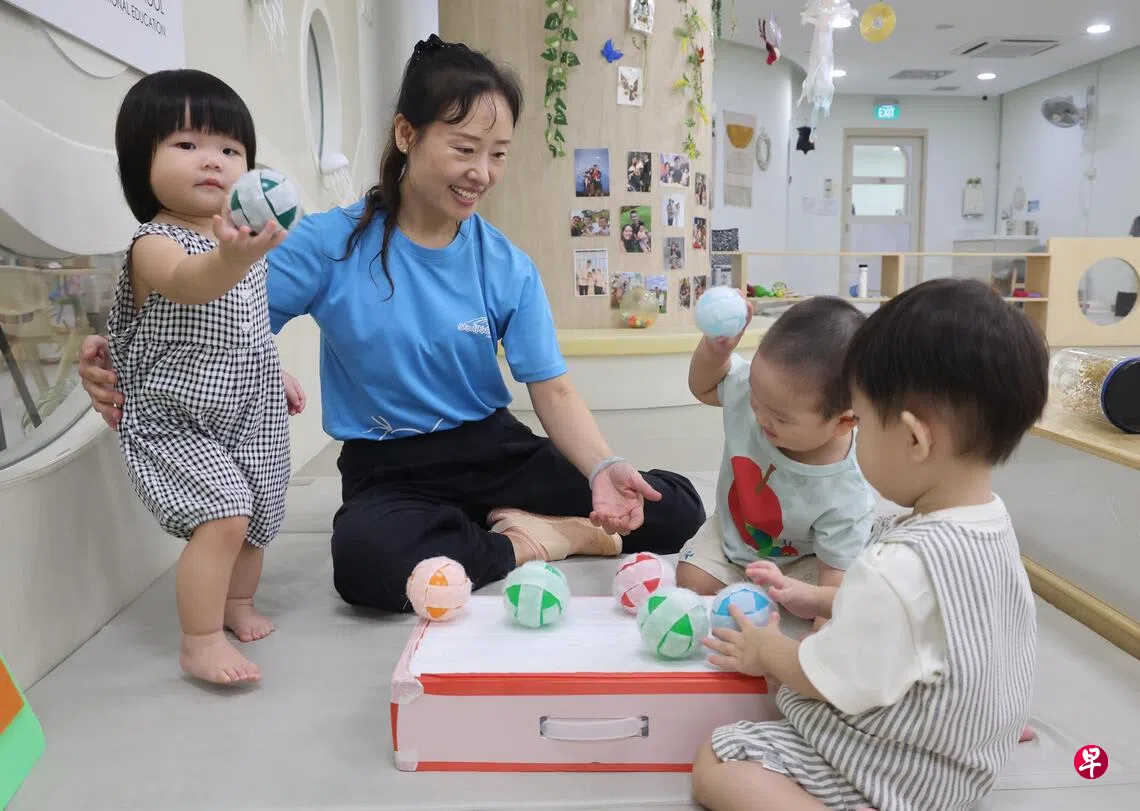
As demand for infant care services in Singapore continues to rise, several preschool education providers are stepping up recruitment and training for infant care educators. One plans to recruit more than 200 over the next three years, while another is offering sign-on bonuses of up to $10,000 to attract new hires.
The government had earlier announced plans to recruit another 1,800 educators by 2030 to care for infants aged two to 18 months. However, as of August this year, although more than 2,000 preschool educators in Singapore held qualifications in both infant care and preschool education, only about 4% of them worked exclusively with infants aged two to 18 months. The Early Childhood Development Agency (ECDA) is exploring how to encourage more qualified educators to move into infant care.
Since September, ECDA has broadened eligibility for its manpower hiring subsidies and increased the amounts available to support operators in recruiting and training aspiring infant care educators.
Expanded Non-Traditional Sources Occupation List helps ease infant care manpower shortage
The Ministry of Manpower also expanded its Non-Traditional Sources Occupation List to eight occupations from September, including infant care educators and assistants. The non-traditional sources include the Philippines, Thailand, Bangladesh, India, Bhutan, Cambodia, Laos, Myanmar and Sri Lanka, giving operators more options when hiring work permit holders.
In response to queries from Lianhe Zaobao, preschool operator Skool4Kidz said it would recruit more than 200 infant care educators over the next three years to meet staffing needs at its future centres. The anchor operator has 37 centres and employs about 300 infant care educators, two-thirds of whom are aged 40 or younger.
A spokesperson said about a quarter of its infant care educators are foreigners holding work passes, mainly from Malaysia and China. With the expansion of the Non-Traditional Sources Occupation List, the group will explore recruiting from other countries, such as the Philippines, although this will also depend on factors including candidates’ professional qualifications and language skills.
Operators interviewed said they would continue to attract and retain talent through competitive salaries and benefits, good career development opportunities and other measures.
NTUC First Campus, which runs preschool centres including My First Skool, has about 900 infant care educators. Chief Human Resources Officer Anne Leong said the inclusion of infant care work in the Non-Traditional Sources Occupation List gives operators greater flexibility to broaden their recruitment sources and complement their Singaporean core.
She said: “We continue to recruit in line with operational and workforce needs across new and existing centres, including mid-career switchers, while providing opportunities for our preschool educators to transition into infant care. Our talent attraction efforts include job fairs, partnerships with institutions and our Trainee Infant Care Teacher programme.”
EtonHouse has more than 300 infant care educators, about 80% of whom are local residents, and expects to increase staffing by 15% next year. A spokesperson said infant care educators need patience, attention to detail and an understanding of infant development. Even those with experience teaching older preschool children may not necessarily be suited to the role. Since 2024, E-Bridge, which is part of the group, has used the manpower hiring subsidies to train more than 40 people as infant care educators. E-Bridge is also offering sign-on bonuses of up to $10,000 to attract recruits.
MapleBear Singapore employs about 90 infant care educators. Founder Mrs Patricia Koh said infant care is physically and emotionally demanding, and educators must also be able to build trusting relationships with parents. “Attracting people into the profession is only the first step. Retention depends on whether educators feel supported, respected and able to grow. We want educators to see infant care as a meaningful professional career.”
Infant care requires professional skills, not just feeding and changing nappies
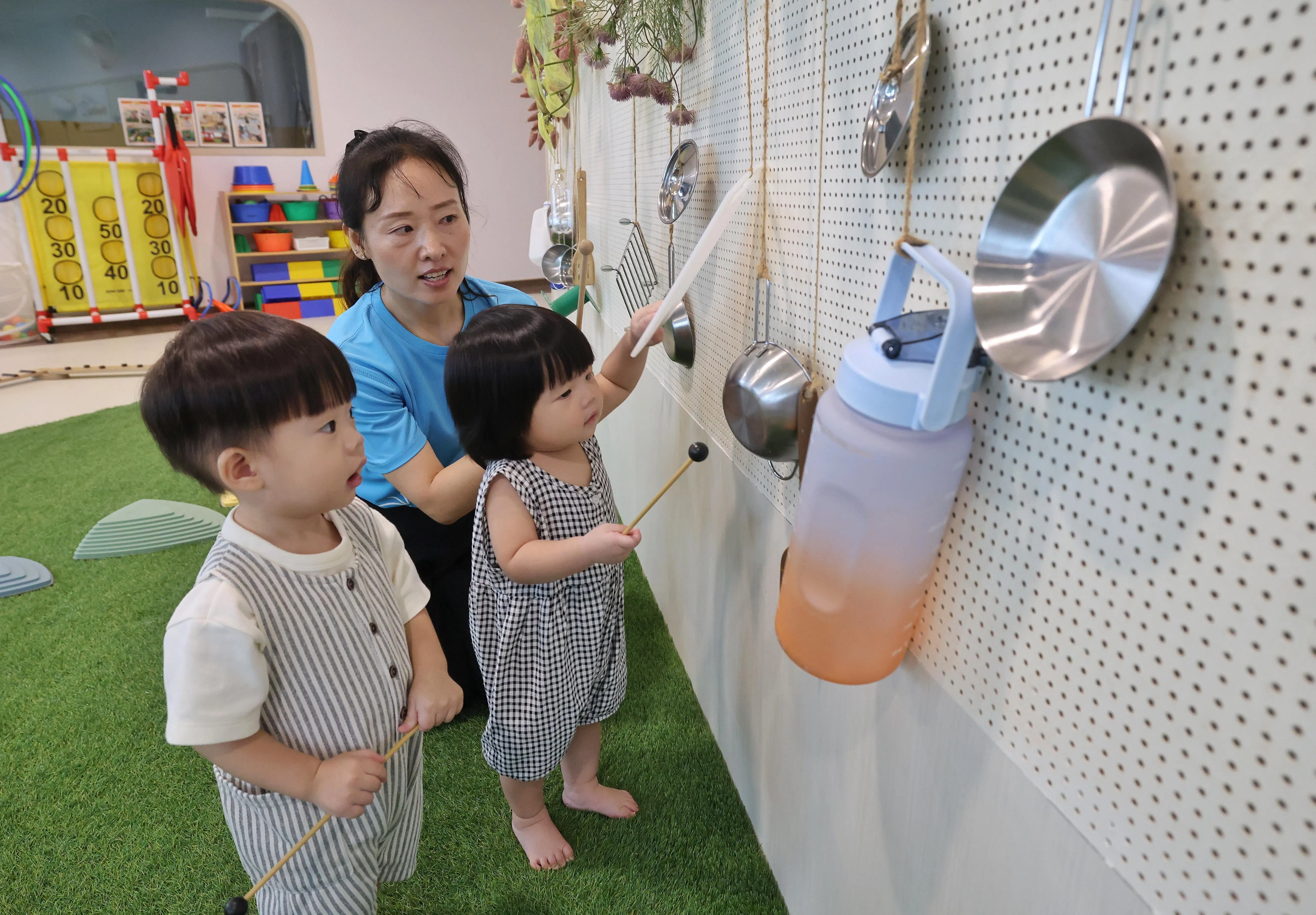
Wu Sujuan, 45, a senior infant care teacher at Skool4Kidz’s One Punggol centre, developed an interest in preschool education after becoming a mother and entered the sector in 2010. She previously taught older children at other preschool centres.
Wu Sujuan began teaching Chinese at a kindergarten more than a decade ago and came to recognise that the years before age three are critical for children’s emotional development. She later took an advanced certificate course in infant care and became a senior infant care teacher in 2023. In her new role, she has supported and witnessed the growth of countless babies, finding great fulfilment in the work.
The working mother of three said in an interview that her experience in infant care had given her a more comprehensive understanding of child development. Her work goes beyond looking after babies: she also designs individualised “lesson plans” based on their developmental stages, such as rolling a ball to encourage them to crawl forwards.
Wu said: “I get to support children as they grow, witnessing them roll over, stand and take their first steps. When I see them make progress, I record videos to share the joy with their parents. When children move on from the infant class, some parents make a point of thanking me for caring for and guiding their children. These are the things that give me a sense of achievement in infant care.”
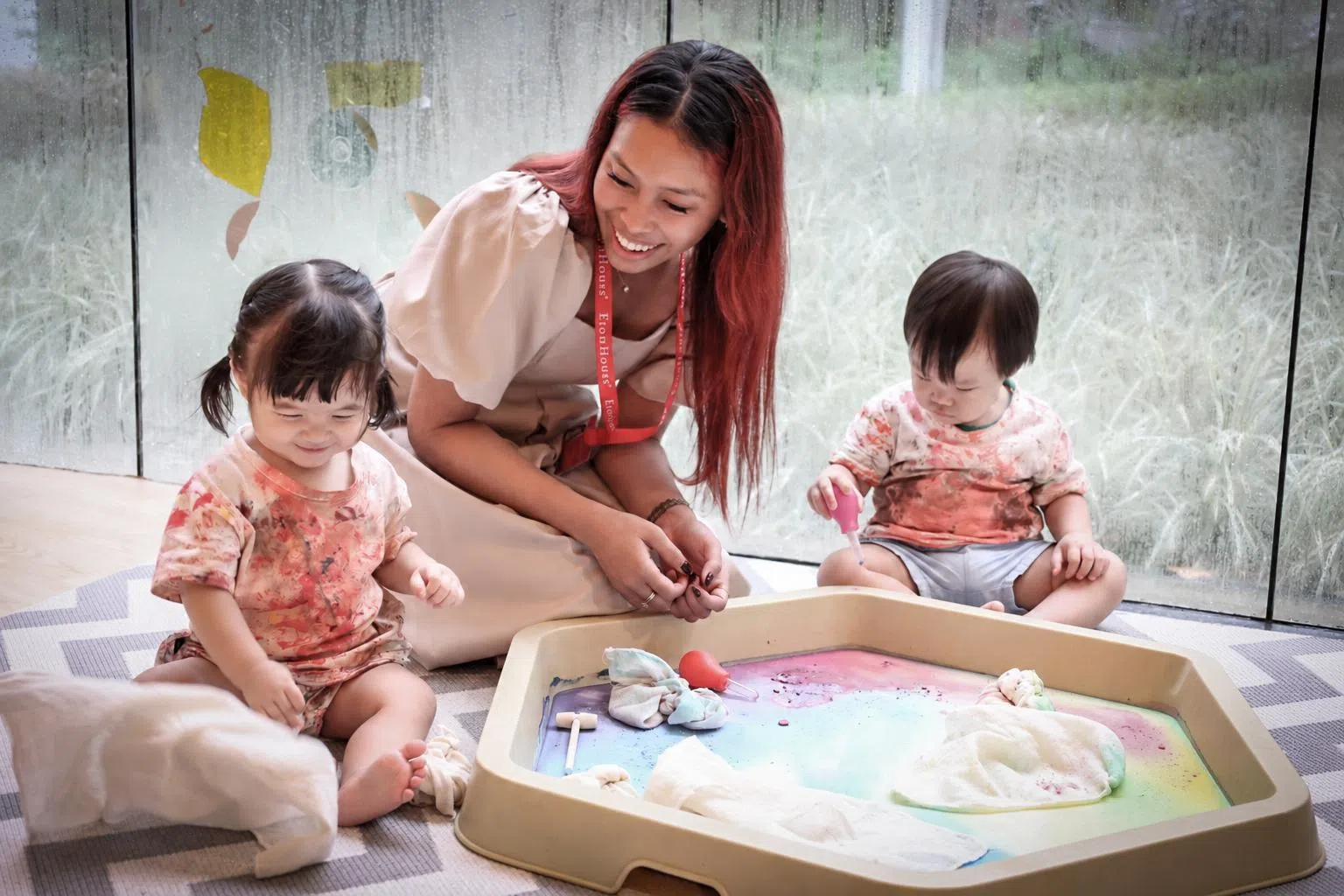
Ryka, 31, a senior infant care teacher at EtonHouse Garden School by the Bay, enjoys spending time with children and has four of her own.
She said there is sometimes a misconception that infant care work revolves solely around daily caregiving tasks such as feeding and changing nappies.
“These responsibilities represent only one part of what we do. We also use these opportunities for meaningful interaction with infants. For example, during nappy changes, we can interact with infants and build trust; during mealtimes, we can help them develop language skills and social connections.”
