From Singapore’s parks, housing estates and community green spaces to the traditional landscapes of Japan’s Okinawa island, the “happiness tree” is a familiar sight. This hardy evergreen has now also become a symbol of the enduring friendship between Singapore and Japan.
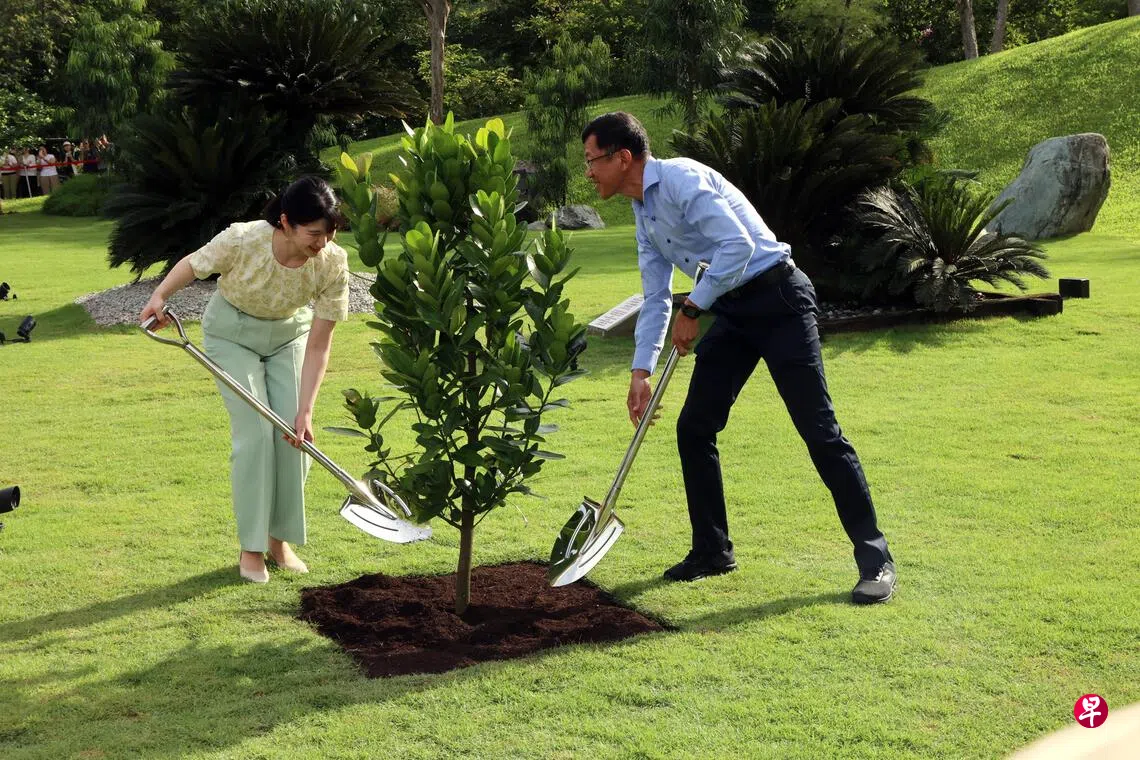
Japan’s Princess Aiko, who is visiting Singapore to mark the 60th anniversary of diplomatic relations between the two countries, planted a “happiness tree” at the Japanese Garden in Jurong Lake Gardens on Friday (20 November). She was accompanied by Tan Chong Lee, assistant chief executive for park management and lifestyle at the National Parks Board (NParks).
Commonly known as the “happiness tree”, Garcinia subelliptica is a broad-leaved evergreen tree belonging to the mangosteen family. It is native to parts of East and Southeast Asia, including Japan’s Ryukyu Islands, and has a long history of cultivation, particularly in Okinawa.
With its dense foliage and long lifespan, the tree can withstand strong winds and adapt to coastal environments. It is also widely planted in Singapore.
NParks said the choice of the “happiness tree” reflects Japan’s rich horticultural and cultural heritage, while symbolising the friendship between Singapore and Japan that has grown stronger over time.
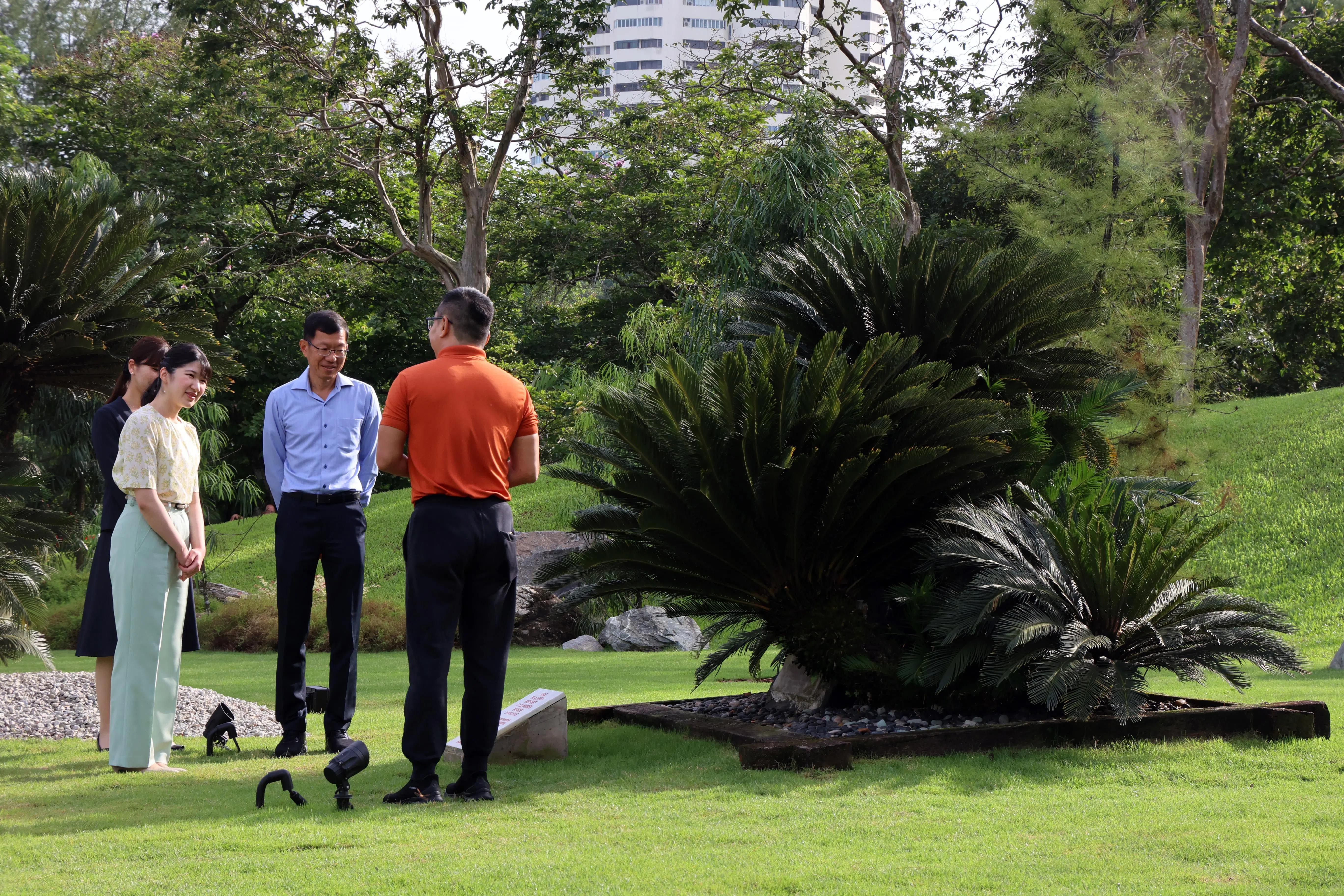
In 1970, Princess Aiko’s grandparents, Akihito and Michiko, also planted two cycads at the Japanese Garden when they visited Singapore as Japan’s crown prince and crown princess. The two trees still stand in the garden, bearing witness to more than half a century of friendship between the two countries.