

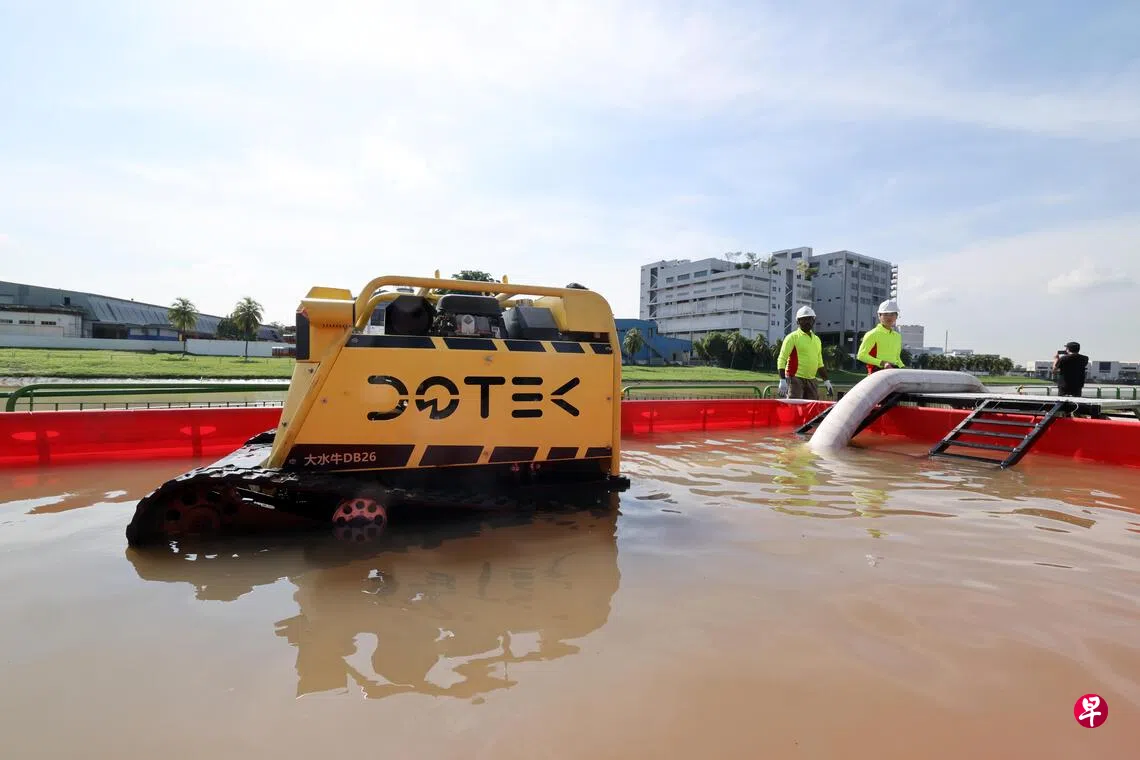
An unmanned pump vehicle that can navigate relatively narrow spaces and be remotely operated from 100 metres away can empty an Olympic-sized swimming pool within five hours. It significantly improves the efficiency of drainage operations, making them less labour-intensive and safer.
November and December are generally Singapore’s two wettest months because of the monsoon, which can bring widespread, prolonged rain lasting two to five days. Amid this rainy season, national water agency PUB launched its third flood resilience campaign on Thursday (12 November).
This year’s flood resilience campaign has the theme “When it Comes to Floods, Make Your Own Luck”. As part of the campaign, PUB introduced the Remote-controlled Pump Vehicle, which is undergoing trials, to the media on Wednesday (11 November).
PUB Catchment and Waterways Department Chief Engineer (Drainage Operations) Ivan Chua said the Remote-controlled Pump Vehicle was being introduced to further strengthen flood response and drainage capabilities. It is expected to enable faster, more effective and safer responses to flooding, especially in areas that are difficult for personnel to access.
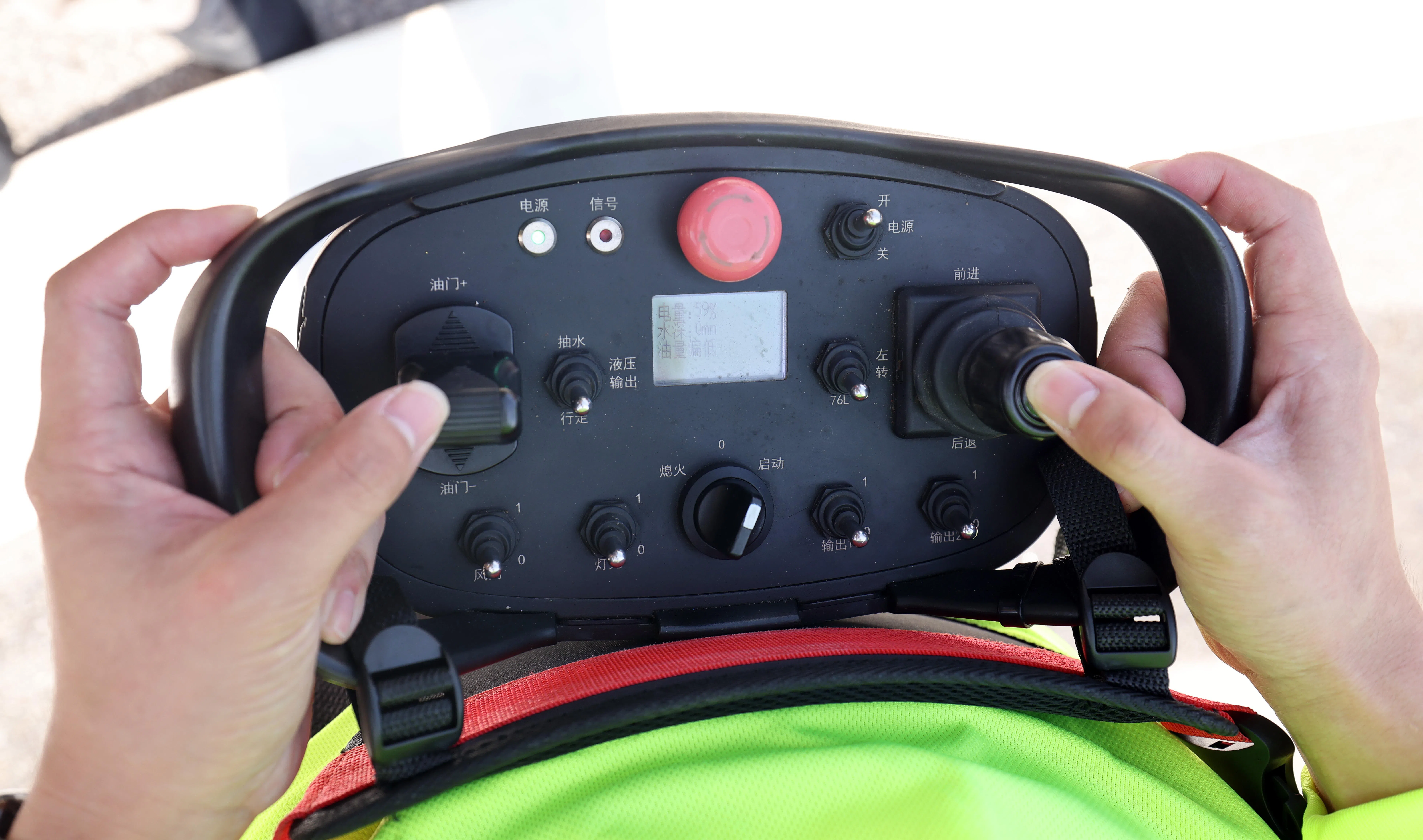
The vehicle can operate continuously for at least seven hours and requires just two workers: one to control it remotely and another to clear obstacles from its path. Once the vehicle is in position, the second worker connects a discharge hose to pump the floodwater into a suitable waterway.
By comparison, current operations require three or four workers to deploy portable pumps and generators on site. This equipment has to be transported by large lorries and can generally be set up within an hour. However, unforeseen circumstances may mean it takes several hours to get everything ready and begin pumping.
Pump vehicle can be deployed in basement carparks
The vehicle also has greater pumping capacity, removing 550 cubic metres of water an hour — twice as much as the largest portable pump currently in use. Its discharge hose can be extended to suit conditions on site, up to a maximum of 300 metres.
The vehicle’s compact design allows it to navigate narrow spaces and travel up and down slopes. It can therefore be deployed in more locations than conventional drainage systems, including low-lying areas such as basement carparks where floodwater cannot drain away naturally.
The vehicle will undergo a year-long trial. PUB will assess its pumping efficiency and effectiveness during actual deployments, as well as deployment costs, before deciding whether to purchase more vehicles to complement conventional pumping systems.
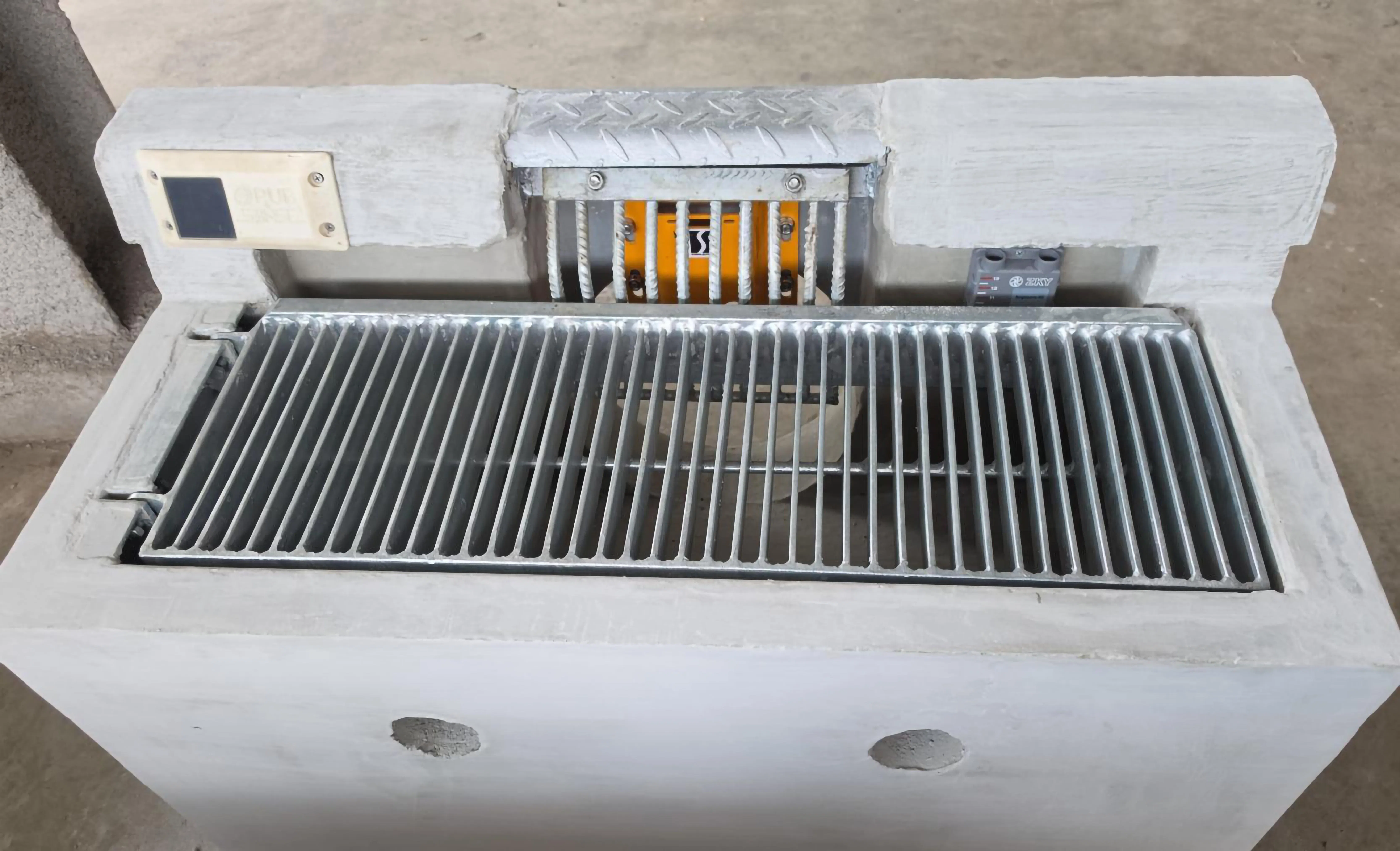
Road Flood Sensors deployed at 30 flood-prone locations
To further improve early flood warnings, PUB deployed 30 Road Flood Sensors late last year at flood-prone locations including King’s Road, Craig Road and Balmoral Road. It conducted a six-month trial to test their ability to monitor road surface water levels in real time.
The trial showed that the sensors, installed inside drainage inlet chambers, could issue alerts within a minute of water accumulating on roads. PUB plans to add 15 more Road Flood Sensors to expand the sensor network and complement its existing monitoring system.
PUB also currently has more than 1,200 water level sensors and over 700 closed circuit television cameras deployed islandwide to monitor flooding around the clock. It will add about 500 water level sensors and 200 cameras over the next two years.
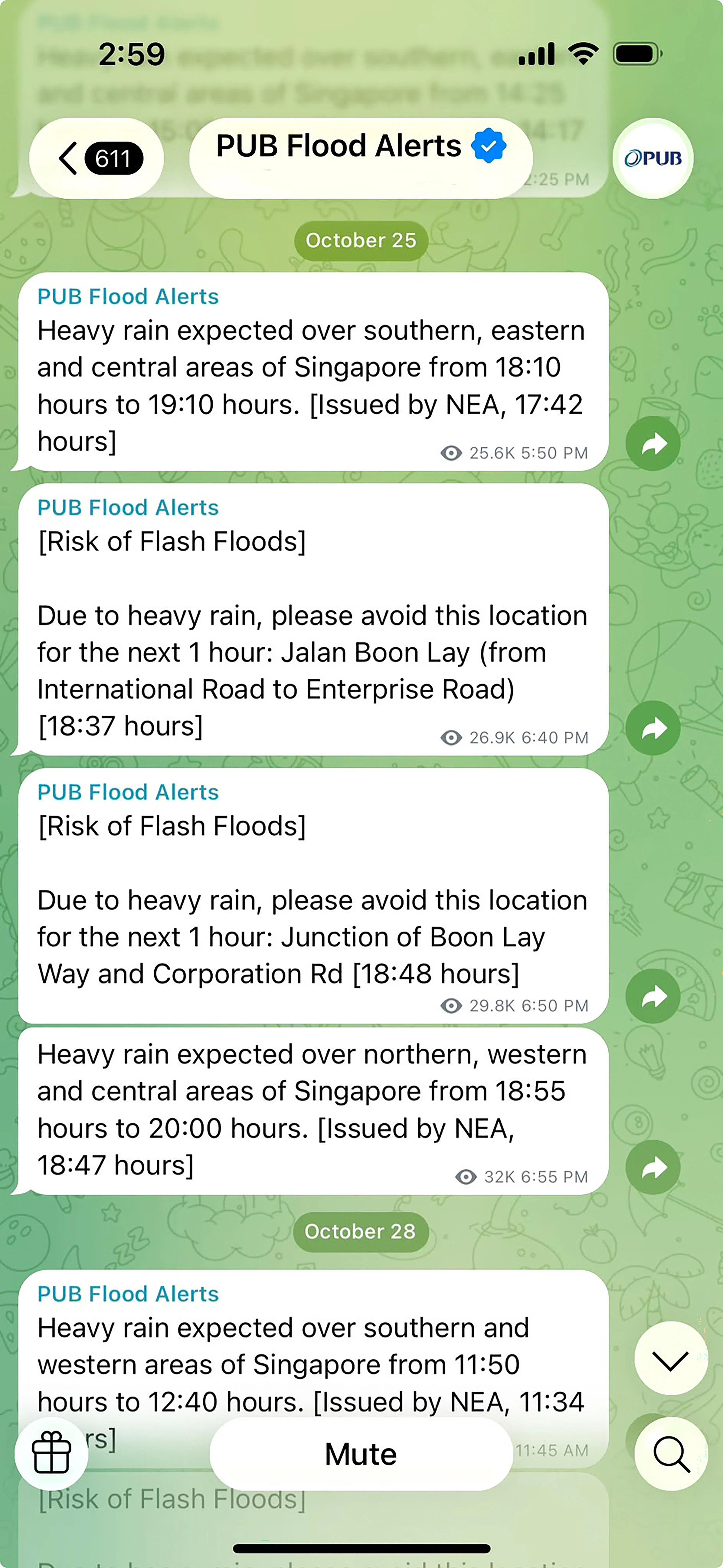
Currently, when water levels in waterways reach 90% of capacity, water level sensors automatically issue early warnings of flood risks through platforms including the messaging app Telegram. If water overflows, staff use closed circuit television footage and video analytics to visually confirm whether flooding has occurred before issuing an alert.
PUB will next explore how to integrate Road Flood Sensors, water level sensors and closed circuit television video analytics into an automated water level monitoring and early warning system. This would improve the accuracy and timeliness of monitoring, allowing earlier warnings and more effective deployment of resources to respond to flooding.
Chua said, “While PUB continues to strengthen Singapore's flood resilience, absolute flood protection is not possible. This is why, for this year's flood resilience campaign, we would like to reiterate the message that everyone has a part to play, be it to be more better informed, knowing what to do when a flood happens, and taking early precautions. Together, we can build a more flood resilient Singapore.”
In June this year, Singapore released its first Flood-Resilient Developments Guidebook, outlining how to assess flood risks for buildings, strengthen their flood resilience and respond when flooding occurs. It aims to help property owners and developers evaluate buildings’ flood risks and draw up response measures.
