

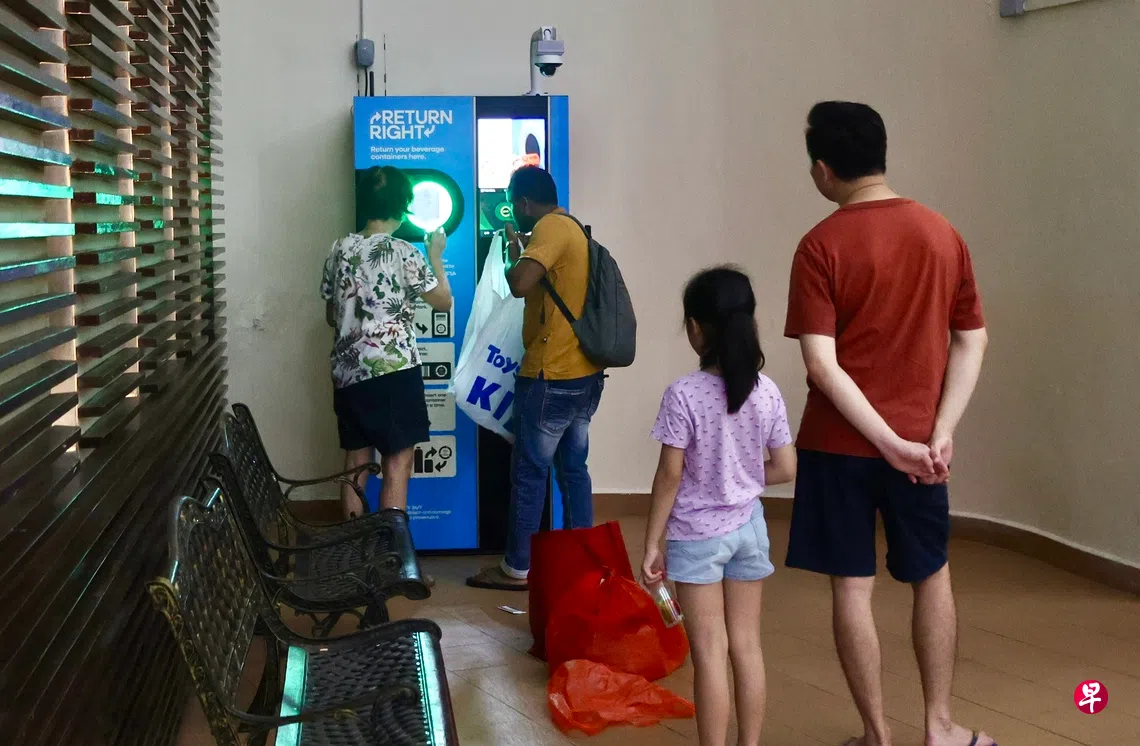
A month and a half after its full implementation, the Beverage Container Return Scheme (BCRS) continues to generate discussion.
To start on a lighter note: to reclaim his 10-cent deposit, a Singaporean man carried a plastic bottle around with him while travelling in Taiwan in October. Besides taking amusing photos along the way, such as strapping one of the bottle into an aircraft seat, he had to take care to protect its barcode. Only after returning home two weeks later did he put it into a reverse vending machine.
A look through online discussions reveals that quite a few others, unable to find reverse vending machines in Changi Airport’s transit area, have also had to take their bottles and cans overseas and return them for recycling only after coming home.
This shows that the BCRS has made people see the 10-cent value in plastic bottles and aluminium cans they once simply discarded after finishing their drinks. It also raises another question that deserves serious consideration:
When the government wants the public to change their behaviour, is it doing all it can to make that change easier, beyond telling people what they should do?
What can be improved?
Since BCRS was fully implemented, members of the public have reported various issues, including price labels covering the barcodes needed for refunds and machines rejecting bottles and cans. Earlier, some people also bought drinks bearing the deposit mark but were unable to reclaim their deposits.
Others have complained that reverse vending machines smell and attract flying insects.
These problems do not necessarily point to major flaws in the scheme’s design. But they inevitably raise the question: which inconveniences in the recycling process are unavoidable costs, and which could be addressed by improving the system?
The scheme’s 10-cent deposit gives consumers a financial incentive to return bottles and cans. But to get that money back, people must take the containers home to wash them, find somewhere to store them, then carry them to a reverse vending machine. If the machine works smoothly, the process may not be too much of a hassle. But an incorrect label, a damaged barcode, a faulty machine, or even a long queue caused by someone ahead returning multiple bottles and cans could mean a wasted trip.
Giving bottles and cans value also brings new behaviours to manage
Meanwhile, news about bottle and can recycling have also highlighted how the same 10-cent deposit holds different meanings for different people.
Some may feel it is not worth the trouble to rinse out bottles and cans and take them to a reverse vending machine, so they continue to throw them away or give them to someone willing to do the work. Yet the sight of foreign construction workers or cleaners lining up with several large bags of containers almost invariably draws comments and suspicion. Marine Parade Town Council even had to clarify in a social media post on 1 November that these containers came from drinks the workers had bought themselves or were given by residents, and had not been retrieved from rubbish bins.
In early November, a netizen filmed a man apparently pulling out a bottle eligible for a refund after scanning it, then inserting other bottles and cans. Another netizen also tested a machine and questioned whether the system had a loophole. The National Environment Agency and the scheme’s operator subsequently said they would review the system and strengthen safeguards to ensure that the scheme operates fairly.
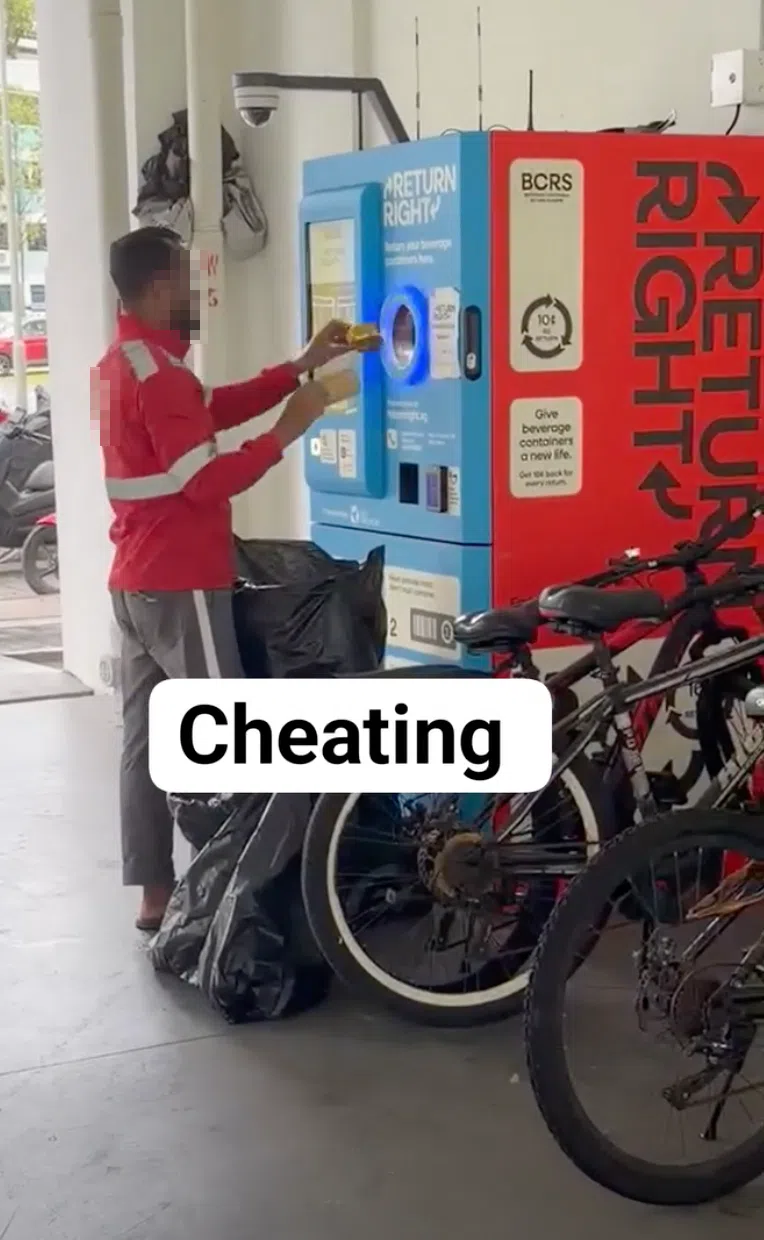
All of this points to one thing: when a monetary value is attached to bottles and cans, the system must also be ready to tackle the new behaviours that follow.
Of course, the system must guard against people exploiting loopholes at the expense of those genuinely taking part in recycling. But preventing abuse and providing convenience need not be mutually exclusive. Ideally, machines should accurately identify containers and promptly detect unusual transactions, while allowing legitimate users to reclaim their deposits smoothly. This would avoid undermining consumers’ willingness to recycle.
The same thinking should guide the siting and maintenance of return facilities. The distance between homes and reverse vending machines, the space needed to store bottles and cans, and the time spent transporting them are admittedly unavoidable costs of participation. But insufficient facilities, faulty machines and poor hygiene are problems that need to be properly addressed as soon as possible.
The effectiveness of a public policy depends not only on people’s willingness to change, but also on whether the system creates the right conditions for that change. The goal of the container return scheme deserves support. But if people are willing to take a step forward, the system should at least ensure a smooth path, while giving those who follow the rules confidence that the arrangements are fair and reliable.
After all, making environmental responsibility a daily habit requires more than telling people why they should recycle. Recycling must also be something they can, and want, to do.
