

Singapore has strengthened its response to and intervention in domestic violence. In its first full year of operation, the Domestic Violence Emergency Response Team (DVERT) handled 1,439 cases and issued 1,151 emergency orders against perpetrators. The National Anti-Violence and Sexual Harassment Helpline (NAVH) received 16,525 reports last year, up nearly 50% from the year before.
The Domestic Violence Trends Report released this year by the Ministry of Social and Family Development (MSF) disclosed these figures for the first time to assess the effectiveness of the domestic violence response system. The report showed that the number of cases handled by DVERT, which operates round-the-clock, more than doubled from 675 in 2024 to 1,439 last year.
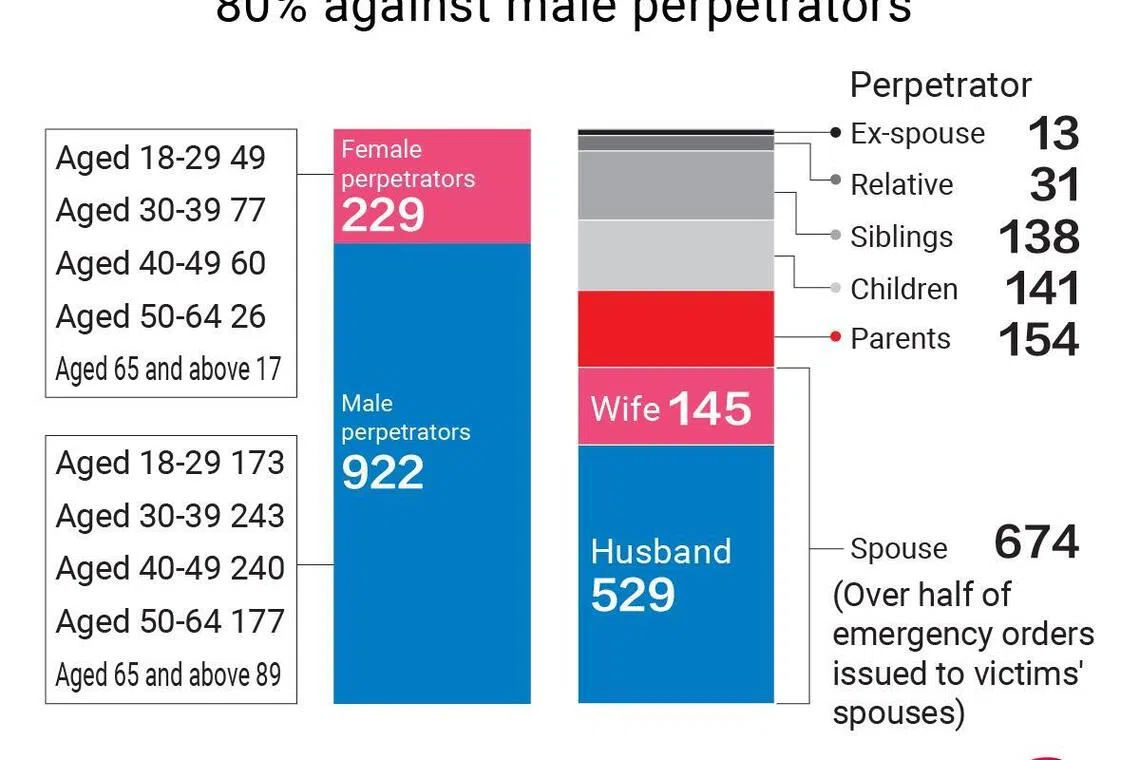
The report also noted that most domestic violence cases involved abuse of spouses or children. More than half of the 1,151 emergency orders issued against perpetrators last year were directed at victims’ spouses: 529 were issued against husbands and 145 against wives. Another 154 were issued against abusive parents.
A total of 922 emergency orders, or 80% of the total, were issued against male perpetrators. Men aged 30 to 49 accounted for the largest share, with 483 orders issued against them. Female perpetrators in the same age group received 137 orders.
Since January last year, DVERT has been empowered to issue an emergency order on the spot when handling high-risk cases. These orders curb perpetrators’ violent behaviour and protect victims while they await personal protection orders.
The report attributed the marked improvement in DVERT’s effectiveness partly to its expansion. The team extended its coverage to all seven police land divisions across Singapore in September 2024. It became fully operational last year and was also authorised to issue emergency orders.
Reports to National Anti-Violence and Sexual Harassment Helpline rose nearly 50% last year
NAVH received 16,525 reports last year, 49% more than the 11,068 received in 2024.
Of these, 82% (13,475) required follow-up, such as further assessment, investigation, the development of intervention plans, or referral to MSF’s protective service and community agencies.
In response to queries, MSF said that 17.6% of child-related reports last year were referred to the protective service and classified as new high-risk (Tier 2) child abuse cases. About 3% of adult-related reports were classified as new high-risk cases of abuse involving vulnerable adults. These included reports to NAVH and cases referred to the authorities by community agencies.
Use of NAVH by law enforcement officers and social service agencies increased significantly. Of the reports requiring follow-up, 57% came from law enforcement agencies, social service agencies and educational institutions. Reports from law enforcement agencies more than tripled, from 941 in 2024 to 2,850 last year.
Reports from social service agencies rose from 1,923 the year before to 2,813 last year, while those from educational institutions increased from 1,418 to 2,056 over the same period. The healthcare sector made 589 new reports last year, the highest number in three years.
The public remained the main source of reports to NAVH. Last year, 5,158 reports requiring follow-up, or 38%, came from members of the public, including victims themselves.
The report noted that the increase in reports reflected heightened vigilance among frontline workers and social service agencies in identifying suspected abuse, as well as greater willingness to alert the relevant authorities to potential risks and concerns.
