

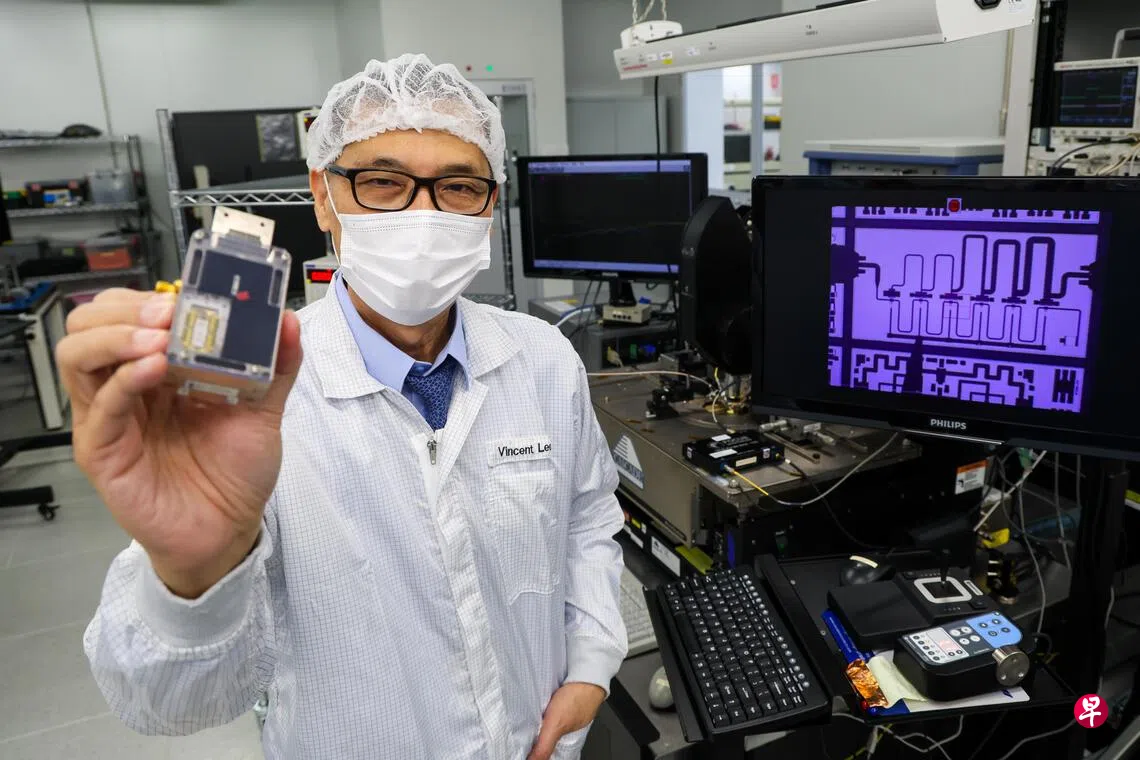
Be it observing targets with satellite radar or disrupting enemy systems in electronic warfare, radio-frequency transmitters are needed to send signals.
Mastering this technology would allow Singapore to develop systems tailored to its operational needs to gather intelligence on adversaries and protect military personnel and assets, while reducing reliance on critical components from overseas.
Dr Leong Yoke Choy Vincent, distinguished member of technical staff (Engineering Division) at DSO National Laboratories, 60, has spent years advancing local development of radio-frequency transmitters.
On Friday (6 November), Dr Leong received the Defence Technology Prize 2026 Individual (Research & Development) Award from Coordinating Minister for Public Services and Minister for Defence Chan Chun Sing.
Mobile phones also have built-in radio-frequency transmitters, which send voice and data to base stations using radio waves. Defence applications work on the same principle, but have different requirements for operating frequencies, output power and other specifications.
Dr Leong said off-the-shelf radio-frequency transmitters may not meet specialised defence requirements. A transmitter installed on a microsatellite, for instance, must perform all its functions within a confined space.
To overcome these space constraints, he and his team took a pioneering approach, redesigning the transmitter’s interior and making some structures planar. This reduced its size to 50% of comparable commercial solutions. The transmitters were successfully deployed between 2022 and 2024.
A key component of the transmitter is the high-power amplifier, which boosts a signal’s power before transmission, much like a car’s engine. With few manufacturers worldwide able to supply this component, Dr Leong established local capabilities in modelling and designing high-power amplifiers.
He noted that in-house design capabilities not only allow transmitters and critical components to be tailored to operational requirements, but also help address the risk of commercial components being discontinued or supplies disrupted. This supports the long-term operation and maintenance of defence systems.
Dr Leong has specialised in radio-frequency circuit design throughout his 35 years at DSO National Laboratories. He initially developed receivers before expanding into transmitters. However, the small pool of radio-frequency engineering talent has made recruiting suitable staff a persistent challenge.
Compared to designing breakthrough products, it is more important, Dr Leong believes, for Singapore to build the expertise and capabilities needed to support its future defence needs.
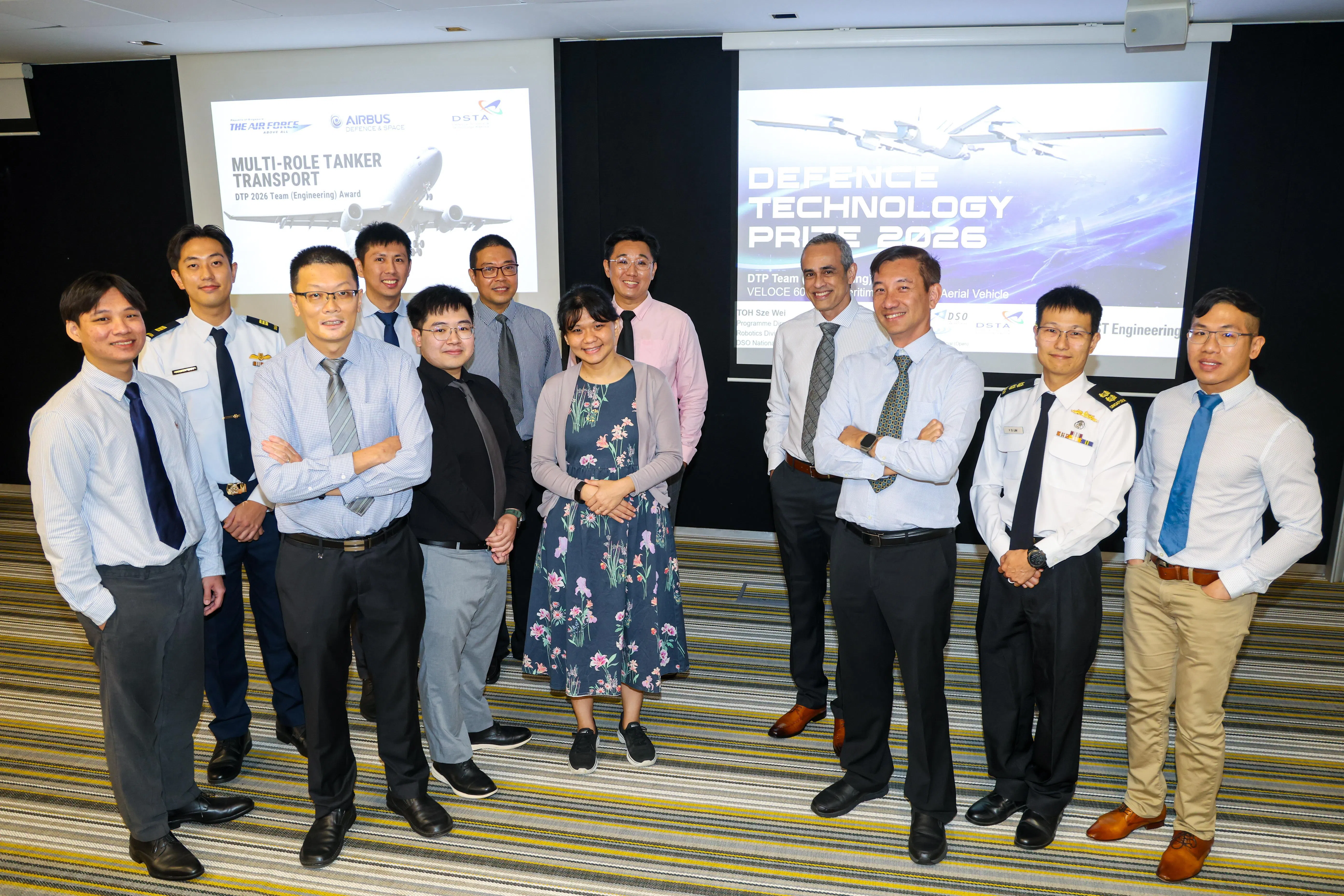
Established in 1989, the Defence Technology Prize recognises individuals and teams that have made outstanding contributions to Singapore’s defence. Besides Dr Leong, three teams received awards this year, including the Multi-Role Tanker Transport team and the V60 maritime drone team.
Chan Chun Sing: Technological excellence is not a luxury but a strategic necessity
Speaking at the awards ceremony, Chan honoured the commitment of successive generations of defence scientists, engineers and operators. He said that for a small nation such as Singapore, security can never be taken for granted, and technological excellence is not a luxury, but a strategic necessity.
Looking ahead to Singapore’s defence development, Chan outlined three priorities: shaping our own future, building strong foundations for long-term success and technology and operations must evolve together.
He said Singapore should seize the initiative. Emerging technologies present particularly significant opportunities, offering new ways to overcome constraints that have shaped the country’s strategic calculations for decades: its lack of geographical depth, limited mass, compressed reaction times and manpower challenges.
“The future, however, will not simply arrive at our doorstep. We must have the courage to shape it. To experiment. To innovate. And to pursue possibilities that others may not yet see.”
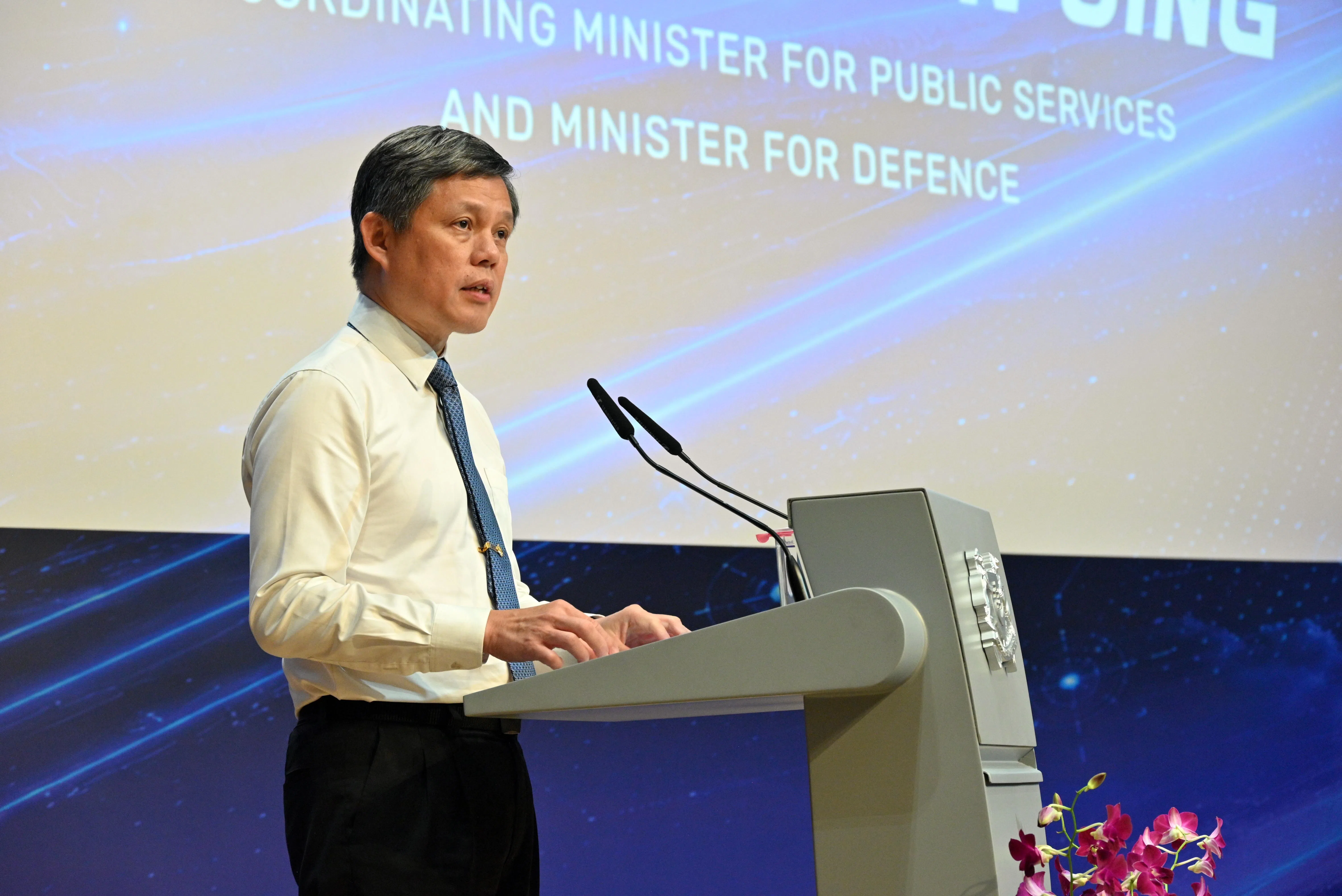
Chan also stressed the importance of sustained investment in defence technology. He said the most effective militaries are those that allow technology and operations to evolve in parallel, each challenging and strengthening the other.
He gave an example: operators identify new possibilities and challenges, while technologists create new solutions. New technologies create new concepts, and new concepts generate new requirements. The cycle repeats itself.
Chan concluded that Singapore’s success will continue to depend on the same qualities that have sustained it since independence: the courage to confront uncertainty, the discipline to build for the long term, the imagination to turn constraints into opportunities and “above all, the determination to shape our own future rather than have it shaped for us.”
