

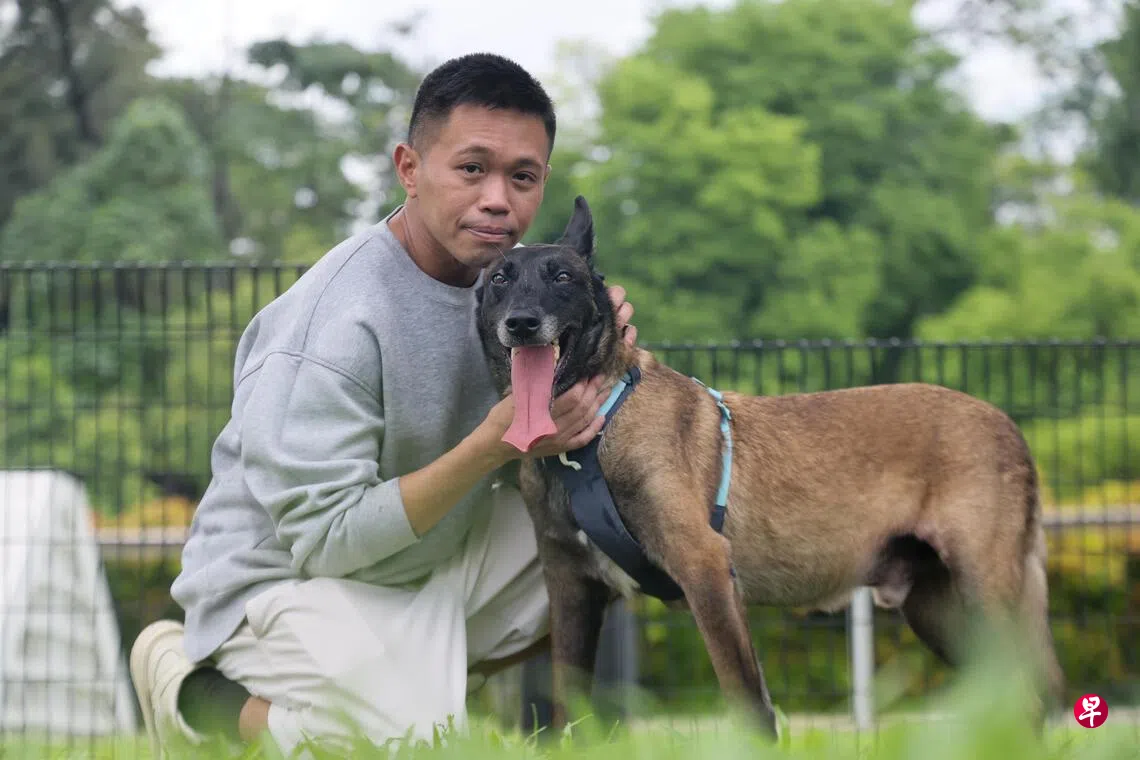
Did it think it had been “kidnapped”? When Dodger, a retired drug-sniffing dog, first arrived at its new home, it treated its adopter as the “enemy”, while giving the postman and neighbours a warmer welcome. Now, it has not only settled into its new life but also become the household’s “parcel inspector”.
With its black face and imposing appearance, Dodger looks formidable but is gentle, friendly and happy to be stroked by anyone. The retired police dog became a member of fashion designer Max Tan’s household in June this year. The Belgian Shepherd once worked as a drug-sniffing dog and is now enjoying retirement in its new home.
Tan, 42, said that when Dodger first came home with him, it seemed unhappy at being taken to unfamiliar surroundings. It was particularly aloof towards him, even treating him like an ‘enemy’. “It was friendly towards guests, friends, the postman and neighbours, but especially cold towards me. No matter how much I called it, it would not come over.”
It took about three weeks before Dodger gradually let its guard down. Today, it is Tan’s constant companion.
Tan shared his experience of adopting a police dog on Friday (6 November) at an event organised by the Singapore Police Force to mark World Adoption Day next Monday (9 November).
Tan described Dodger as a “gentle giant”. Despite its cool exterior, it is calm, friendly and well-disciplined. But bring out a ball and it gets excited, playing like a child.
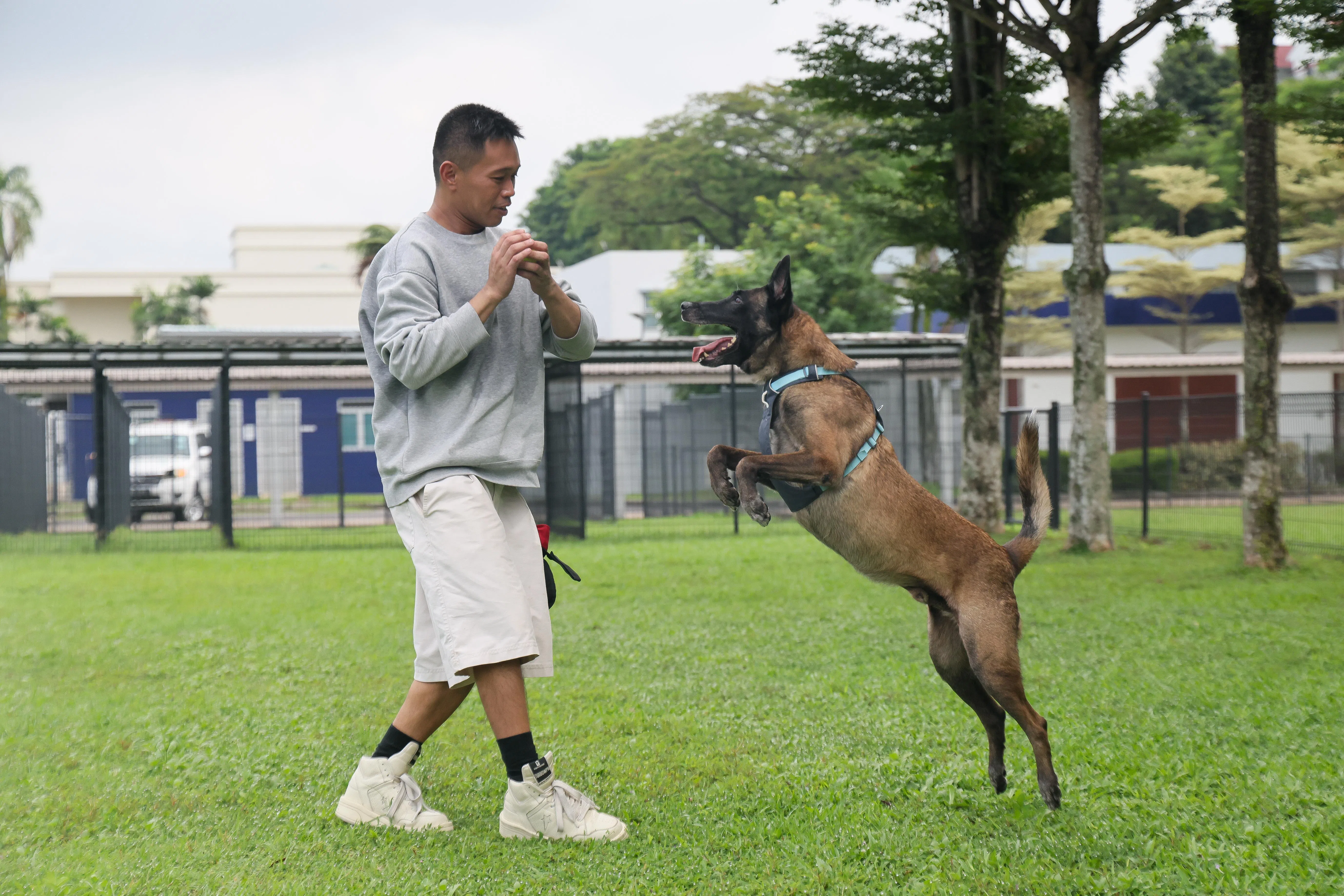
Retired, but still putting its skills to use
Although retired, Dodger has not forgotten its “professional skills”. Whenever a parcel arrives at home, it goes over to sniff and inspect it carefully, before running to Tan’s bedside as if to report: “Inspection complete. You can open the parcel now!”
This is Tan’s second time adopting a retired police dog. His first, also a Belgian Shepherd, died in February this year after spending two and a half years with him. After coming to terms with his loss, Tan contacted the Police K-9 Unit again to apply to adopt another retired police dog. He said he had always wanted to provide a secure home for these dogs, which had spent years on duty.
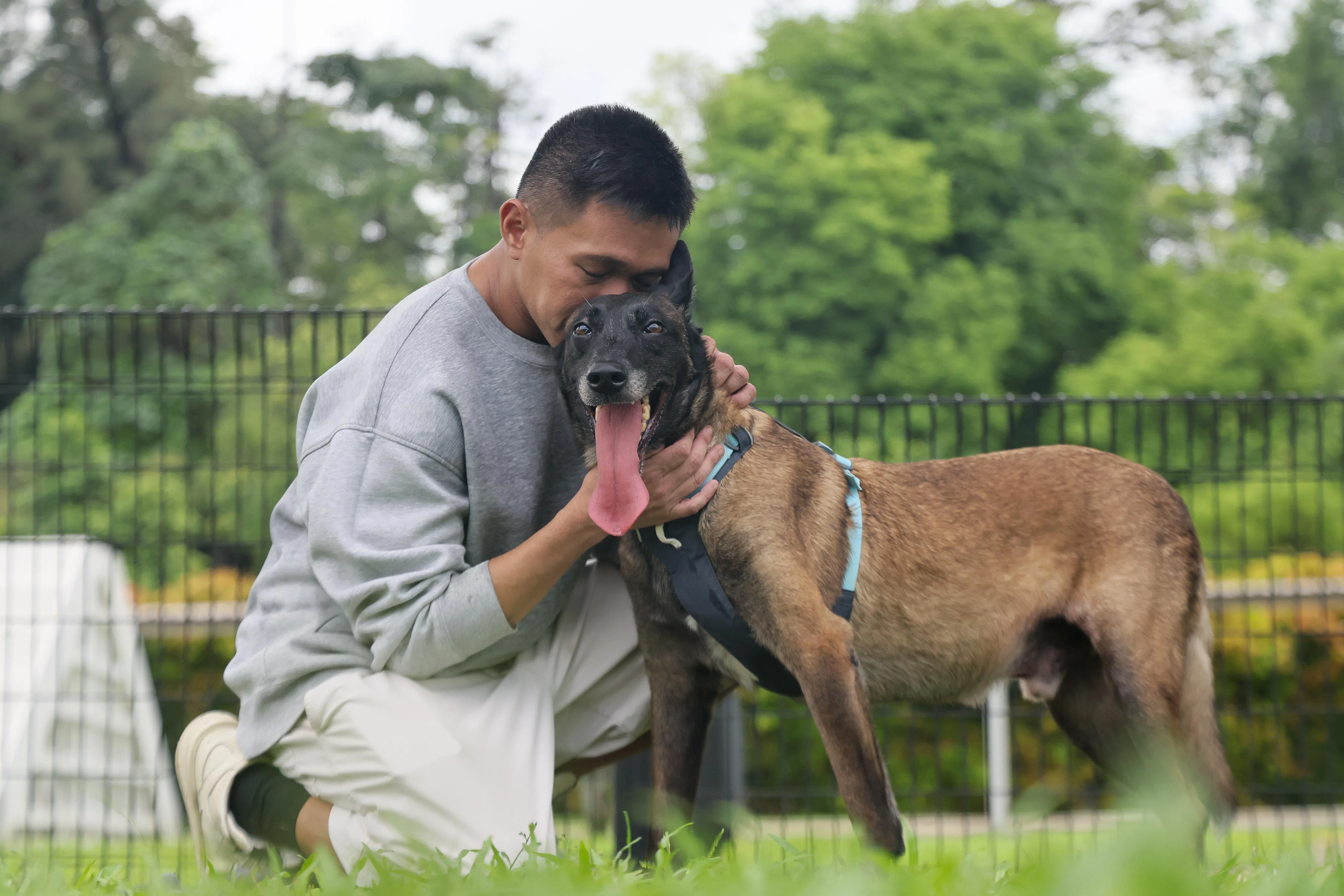
Tan said that when police dogs retire, “it is as though they rediscover their childhood. They throw themselves into playing and eating”. Caring for a police dog is not very different from caring for any other pet dog. “What matters most is whether you have enough time to spend with it and enough love to give it.”
However, because retired police dogs are older, adopters must pay particular attention to their health and take them for regular veterinary check-ups.
The Police K-9 Unit has more than 250 police dogs, about 40 of which retire each year. Many members of the public are willing to adopt retired police dogs, so most do get rehomed.
The police carefully screen potential adopters to ensure they can properly care for a retired police dog. In Tan’s case, the police first gathered information about him before matching him with Dodger. They then arranged opportunities for Tan and Dodger to interact and build a bond.
Building a bond with a dog takes mutual understanding
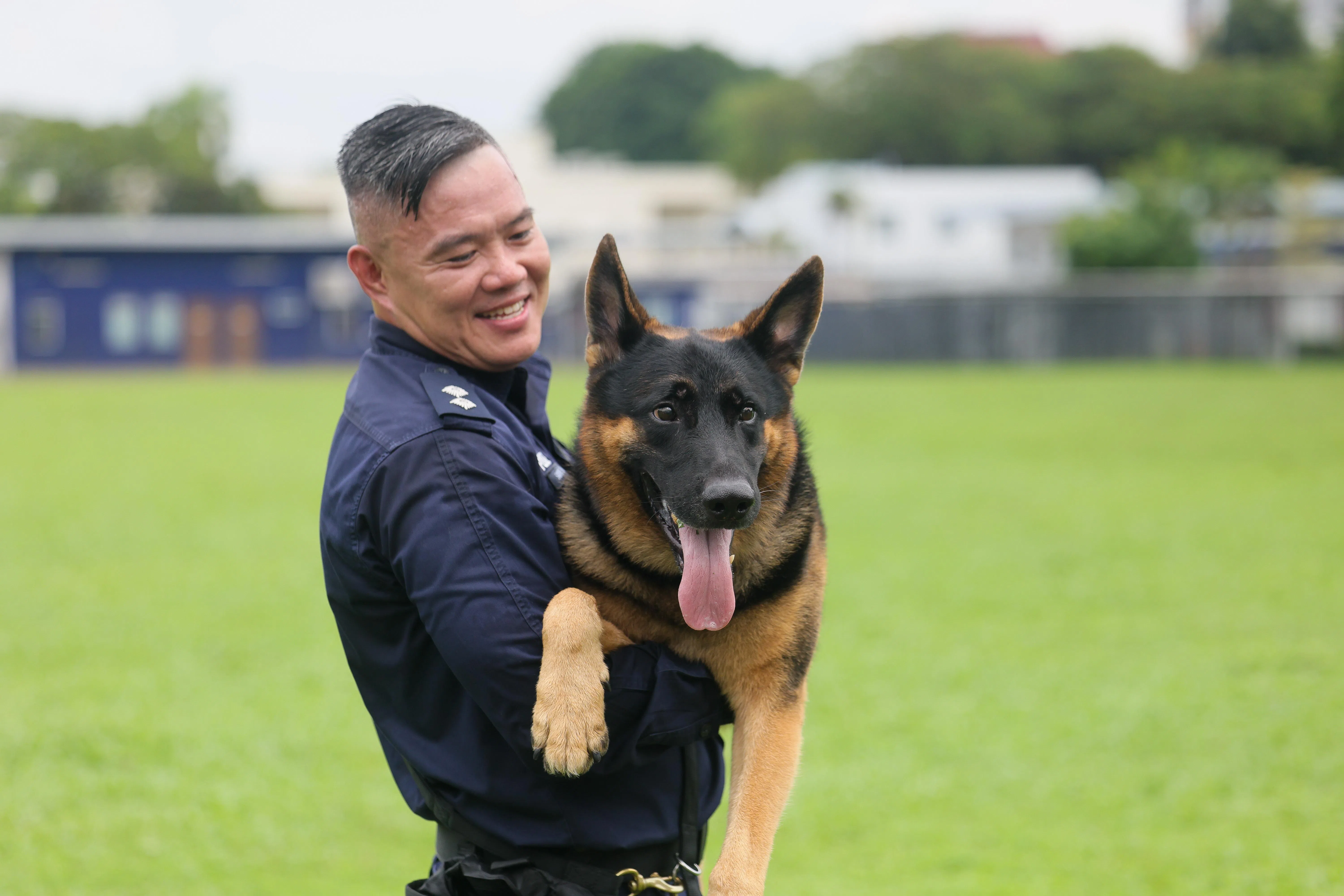
INSP Samuel Shue, a team leader in the Police K-9 Unit who has served in the Singapore Police Force for 26 years, recalled being bitten by the first police dog he was assigned to train when he joined the unit. For a time, he was afraid of seeing the dog at work. As he came to understand its past unpleasant experiences with people and what might trigger its aggression, he gradually built mutual trust with it.
Today, Shue’s working partner is Jango, a four-year-old German Shepherd. He said German Shepherds are often seen as aggressive dogs, and he frequently hears members of the public call out a warning in Hokkien while he is on patrol: “The wolf dog is here.” To him, however, Jango is gentle and enjoys being close to people, sometimes coaxing Shue for treats.
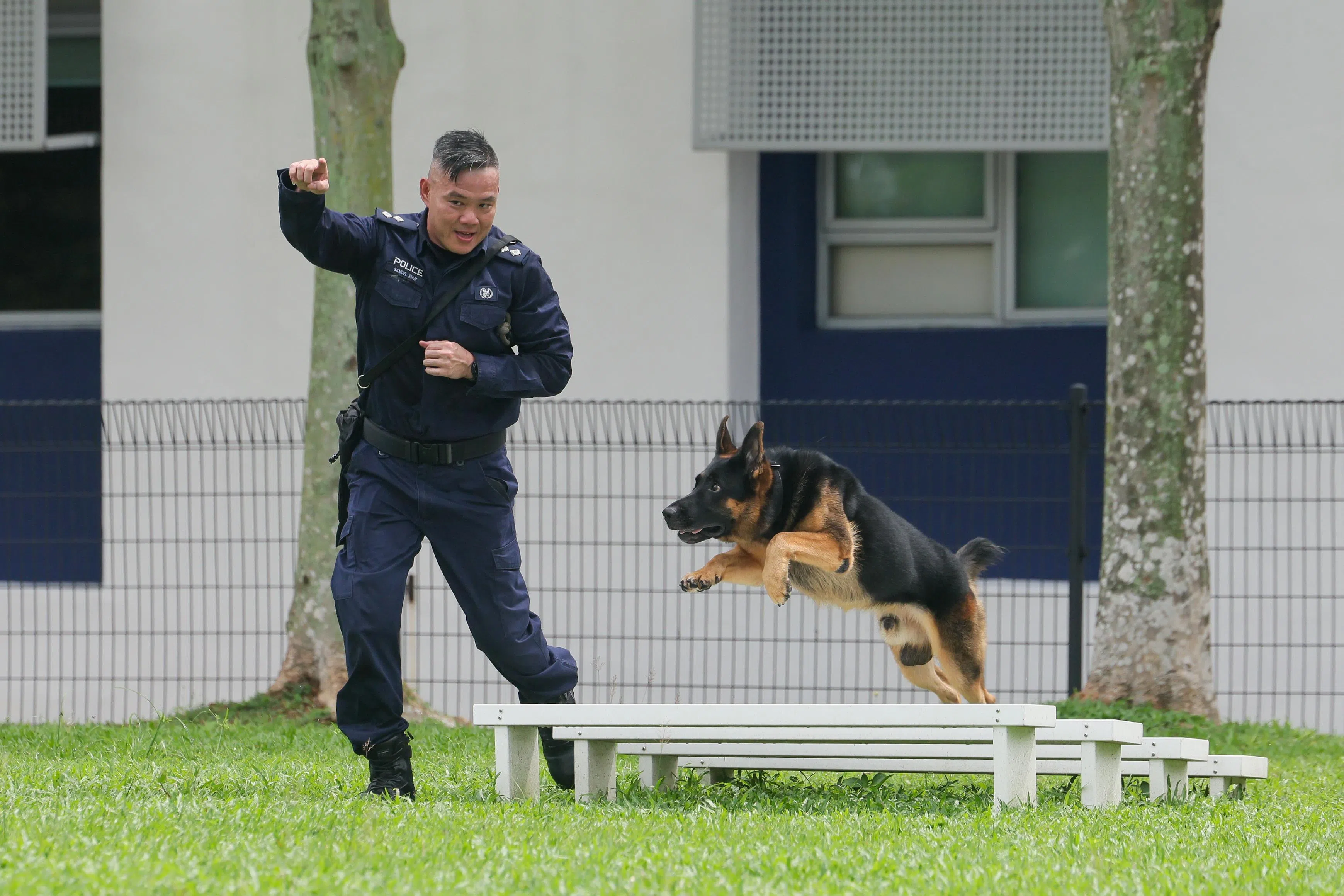
Over the years, Shue has worked with more police dogs than he can count. He said it was heartening to see his former canine partners find suitable homes after retirement.
Shue stressed that every dog has its own personality, and building a bond with one is like raising a child, requiring time to understand one another’s character and habits before rapport can grow.
