

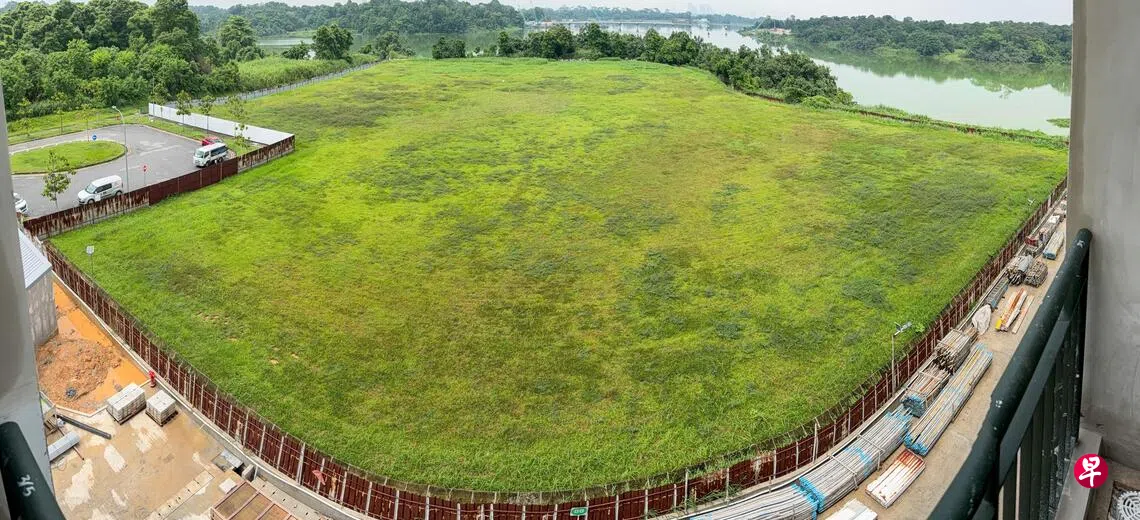
A modern vegetable farm will be built in Sungei Tengah, producing about 700 tonnes of leafy vegetables and tomatoes a year at full capacity. It will use technologies such as a recirculating nutrient solution system, solar power and rainwater harvesting to improve production efficiency and reduce resource consumption.
The Singapore Food Agency (SFA) announced on Wednesday (11 November) that Rong Fong Holdings had successfully tendered for an agricultural plot in Sungei Tengah Lane. The company secured the approximately 1.78-hectare site for $409,000 on a 20-year lease.
Speaking to Lianhe Zaobao on Thursday (12 November), Rong Fong Holdings’ owner, who gave his surname as Wei, said the first year would be spent building the farm. Production would begin in the second year at about 300 tonnes of leafy vegetables and tomatoes, rising to about 500 tonnes in the third year and reaching full capacity of about 700 tonnes annually in the fourth.
The farm will employ about 30 people, around 20 of whom will work in production.
Vine tomatoes will account for more than half the farm’s output. Its main leafy vegetables will be chye sim, kailan and xiao bai cai, varieties commonly used by local households and restaurants that enjoy steady demand. It will also grow a new variety of kangkong not available in Singapore or Malaysia. The farm is also working with local research institutions to introduce and trial more heat-tolerant vegetable and tomato varieties suited to tropical conditions, to improve yields and ensure consistent quality.
The farm will use modern greenhouses covering about 15,900 sq m, taking advantage of Singapore’s abundant natural light. This will keep energy consumption and costs lower than those of indoor farms that rely entirely on artificial lighting.
Wei said the farm would adopt circular economy practices and precision growing techniques.
The company plans to reuse mushroom-growing substrate from its farms to grow tomatoes, turning agricultural waste into a growing medium. Leafy vegetables will be grown using a recirculating nutrient solution system that reuses nutrients and water, reducing resource wastage.
The farm will also install solar panels and make extensive use of rainwater and non-potable water sources, reducing its reliance on energy supplies and drinking water.
Wei said he hoped to build a high-yield, low-carbon, sustainable modern farm that reuses resources, contributing to Singapore’s food security and supply resilience. He also hopes to give consumers access to more fresh, safe and locally grown vegetables, shortening the journey from farm to table while reducing carbon emissions and supply risks associated with long-distance transport.
The farm’s leafy vegetables and tomatoes will be supplied directly to local hotels, restaurant groups and Chinese restaurants.
Separately, SFA said in its statement that an agricultural plot in Lim Chu Kang had not been awarded. The tender for the two plots in Sungei Tengah and Lim Chu Kang opened on 29 May this year and closed on 28 July, attracting six proposals from five bidders.
