

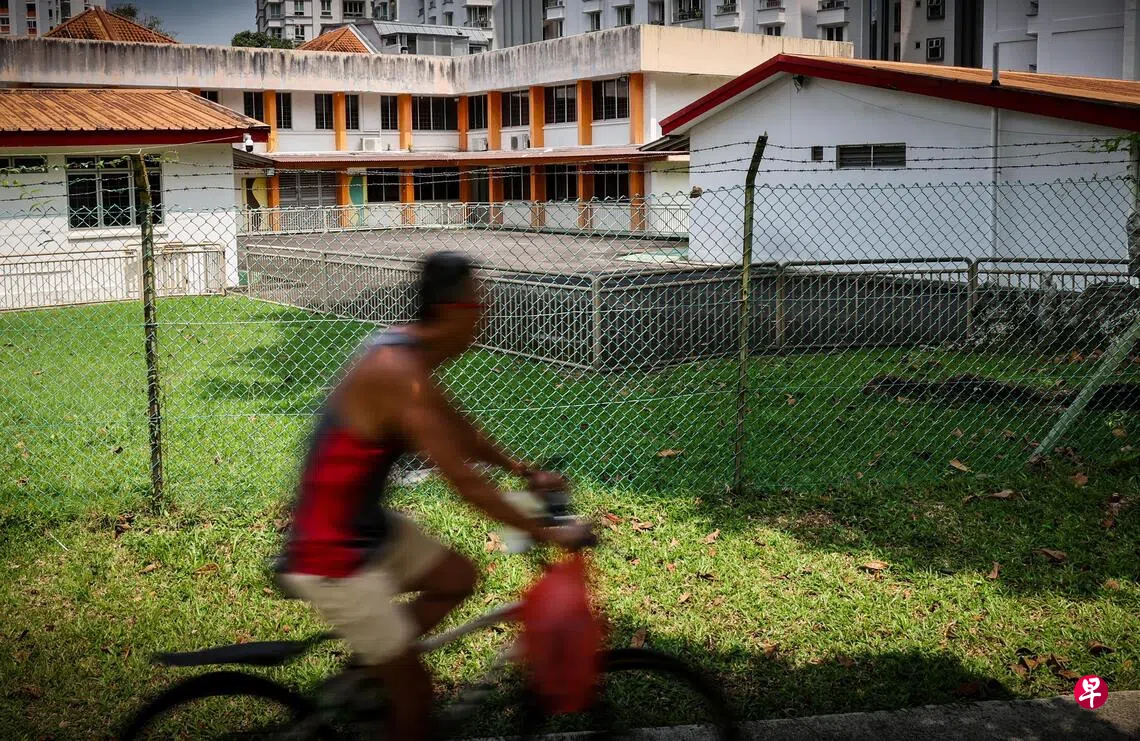
A planned Youth Crisis Facility will be located in Sengkang and run by Samaritans of Singapore. The residential rehabilitation facility will cater to young people at risk of suicide or serious self-harm.
Samaritans of Singapore has advertised for a centre head as it prepares to open the new facility.
According to the job advertisement, the Youth Crisis Facility (YCF) will provide round-the-clock, short-term residential care, giving young people immediate, intensive psychosocial support during a crisis. It will help them stabilise emotionally, learn coping strategies and gradually return to their families or the community.
Lianhe Zaobao understands that the centre will occupy an existing government building at 60 Sengkang East Way. Formerly a preschool centre, it served as a joint testing and vaccination centre during COVID-19.
The Youth Crisis Facility is one of the initiatives under the national mental health strategy announced by the Ministry of Health in 2023. The government previously said the facility, expected to open in 2027, would operate round the clock and primarily serve young people aged 10 to 19. Support will be provided by a multidisciplinary team of psychiatrists, psychologists, social workers, nurses and residential care staff.
Responding to queries from Lianhe Zaobao, the Ministry of Health said some young people may self-harm or attempt suicide because of psychosocial factors such as a stressful home environment. The Youth Crisis Facility is being developed to support their recovery after a crisis.
“The YCF will support youths referred from the community, or discharged from acute hospitals, offering psychosocial interventions by a multi-disciplinary team in a safe and non-stigmatising environment to aid community reintegration.”
A Ministry of Health spokesperson said the location was selected from available sites that best met operational needs. The project team is developing clinical protocols and operational details, and more information will be shared in due course.
A Samaritans of Singapore spokesperson said in response to queries that it was too early to share further details about arrangements for the new centre.
Outlining its existing procedures, the spokesperson stressed that when young people experiencing suicidal distress seek help from Samaritans of Singapore, its priority is to provide a safe, empathetic and non-judgemental space where they feel comfortable opening up.
“Our counsellors work with youths to understand the challenges they face, help them develop coping strategies and identify ways to keep themselves safe in times of distress.”
The spokesperson said the organisation also helps young people connect with other support networks where appropriate, including professionals and community resources, to ensure their needs are comprehensively addressed.
Samaritans of Singapore received nearly 40,000 calls to its hotline last year, almost one in five of which involved suicide risk.
According to the Report on Registration of Births and Deaths 2025, released by the Immigration and Checkpoints Authority in July this year, 441 people died by suicide in Singapore in 2024. Suicide was the leading cause of death among young people aged 10 to 29 for seven consecutive years, from 2018 to 2024.
New centre could bridge gap between hospitalisation and community outpatient care
Nic Lee Jin Kian, CEO of the Singapore Association for Mental Health, welcomed the establishment of the Youth Crisis Facility, saying it would help bridge the gap between hospitalisation and outpatient community support in Singapore’s mental health services.
He noted that young people experiencing severe distress or chronic suicide risk may not require acute psychiatric hospitalisation, yet cannot be kept safe through community outpatient services alone. “There is a critical gap in support here.”
“Most community services are not structured for round-the-clock crisis containment, while returning home can be counterproductive if the crisis is driven by domestic conflict.”
Lee said the existing system needs an intermediate, sub-acute residential space between hospital and community outpatient care. A step-down respite facility would provide young people in need with short-term refuge, after-hours monitoring and de-escalation support.
He stressed that as the new centre’s operational details and referral protocols take shape, seamless intake pathways will be essential.
“Stabilising young people in a dedicated environment better prepares them to transition into longer-term community rehabilitation and sustained recovery.”
