

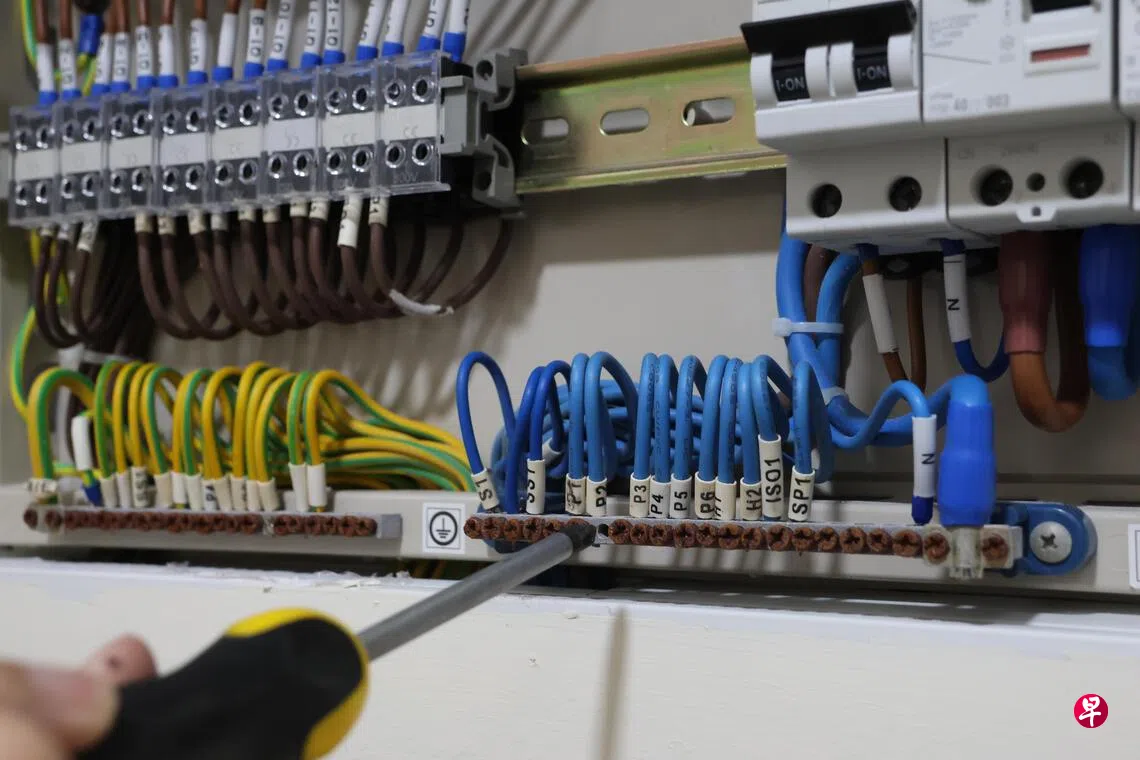
A power trip less than three years after moving into a new HDB flat prompted a homeowner to call an electrician, who discovered that almost all of the more than 40 screws securing wires inside the distribution board were badly rusted. Similar problems were found in several flats on different floors of the same block, raising residents’ concerns about electrical safety and the quality of the components.
Madam Liao, a 63-year-old packing worker who lives on the 12th floor of Block 113A Plantation Crescent in Tengah, told Lianhe Zaobao that she was watching television at home at about 8pm on 13 November when the power suddenly tripped. She then called an electrician to investigate.
When the electrician removed the distribution board’s casing, he found that almost all of the more than 40 screws securing the various sets of wires were severely corroded. Rust had eaten away at some of the cross-head slots, leaving them barely discernible. “The electrician told us it was neither normal nor safe for screws to be so rusty in a flat that was only three years old, and advised us to notify the authorities as soon as possible.”
When Lianhe Zaobao visited Madam Liao’s home on Monday (23 November), the reporter found an entire row of rusty screws inside the distribution board. The reporter also noted that the screws securing the wires were hidden by the casing, making the rust difficult to spot unless the entire casing was removed.
Madam Liao said she and her husband had moved into the Build-To-Order flat just over two years ago. They had never removed the distribution board’s casing or repaired or replaced any components. After the problem was discovered, her son emailed Chua Chu Kang Town Council the following day (14 November), asking it to send someone to inspect the board and carry out repairs. In its reply on 15 November, the town council said the problem was inside the flat and therefore the homeowner’s responsibility, and advised the family to engage a contractor.
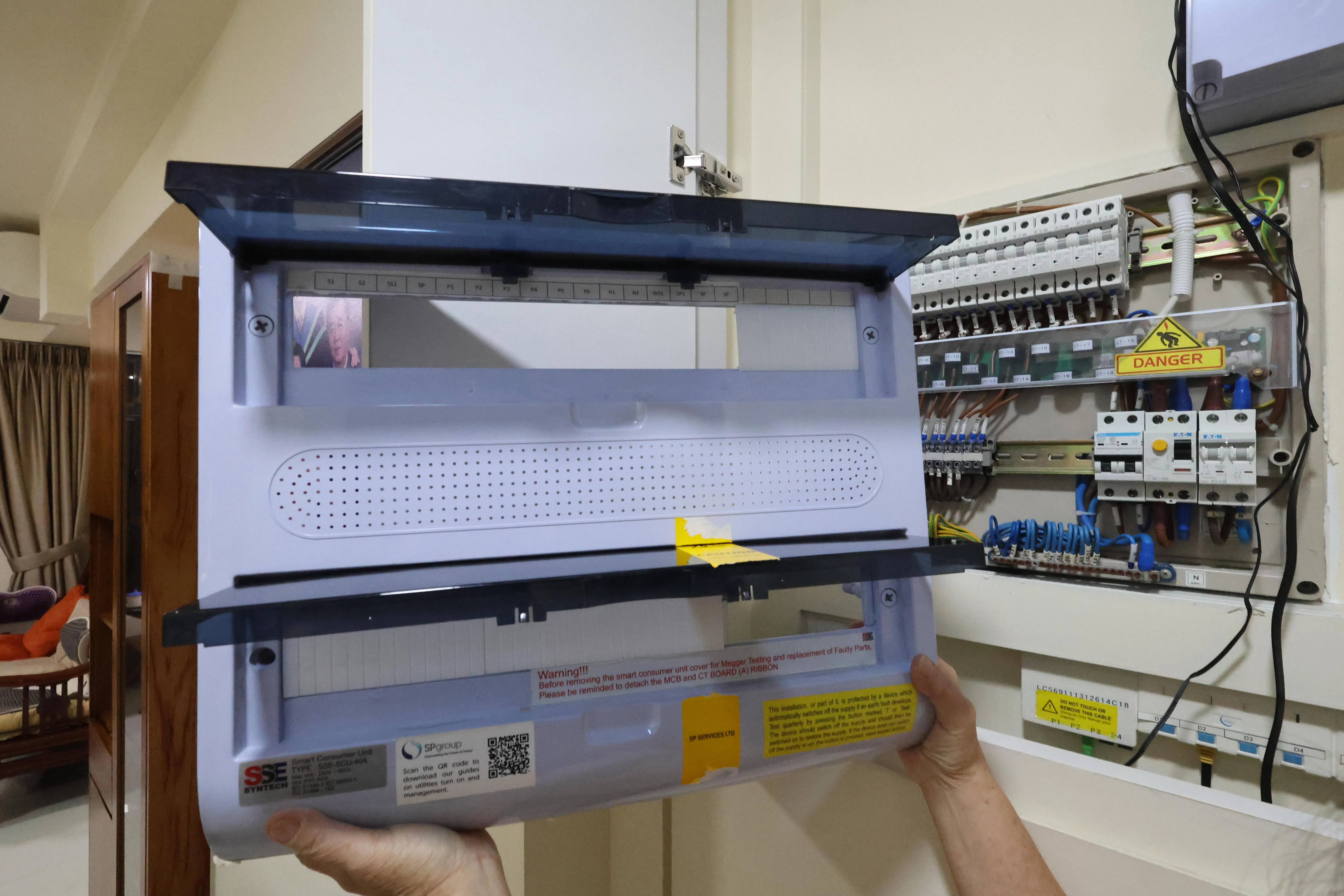
Following further discussions, town council staff called last Wednesday (18 November) to say that it would cover the repair costs, but would first have to apply for funds and would respond in one to two weeks. Madam Liao’s family had received no further update by press time.
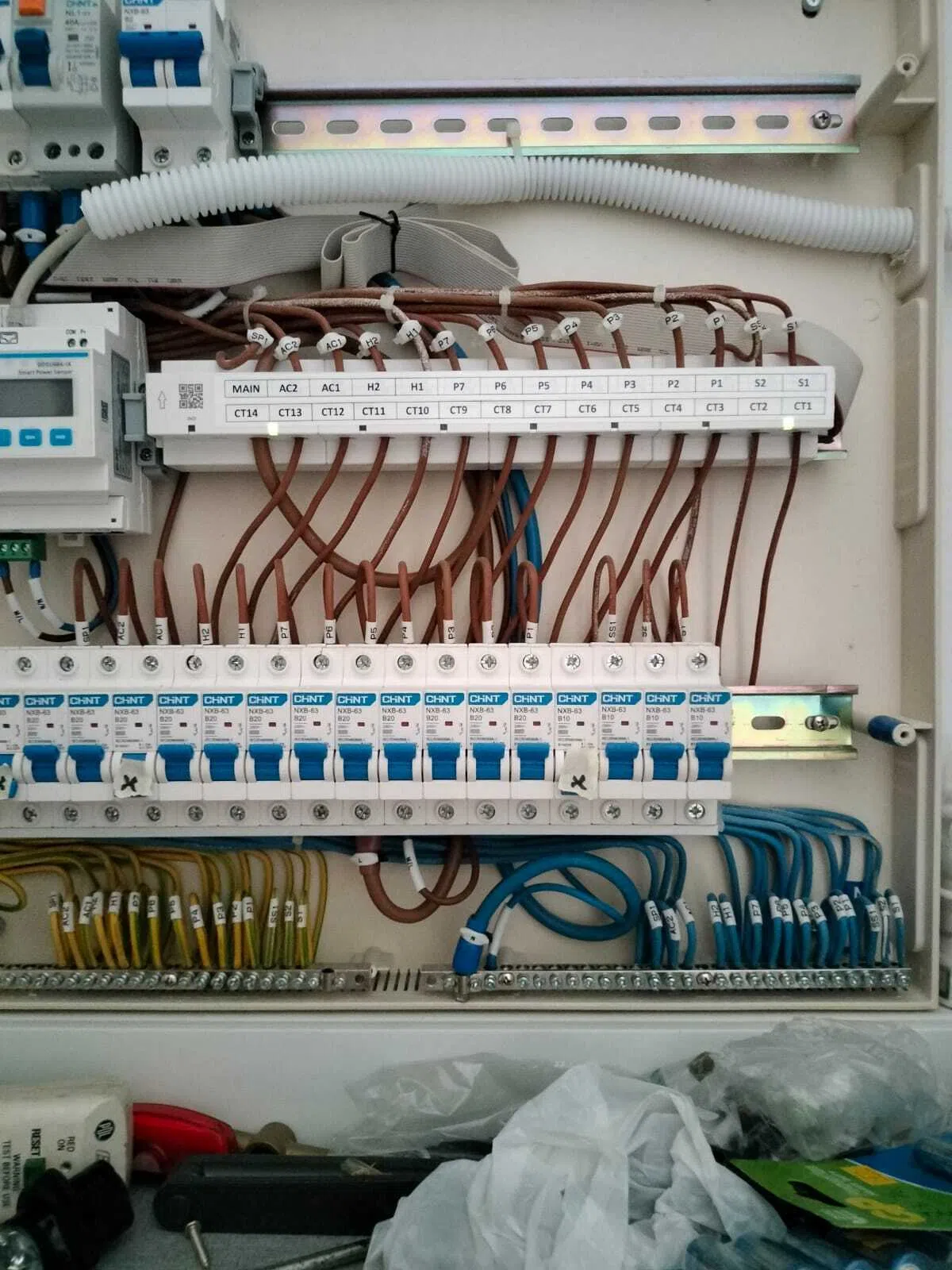
Madam Liao said she did not believe the rust was caused by humid weather. She noted that a relative living nearby in Block 118 had checked the distribution board at home and found the screws intact. “If the electrician had not removed the casing, we might never have discovered the problem. I was shocked and frightened, and worried about electrical leakage or a fire in the distribution board.”
Rust found in several flats during visits to neighbours
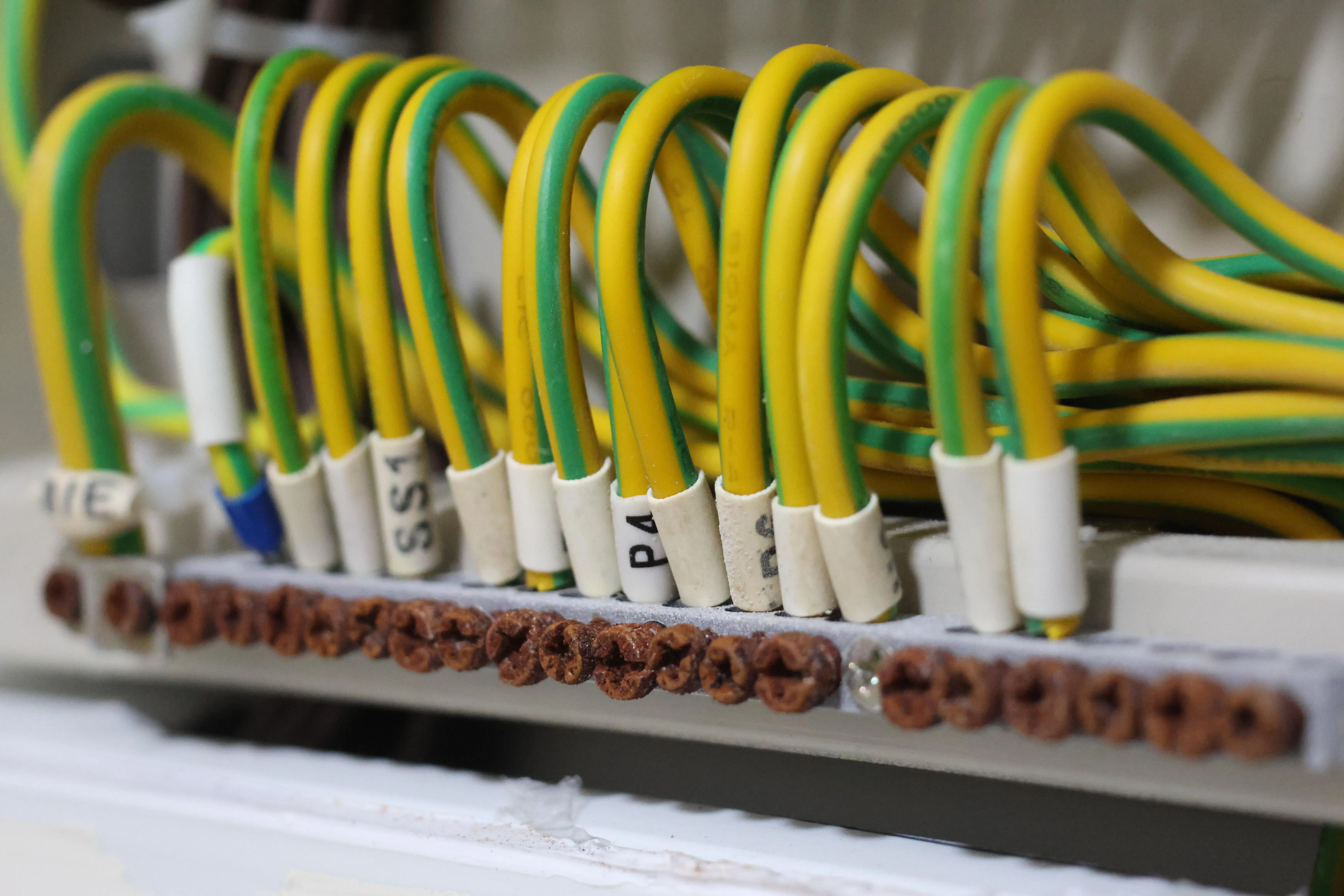
Visits to other flats in the block found that almost none of the residents had ever checked behind their distribution board’s casing. After learning of the problem, a number removed the casing and discovered that their screws were also rusty.
Madam Liu, a 33-year-old manufacturing worker who lives on the 12th floor, said she had never touched the distribution board since moving into her flat more than a year ago. She learnt that hers had a similar problem only after a neighbour came to ask about it and removed the casing.
Although the corrosion in Madam Liu’s distribution board was less severe, she was glad it had been discovered early, as it might otherwise have posed an electrical safety risk.
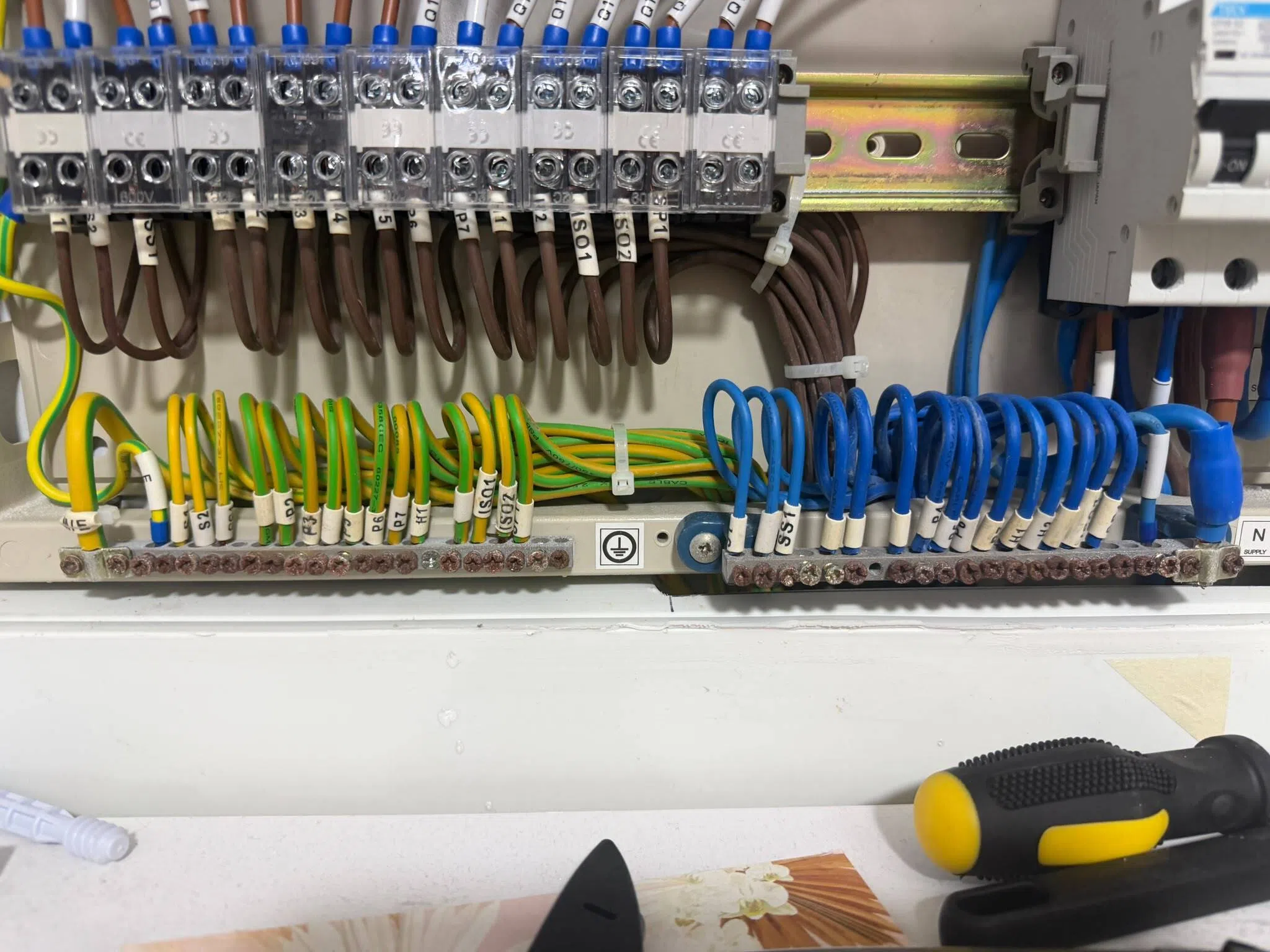
Hussin, a 38-year-old civil servant living on the 11th floor, removed his distribution board’s casing to check it during the reporter’s visit and found that almost all the screws inside were rusty. He had lived in the flat for about three years and had never experienced a power trip at home.
With young children at home, Hussin was concerned about whether the rusty screws could cause a fire or other problems. “If an electrical fault occurs while I am out, the consequences could be unthinkable. I will get someone to inspect and deal with it as soon as possible.”
Mr Luo, a 37-year-old operations executive living on the fourth floor, did not have the right tools at home to remove the distribution board’s casing for an inspection. But he said the power had tripped twice in the past three months. After hearing about his neighbours’ experiences, he also planned to arrange an inspection.
He said it was difficult to tell at this stage whether the rusty screws were linked to the quality of the components. He felt the area was quite humid and did not rule out damp conditions as a contributing factor.
Why are rusty screws dangerous?
Electrician Yang Xiong, who has 14 years of experience, said damp conditions inside distribution boards were not uncommon. However, severe corrosion of screws within just three years was unusual and something he rarely encountered in repair work.
Yang said homeowners should also check, provided it was safe to do so, whether the screws were loose and whether there was corrosion where the screws made contact with the wires.
He said severe corrosion could increase contact resistance, causing wires to overheat or become damaged, and could even pose a fire risk. For minor corrosion, homeowners could engage a professional to remove the rust. In more serious cases, he recommended replacing the screws and, if necessary, the neutral and earth bars as well.
He added that Singapore’s climate was humid and, in coastal areas, salt in the air could also accelerate metal corrosion. “Homeowners can also consider placing desiccants inside the distribution board to reduce moisture in the air.”
Another electrician, Mr Xu, who has more than three years of experience, agreed with Yang that such obvious corrosion within three years was highly unusual. “Unless the screws have been submerged in water, a flat built just three years ago should not have this problem.”
He said poor contact between screws and wires could affect the flow of current, causing wires to overheat and potentially leading to more frequent circuit breaker trips. Although the likelihood of a fire was low, he also recommended replacing rusty screws as a safety precaution.
HDB arranges replacement and tests to establish cause of rust
In response to Lianhe Zaobao’s queries, the Housing and Development Board (HDB) said it had received a report from a resident of the block about rusty screws in the distribution board at home. It had received no other similar reports and was investigating the cause of the rust.
HDB said contract specifications for all Build-To-Order projects required corrosion-resistant screws to be used in distribution boards. Contractors must rectify any defects identified during HDB’s final inspections before the flats are handed over.
When HDB inspected the flats at Plantation Acres in 2023, it found no signs of rusty screws in the distribution boards of any units.
Following the resident’s feedback, HDB arranged for the contractor to replace the screws in the distribution board. It will collect the original screws for further testing to establish the cause of the rust. “We have also explained to the resident that the rusty screws do not pose an electrical safety risk and will not cause the circuit breaker to trip.”
