

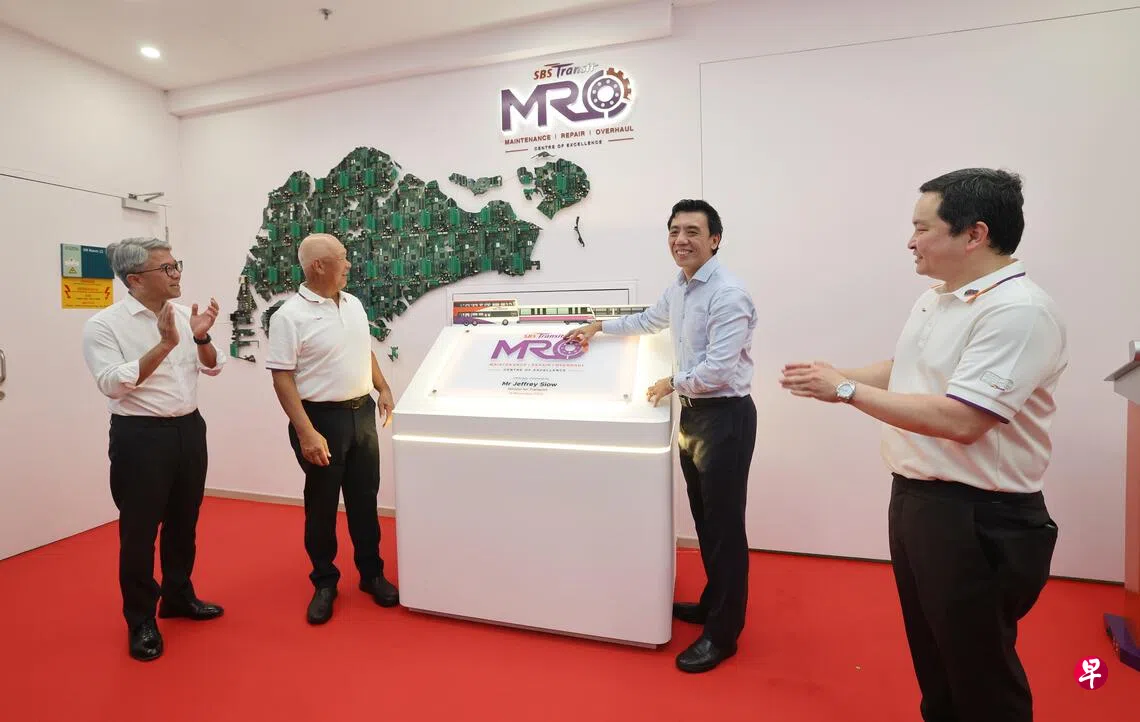
When critical MRT components fail, they generally have to be sent overseas for repairs, which can take up to six months. Public transport operator SBS Transit is investing more than S$8 million to integrate and upgrade maintenance facilities and technology across its eight rail and bus depots. By bringing some specialised repairs to Singapore, it hopes to cut turnaround times for the components concerned from six months to just days.
Minister for Transport and Second Minister for Finance Jeffrey Siow launched SBS Transit’s Maintenance, Repair and Overhaul Hub (MRO Hub) at Sengkang Depot on Wednesday (18 November). Rather than occupying a single site, the new hub brings together maintenance facilities across SBS Transit’s eight rail and bus depots, including Sengkang Depot.
Speaking at the launch, SBS Transit Group CEO Jeffrey Sim said the company was committing more than S$8 million to equipment, technology and training. It is starting with 12 local and overseas partners and aims to double that number within two years.
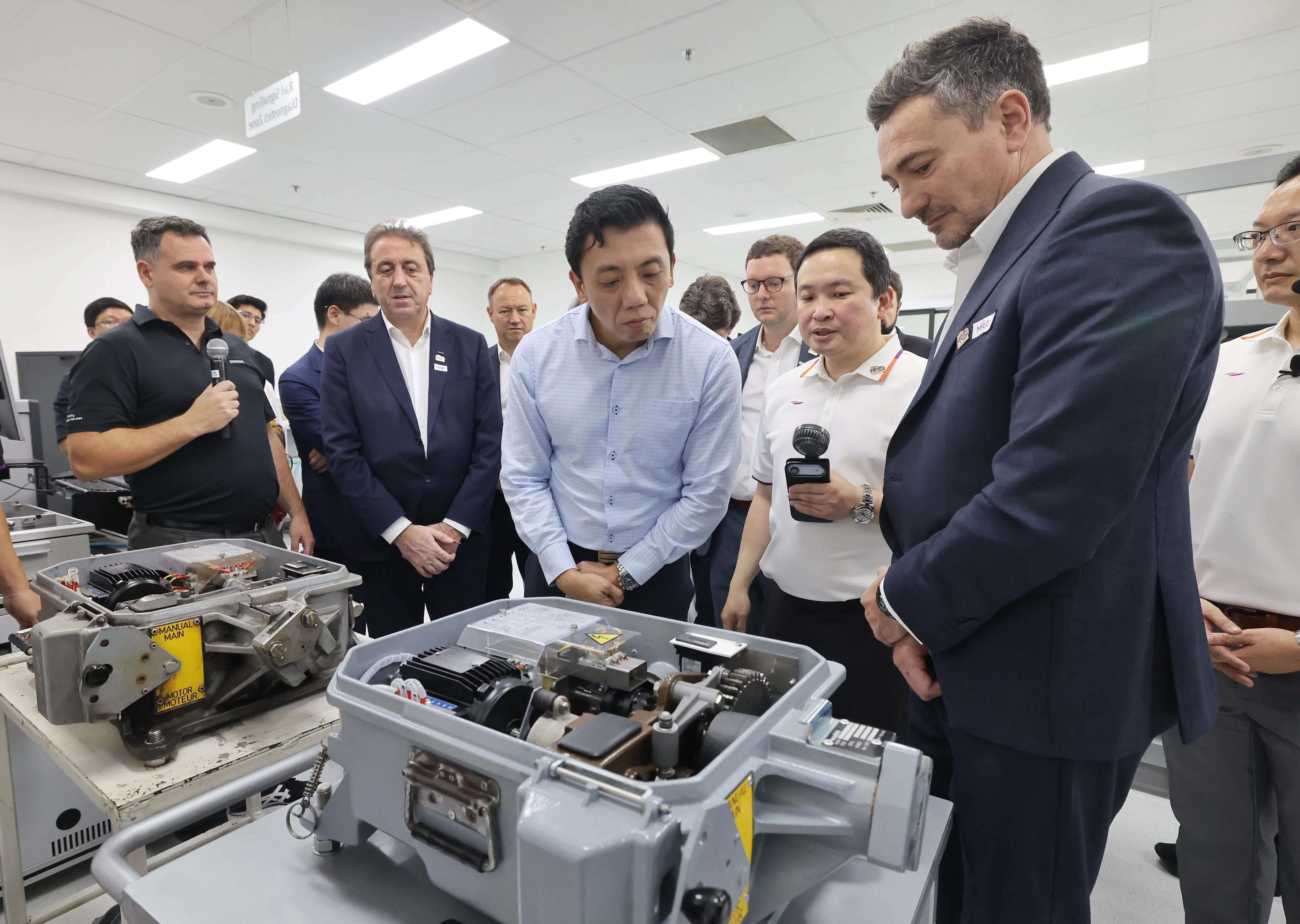
One key collaboration is the establishment of Southeast Asia’s first service centre for point machines, in partnership with Germany’s Siemens Mobility and rail technology company Vossloh.
Point machines are critical components of the railway system. They move sections of track at a junction to switch a train from one track to another. Previously, when these machines broke down, they might have to be sent overseas to their original equipment manufacturers for repairs. The process, from shipping and fault diagnosis to repair and return to Singapore, took an average of six months.
Siemens Mobility’s Singapore head Michel Obadia said in an interview that point machines could be overhauled locally within two weeks. This would significantly reduce turnaround times and costs, while avoiding repair delays caused by disruptions to international shipping during unforeseen events such as pandemics. It would also help develop local technical specialists and strengthen the operational resilience of the MRT system.
Brake control system repair time cut from three months to two weeks
Another key initiative is the introduction of a CubeControl service centre by German rail braking systems supplier Knorr-Bremse. It provides local fault diagnosis, maintenance and repairs for critical train brake control systems, and is also the first facility of its kind in Southeast Asia.
Sim said: “Brake control units previously took up to three months to repair overseas. They can now be serviced locally in about two weeks.”
Both the point machine service centre and the CubeControl service centre are housed at Sengkang Depot, which serves the North East Line.
AI bus monitoring prevents more than 500 breakdowns this year
Besides strengthening its maintenance capabilities, SBS Transit is expanding its use of artificial intelligence (AI) and equipment condition monitoring technology to detect potential problems early and take preventive action before faults occur.
Sim said AI-powered condition monitoring now covered the group’s entire internal combustion engine bus fleet and had helped the company prevent more than 500 bus breakdowns this year alone. SBS Transit is exploring extending the technology to electric buses.
For its rail operations, SBS Transit is also combining its operating and maintenance experience with its partners’ technological expertise to strengthen equipment condition monitoring. This will help it develop predictive maintenance solutions that anticipate potential faults and prevent train delays.
The latest mean kilometres between failure figures for the North East Line and Downtown Line, both operated by SBS Transit, remain above four million kilometres. This means trains travel an average of more than four million kilometres before a service delay exceeding five minutes occurs. The North East Line has recorded no such delays so far this year.
Advanced maintenance skills offer staff better career and pay prospects
The new Maintenance, Repair and Overhaul Hub will also serve as a Centre of Excellence, bringing together industry partners including Chinese electric vehicle maker BYD and US rail technology company Wabtec. It will promote technology transfer and training to strengthen engineering and maintenance capabilities in Singapore’s public transport sector.
SBS Transit currently operates BYD electric buses. James Ng, Managing Director of BYD Singapore, said in an interview that BYD would train SBS Transit’s MRO team in electric bus maintenance and repair.
Previously, BYD was responsible for most warranty servicing and more complex repairs on the electric buses. Going forward, this work will gradually be handed over to SBS Transit’s maintenance team. This will help shorten repair times, improve efficiency and keep the electric buses in good operating condition.
Sim said the new hub would reduce reliance on overseas servicing and give local engineers and technicians opportunities, through training and technology transfer, to acquire more complex maintenance skills. This would help them progress into more specialised roles with greater responsibilities, better career prospects and higher pay.
