

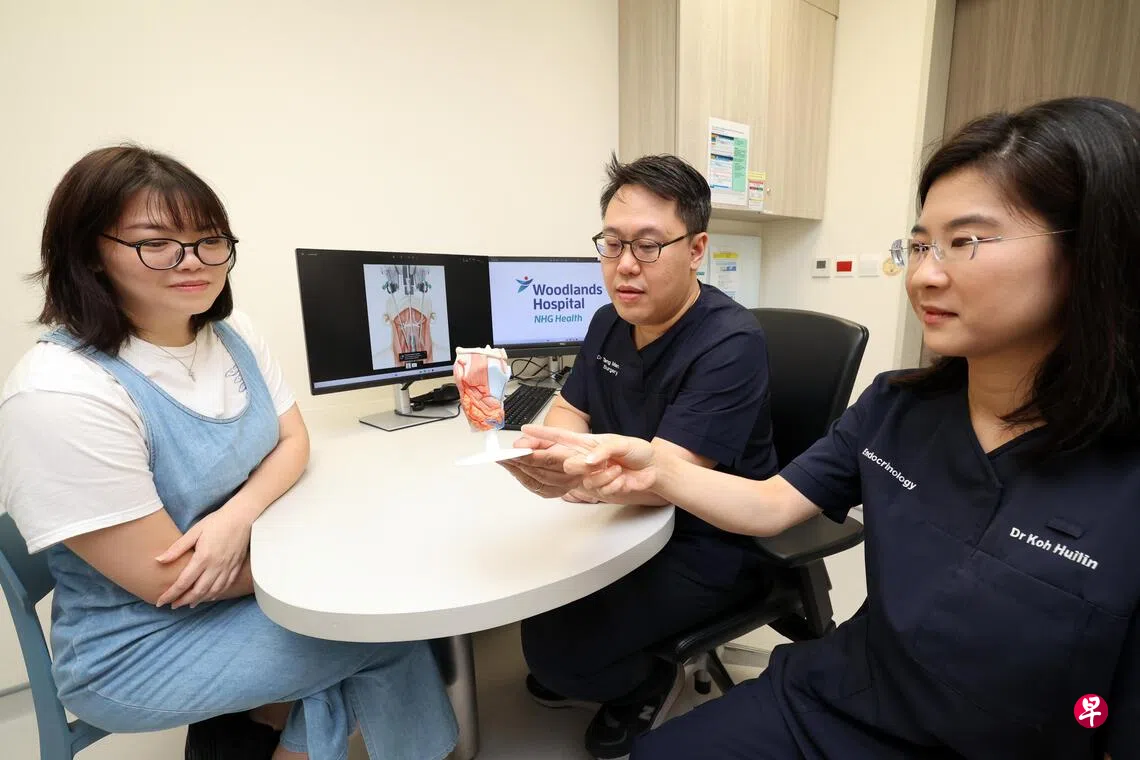
Two endocrine disorders struck Cleo in quick succession, leaving her battling metabolic problems through her teenage years. After years of distress, she underwent scarless thyroid surgery, removing the biggest obstacle to improving her metabolic health.
Now 27, Cleo, who works in social services, said she sought medical help for persistently irregular periods about 10 years ago. She was subsequently diagnosed with polyendocrine metabolic ovarian syndrome and Graves’ disease. These conditions affected not only her metabolism and thyroid function, but also gradually took a toll on her active lifestyle.
The two endocrine disorders struck almost simultaneously, completely disrupting her daily routine and plans. An avid rock climber and water sports enthusiast, she suddenly found her stamina greatly diminished and suffered from palpitations, trembling hands and all-over fatigue.
Polyendocrine metabolic ovarian syndrome was previously known as polycystic ovary syndrome (PCOS). It is a common hormonal disorder whose typical symptoms include irregular periods, often accompanied by metabolic problems such as insulin resistance, abnormal blood sugar levels and weight gain.
The global medical community recently renamed the condition polyendocrine metabolic ovarian syndrome to reflect that it is not simply a gynaecological condition, but a multisystem disorder affecting endocrine and metabolic health throughout the body.
Graves’ disease, meanwhile, is an immune system disorder in which the body’s own antibodies attack the thyroid, causing it to produce excessive thyroid hormones. This may lead to hyperthyroidism, or an overactive thyroid.
Dr Koh Huilin, Endocrinologist and consultant at Woodlands Hospital, said that although the two conditions have no direct pathological link, they can complicate each other. The combined effects of problems such as insulin resistance and thyroid dysfunction not only make metabolic health and weight management more challenging, but can also place a heavy psychological burden on patients as their repeated efforts meet with setbacks.
Scarless surgery leaves no neck scar but demands exceptional precision
After several years of medication and radioactive iodine treatment, Cleo’s Graves’ disease remained unstable. This year, she decided to have her thyroid removed.
“I was quite keen to get my thyroid removed because I think it gave me a lot of instability with my thyroid level, and I think it was quite destabilizing for me”
For many patients, particularly younger people, one potentially difficult aspect of conventional thyroid removal surgery is the prominent scar it leaves on the front of the neck. Scarless thyroid surgery performed through the mouth therefore became Cleo’s preferred option.
Her treating doctor, Dr Tang Man Hon, Department of Surgery , Consultant General and Endocrine Surgeon at Woodlands Hospital, said the technique was introduced in Singapore about 10 years ago. However, because it requires exceptional precision, only about five doctors in local public hospitals currently perform it regularly.
Scarless thyroid surgery is performed through the inside of the patient’s lower lip. The surgeon makes tiny incisions there to insert an endoscope, advancing it down into the neck to remove part or all of the thyroid.
Dr Tang said: “This operation is technically very demanding. The most difficult part is avoiding damage to tiny but vital structures near the thyroid, such as the nerves that control the vocal cords.”
The operation is lengthy, typically taking twice as long as conventional surgery. It is generally suitable only for patients with smaller thyroid nodules measuring less than 4cm.
Dr Tang said he performed more than 100 such operations a year while training in South Korea, compared with only about five a year in Singapore. This was mainly because South Korea has a larger population and its patients generally have smaller thyroid glands.
He said scarless surgery offers clear advantages. Besides a shorter recovery period, the incisions hidden inside the lower lip avoid visible post-operative scarring problems such as keloids and pigmentation, to which Asians are particularly prone.
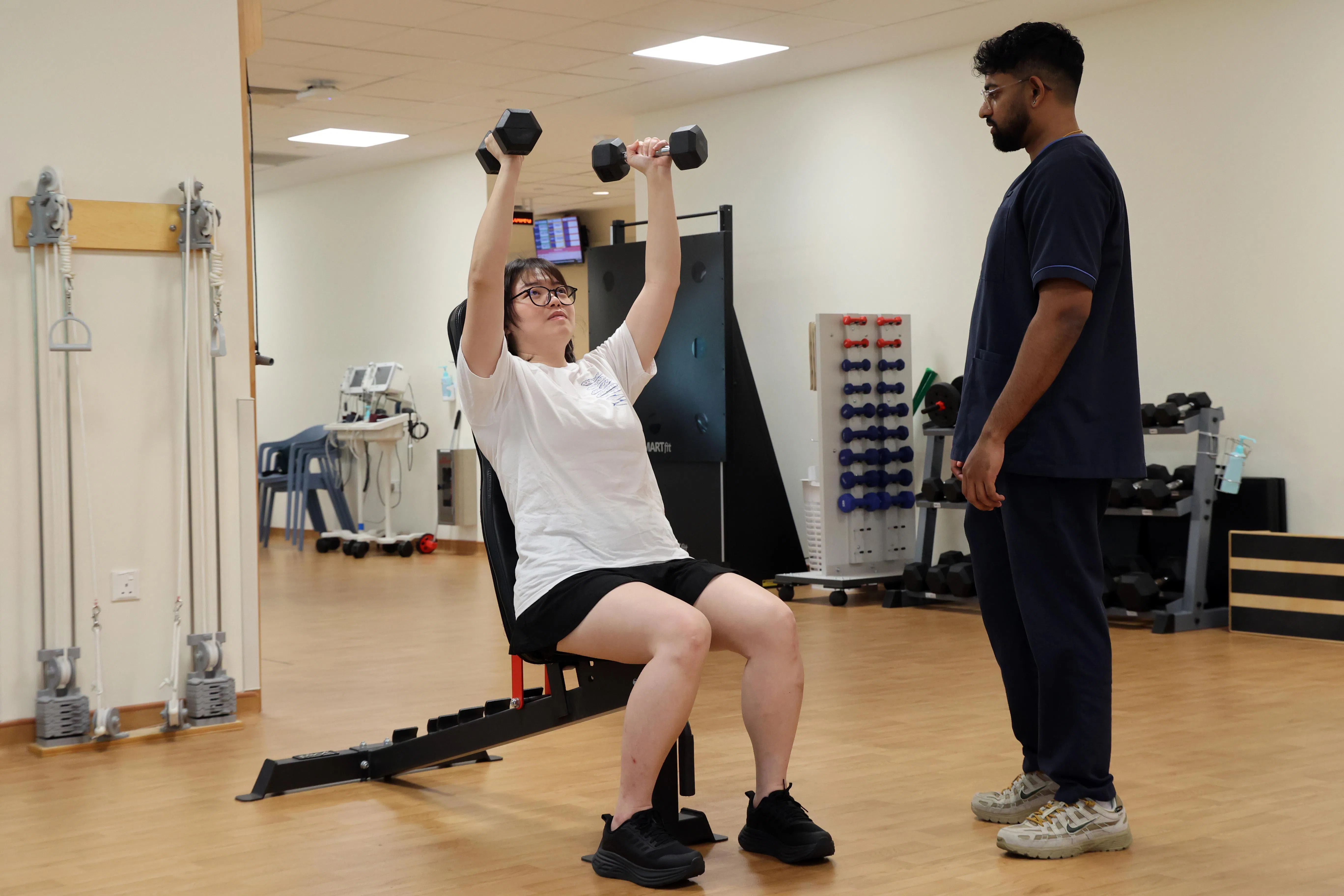
Cleo, for example, was discharged after just one day in hospital following surgery, with almost no visible signs of the operation. Recalling her choice of procedure, she said: “I chose this almost without a second thought.”
Thyroid problems are very common in Singapore. To better support patients, the Ministry of Health has announced that hyperthyroidism and hypothyroidism, or an underactive thyroid, will be included in the Chronic Disease Management Programme from January next year. The move is expected to benefit more than 53,000 patients.
