

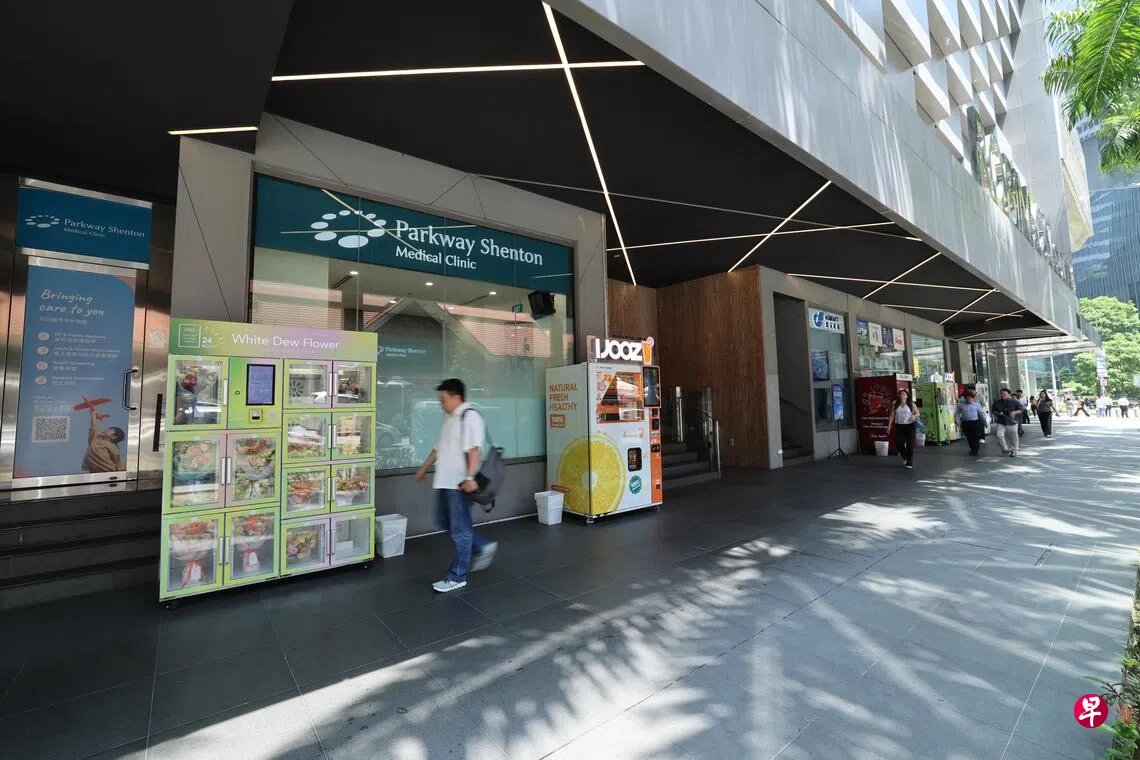
The management corporation of a condominium in the Central Business District installed vending machines in a common corridor outside its ground-floor shops to generate income for the building. The shops’ owner said the machines blocked the shopfront windows, affecting business and natural light, with one shop tenant even seeking a rent reduction. The owner applied to the Strata Titles Boards to have the vending machines and any rubbish bins removed, but its application was dismissed and the owner was ordered to pay $10,000 in legal costs and disbursements.
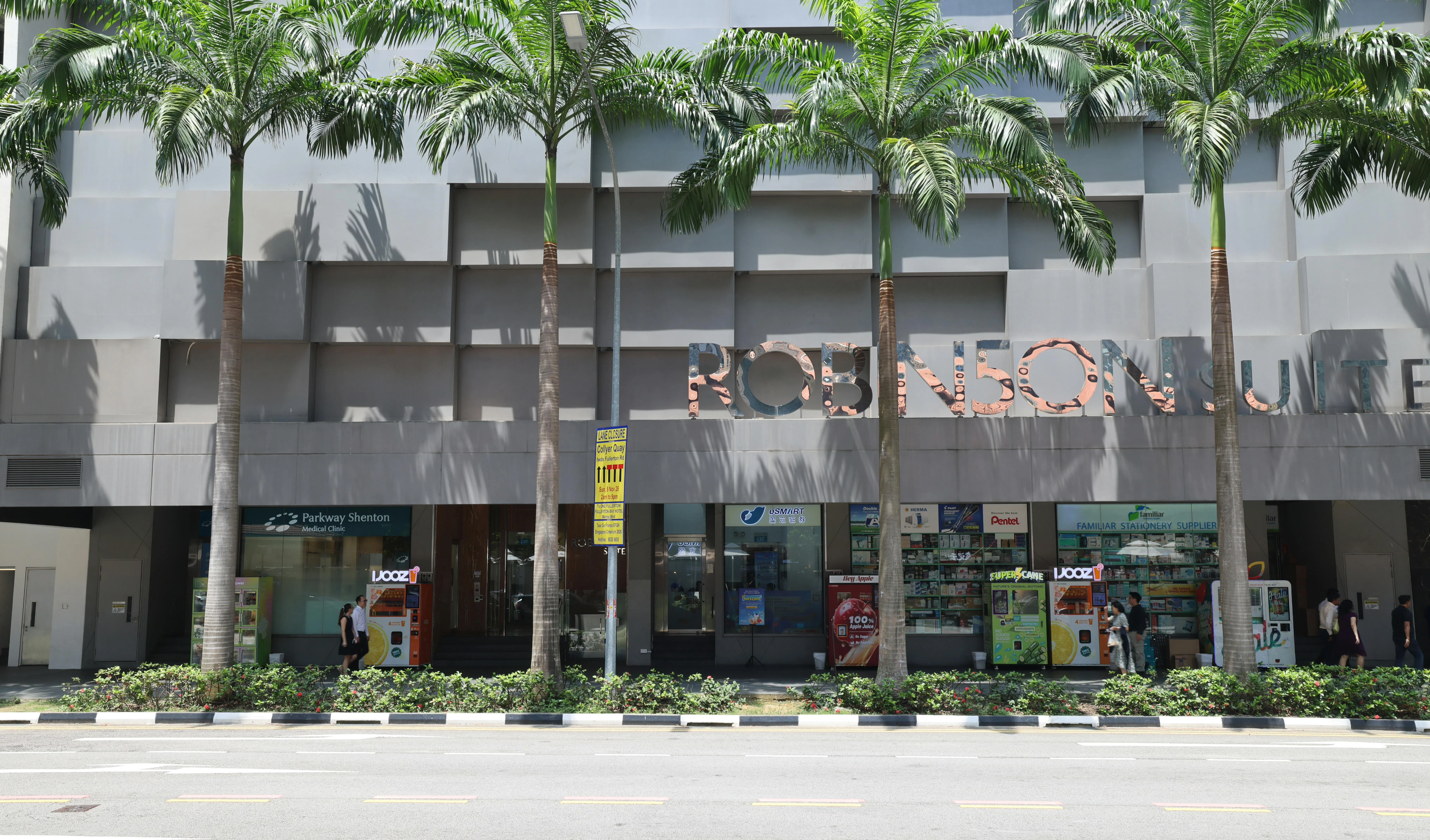
Robinson Suites at 50 Robinson Road has 170 strata units, 167 of which are residential units, while the three commercial units are all owned by the applicant, Boon Trading Pte Ltd. The respondent in the case was the condominium’s management corporation.
All three shops face Robinson Road and have floor-to-ceiling glass windows. They are leased to a stationery shop, a stockbroking firm and a clinic respectively. The covered corridor outside the shops is part of the building’s common property.
Shop owner objects to machines blocking views and light, ‘unsightly’ bins
The dispute arose from the management corporation’s leasing of common property to generate income. A special resolution passed at the annual general meeting in April 2023 authorised it to lease all or part of the common property for terms of one to three years. Between May 2025 and May 2026, it installed eight vending machines in stages along the corridor, with rubbish bins beside them.
The applicant said the machines blocked pedestrians’ eye-level views through the shopfront windows and made the interiors darker, while the rubbish bins were unsightly. In April 2026, it applied to the Strata Titles Boards to have the 2023 leasing resolution declared invalid. It also sought mandatory orders to remove the vending machines and bins, and to prohibit the management corporation from placing objects that would obstruct the shopfront windows in the corridor in future.
After the dispute arose, the management corporation convened another extraordinary general meeting in August 2026. It passed a further special resolution explicitly incorporating a leasing layout plan and specific lease terms. On 11 September that year, it removed two vending machines and repositioned the rest.
According to calculations by the respondent’s architect, 80.5% of the glass frontage of each of two shops was now unobstructed, up from between 58.7% and 69.1% previously. The third shop’s windows were completely unobstructed. The applicant did not dispute these figures.
The board rejected the applicant’s bid to overturn the special resolution passed at the 2023 general meeting.
The applicant’s director, Koe Kyin Hoon, questioned the resolution on the grounds that it did not specify the areas to be leased. Koe also said the corridor was an area that the Urban Redevelopment Authority (URA) required to be kept clear, and that the management corporation had not obtained regulatory approval.
The board found that the resolution had clearly authorised the management corporation to lease all or part of the common property. Before installing the vending machines, the management corporation had also notified Koe and given the applicant’s tenants an opportunity to rent the space.
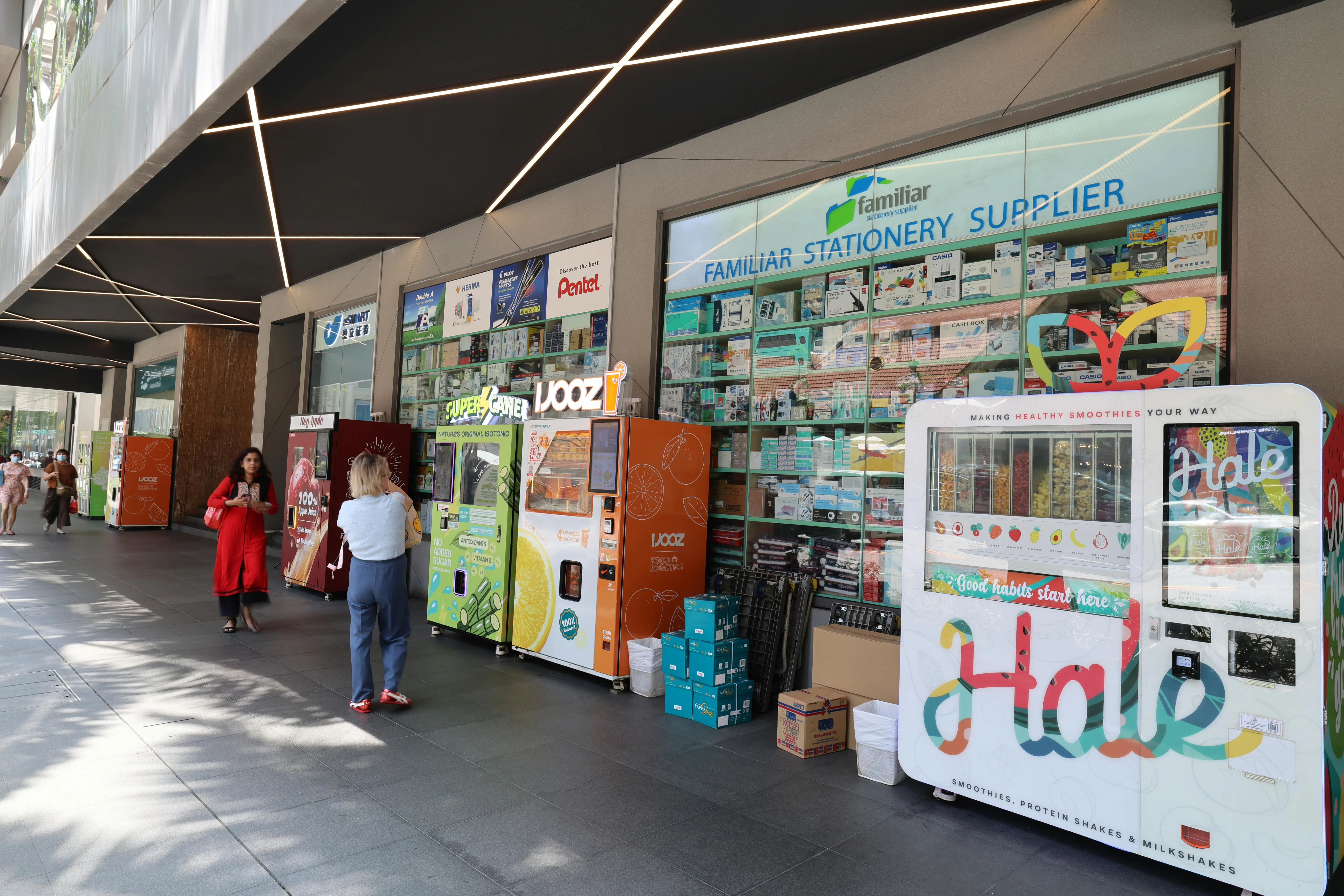
The board found that all parties knew the management corporation was installing vending machines outside the applicant’s shops. The resolution had clearly authorised the management corporation to grant others exclusive use of all or part of the common property. Documents and photographs also showed that the machines did not substantially obstruct the shopfront windows, and members of the public could still see into the shops through the glass.
On whether the arrangement breached URA rules, the board said that even if the lack of approval meant the vending machines might have to be removed, the applicant should take its complaint to URA. This did not affect the validity of the 2023 resolution.
Board lacks power to grant injunctions, sees nothing wrong with management corporation generating income
On the applicant’s requests to compel the removal of the vending machines and bins, and to prohibit the management corporation from placing obstructions in future, the board made clear that the Building (Strata Management) Act did not give it the power to grant injunctions. That alone was sufficient to dismiss both requests.
The board added that even if it had the power to grant injunctions, the applicant had not established sufficient grounds for one.
The applicant argued that the shops enjoyed a statutory easement of light, but the board found that it had not proved that this right had been affected.
Responding to the applicant’s argument that the management corporation should not make money as a non-profit body, the board said that while making a profit was not its primary role, there was nothing wrong with generating income for all owners in the course of managing the property.
The board ultimately dismissed all three of the applicant’s requests and ordered it to pay the management corporation $8,000 in legal costs and $2,000 in disbursements.
