

Singapore Airlines (SIA) is investing more than S$2 billion to overhaul all cabin classes on its long-haul aircraft. The new cabins will enter service progressively from the second half of next year, offering passengers a more comfortable and personalised flying experience. This is SIA’s first long-haul cabin upgrade in nine years.
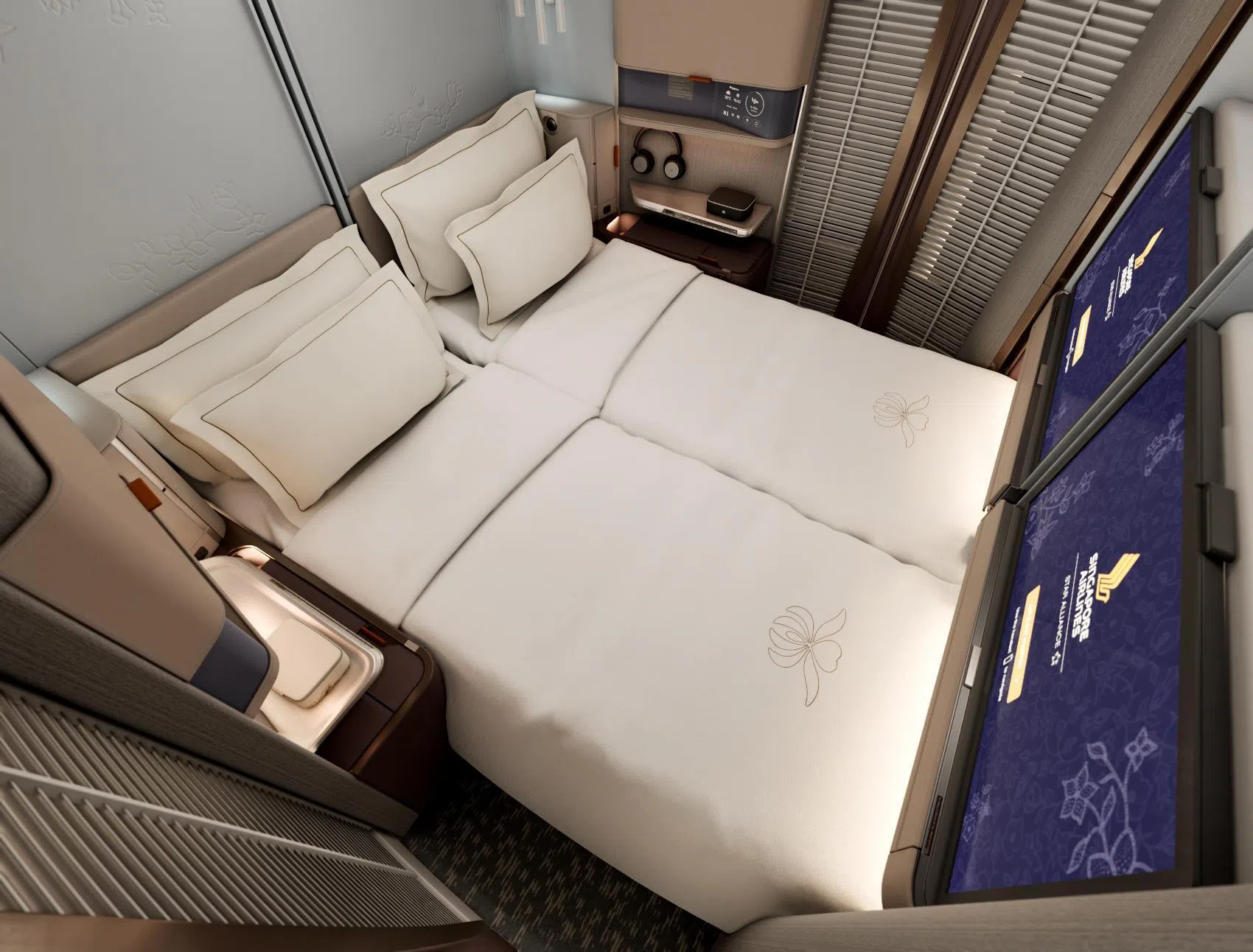
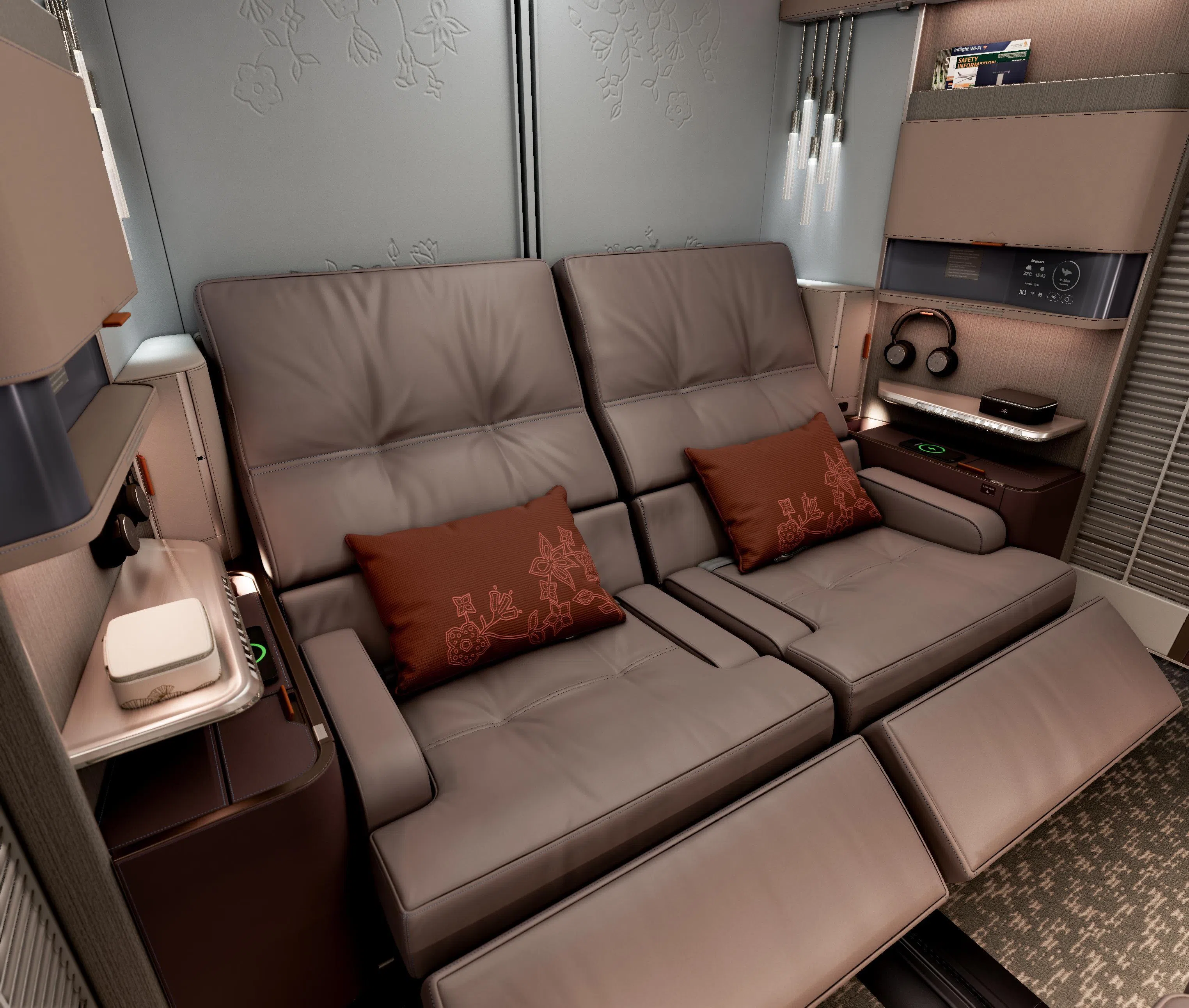
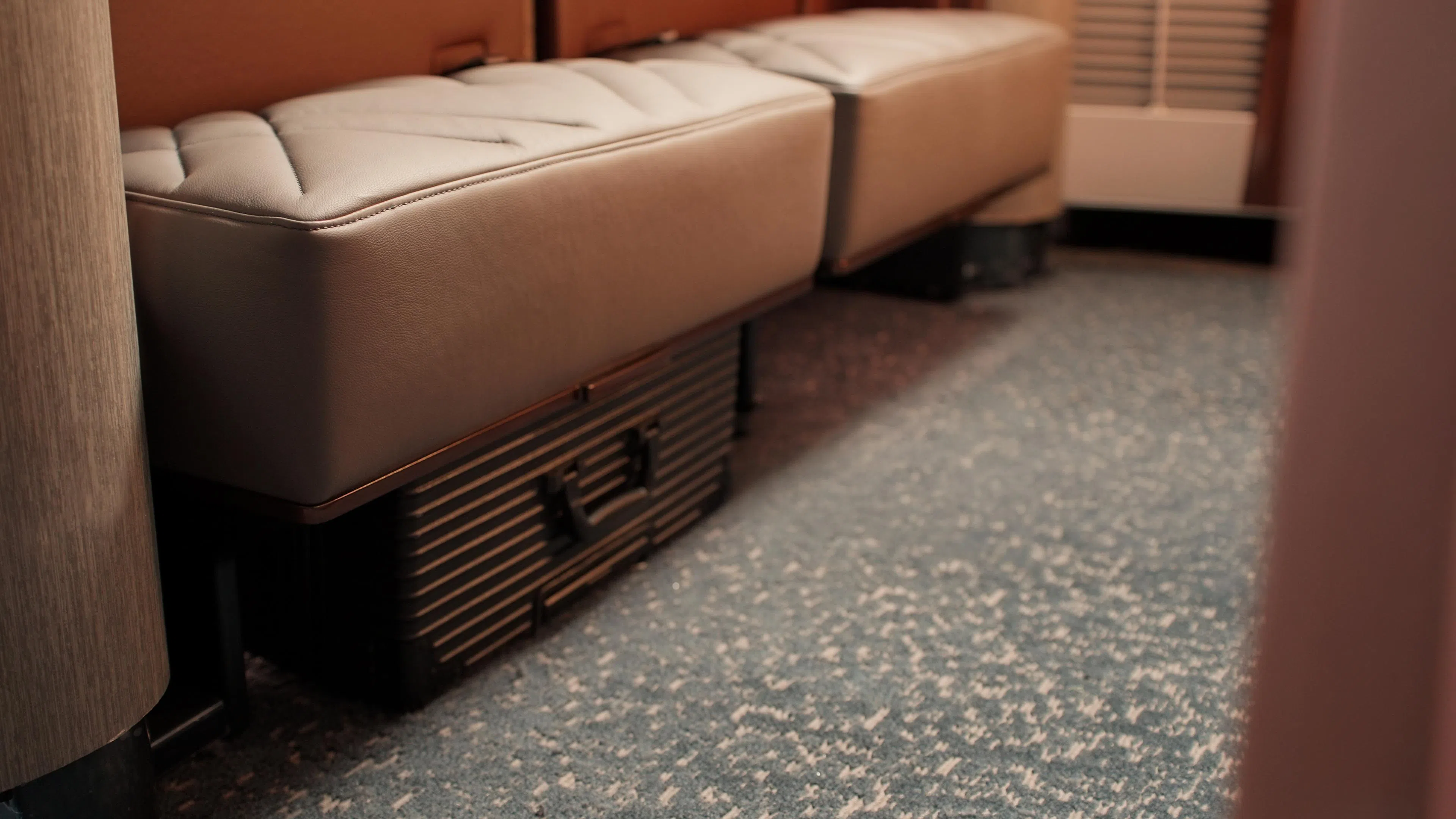
Business class will feature privacy doors for the first time, while the two centre seats in first class can be combined to form a double bed or sofa.
SIA unveiled its new long-haul cabins on Friday (6 November), covering economy, premium economy, business and first class. Minister for Transport and Second Minister for Finance Jeffrey Siow attended the launch as an invited guest.
The new cabins will be installed on 31 next-generation Boeing 777-9 aircraft, as well as 34 refurbished Airbus A350-900 long-range aircraft and seven ultra-long-range (ULR) aircraft.
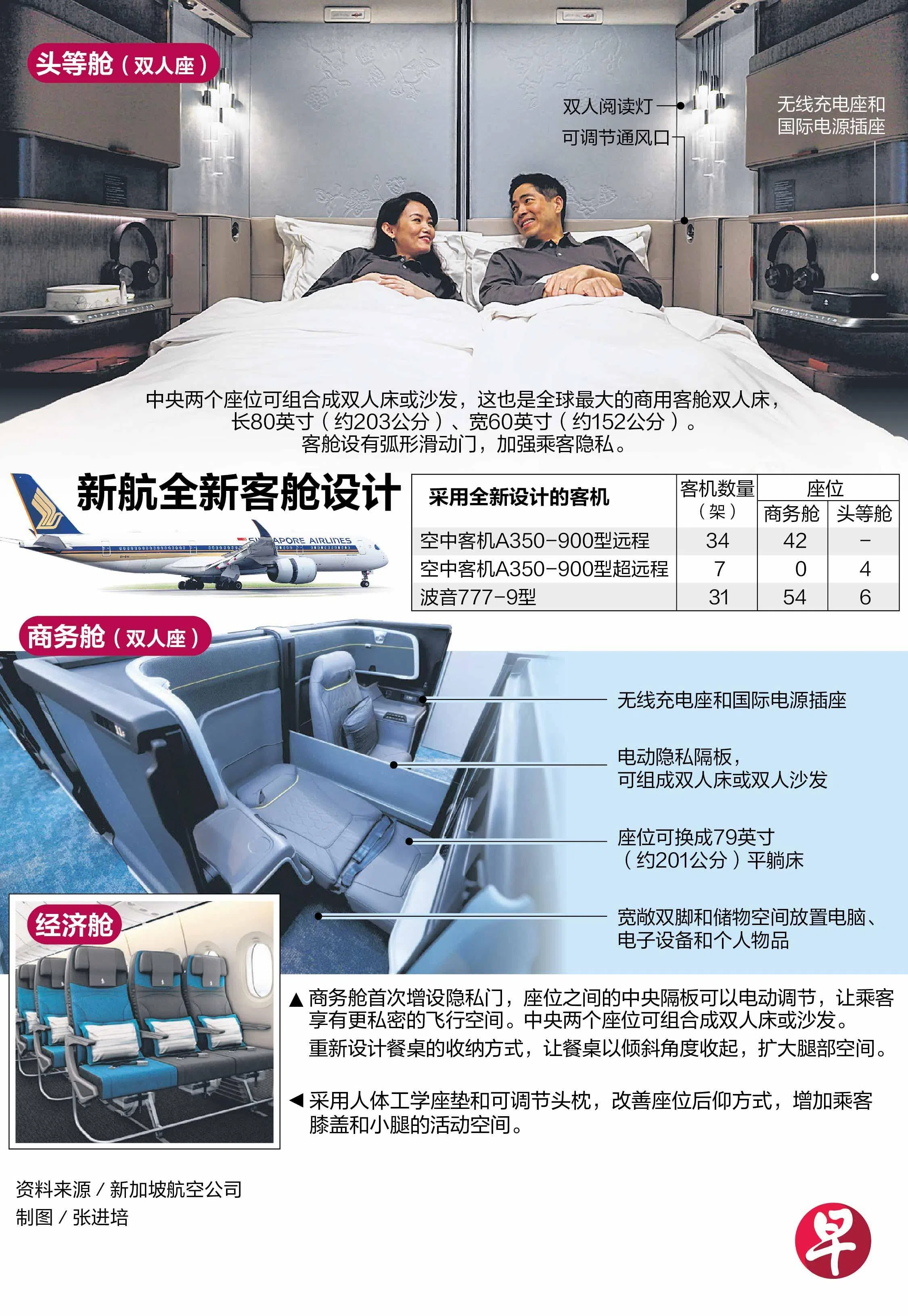
The Boeing 777-9 wide-body aircraft will feature entirely new cabin designs and amenities. Each aircraft will have six first-class seats, 54 business-class seats, 36 premium economy seats and 204 economy seats.
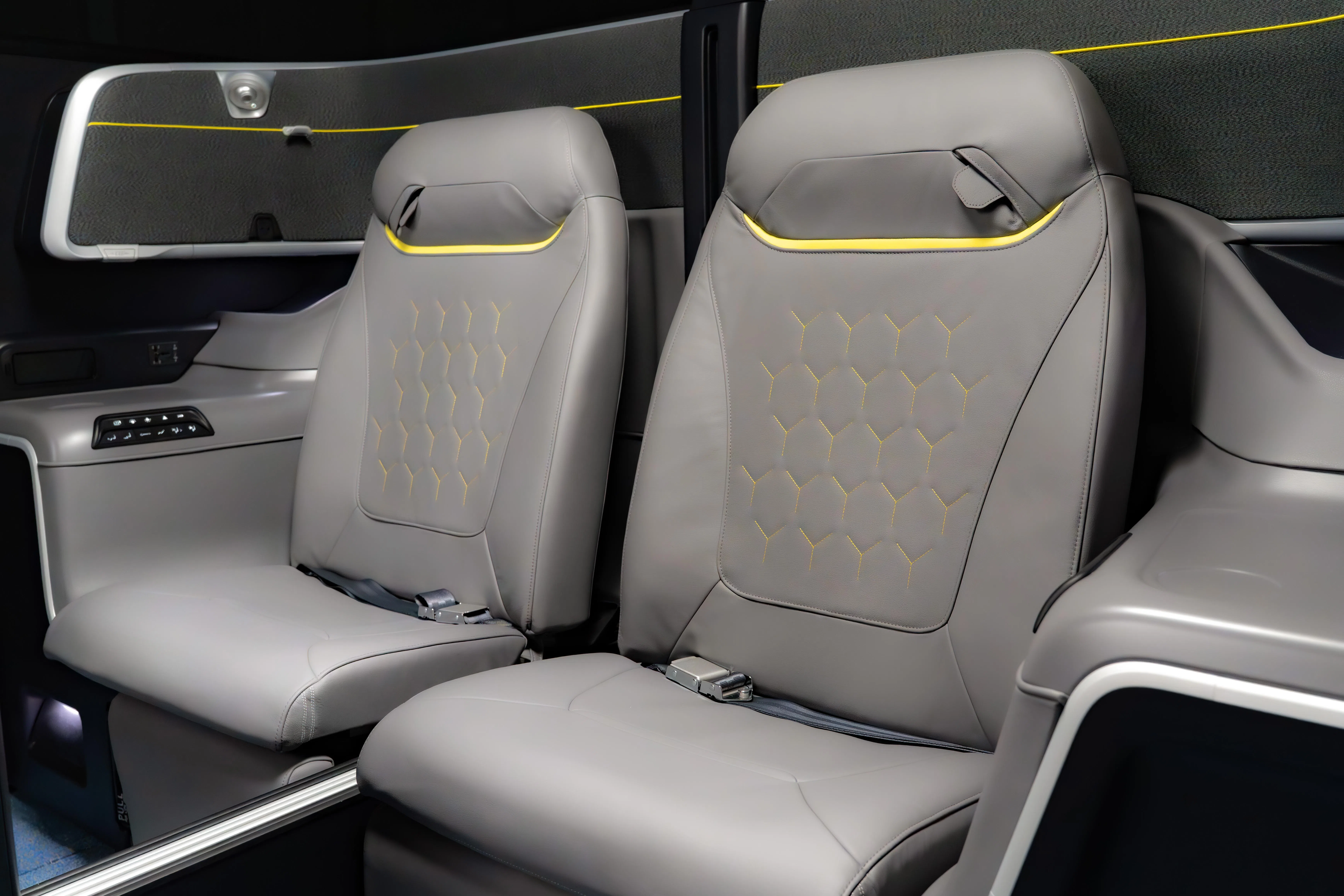
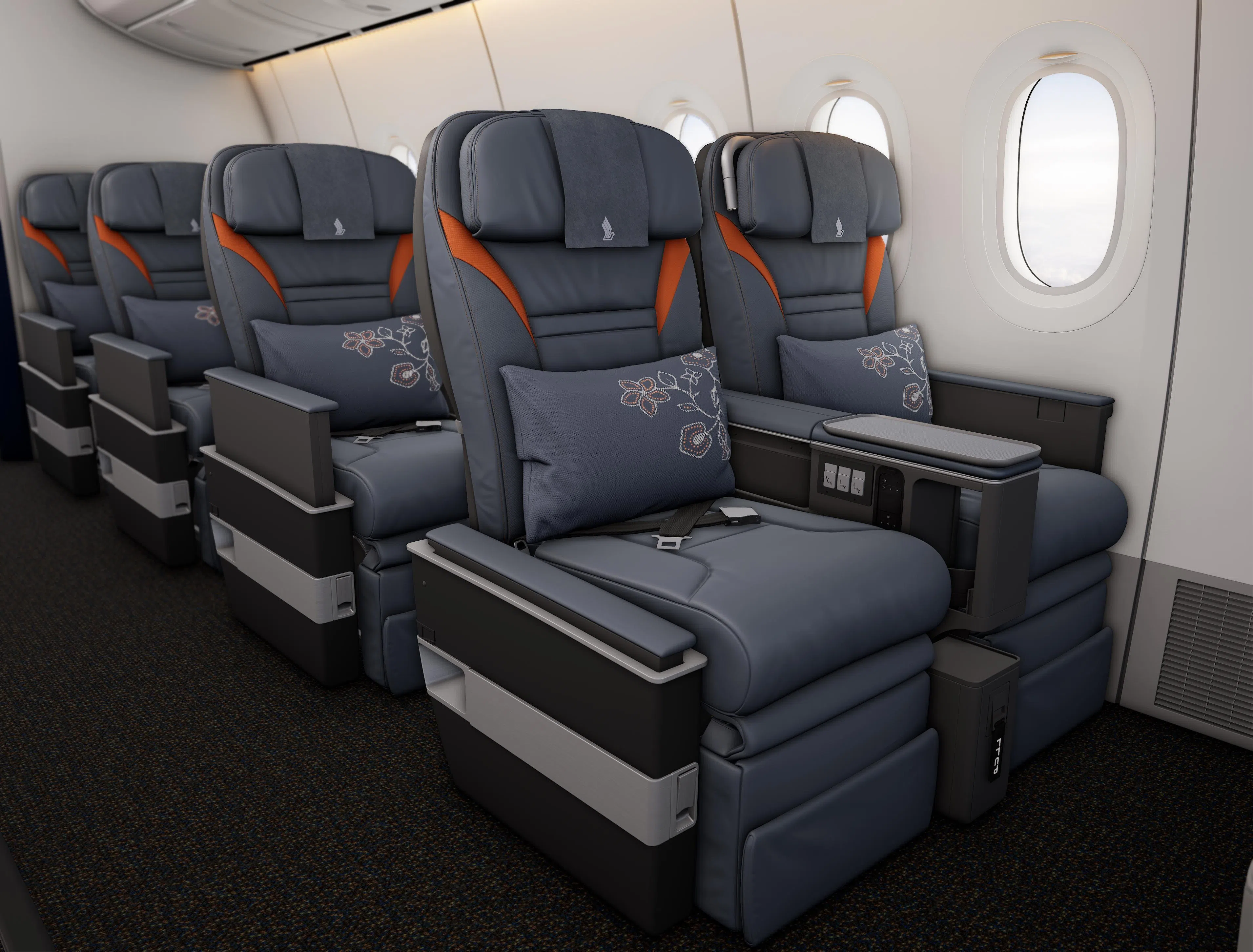
Premium economy will offer passengers more space, with seat pitch increased to 40 inches (102cm), adjustable headrests, leg rests and footrests. There will also be personal storage for tablets or water bottles, adjustable individual reading lights and holders for electronic devices.
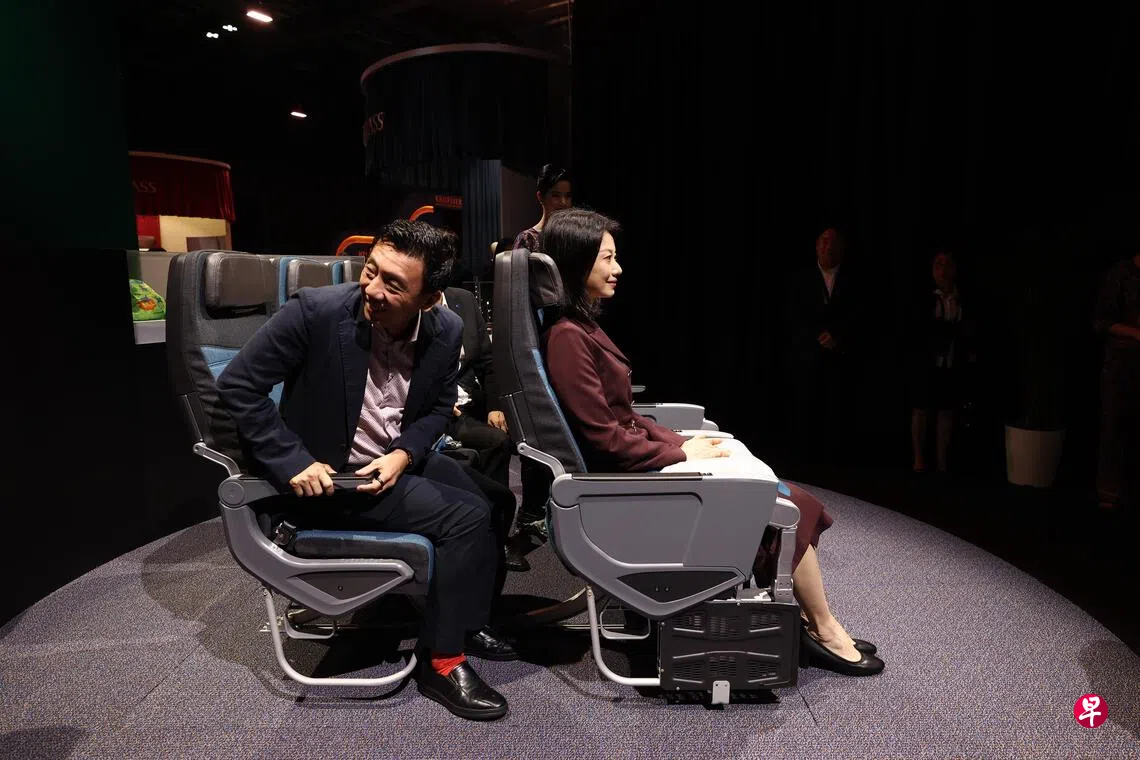
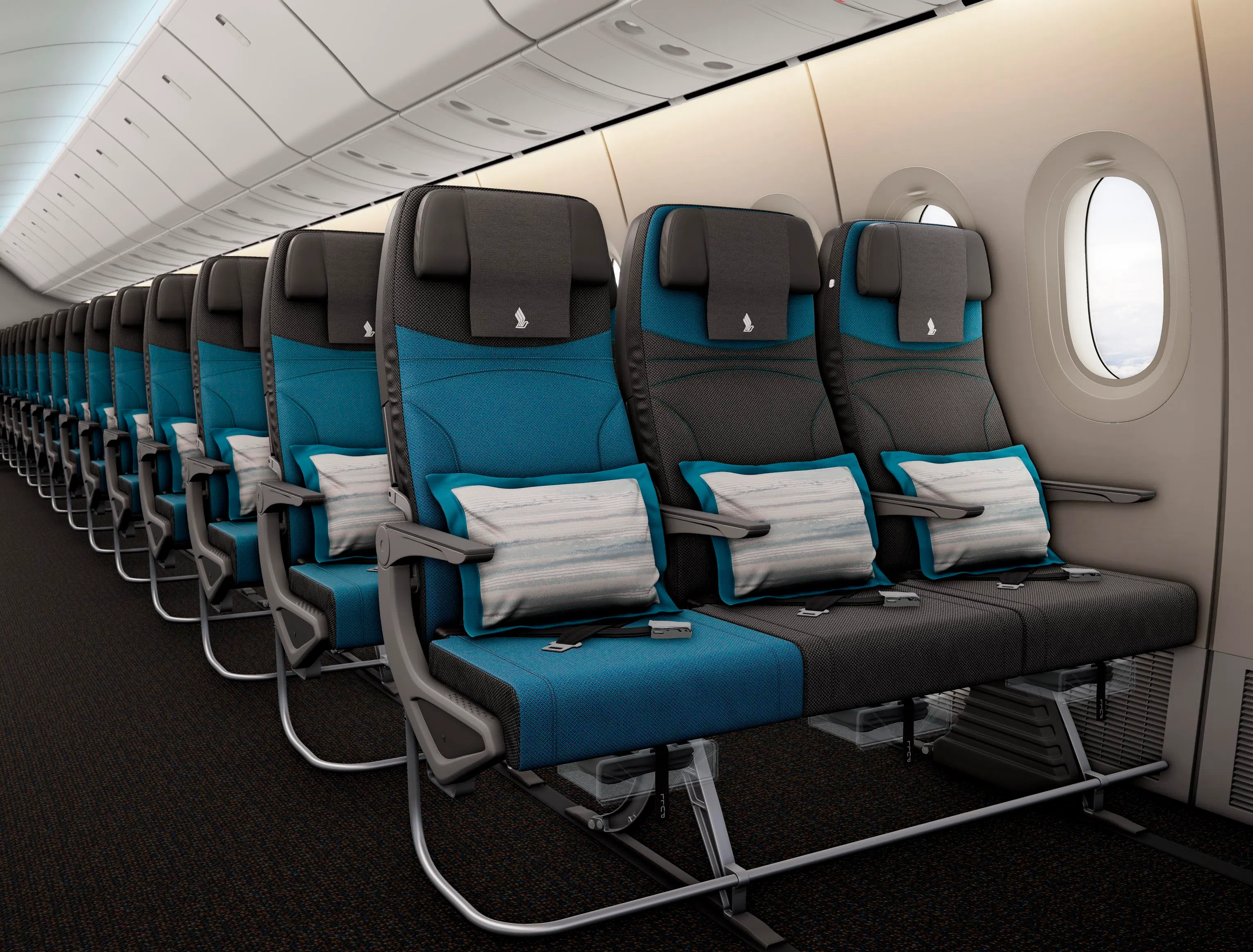
Economy seats will feature ergonomic cushions and adjustable headrests, with an improved reclining mechanism to give passengers more knee and legroom.
Refurbished A350-900 ultra-long-range aircraft to get first class
The refurbished A350-900 ultra-long-range aircraft will feature first class for the first time to attract premium travellers. Each will have four first-class seats and 70 upgraded business-class seats. The long-range aircraft will have 42 upgraded business-class seats each. Economy and premium economy seat designs on both variants will remain unchanged.
SIA has yet to announce the routes these aircraft will serve.
SIA began developing the new cabins in 2018, gathering feedback from more than 5,000 frequent flyers, employees and industry experts worldwide to understand passengers’ needs for privacy, comfort, flexibility and onboard amenities.
The cabin upgrade programme was delayed by factors including COVID-19, geopolitical developments and supply chain disruptions. The cabins were originally due to debut on the Boeing 777-9, but delivery delays in the Boeing 777X programme led SIA to extend the new designs to its A350-900 long-range and ultra-long-range aircraft.
Lee Lik Hsin, chief commercial officer of SIA, said in an interview that the cabin upgrade programme has been years in the making: “We are introducing these new seats on the next-generation Boeing 777-9, one of the backbones of our long-haul fleet, and retrofitting them on the A350-900 long-haul and ultra-long-range aircraft, the other backbone of our long-haul fleet. In other words, a large majority of our long-haul fleet will be getting this new product, and so in that respect, it is far more comprehensive than some of the previous upgrade programmes that we have done.”
Cabin upgrade does not mean higher fares
Asked whether the investment of more than S$2 billion in cabin upgrades would mean higher ticket prices, Lee said there was no direct link between the two. Fares are determined by market supply and demand, rather than aircraft type.
Asked why the A350-900’s economy and premium economy cabins had not been redesigned, and why changes were less extensive than in first and business class, Lee emphasised: “This does not mean SIA is not investing in economy class. We need to assess and consider whether to introduce new features in economy and premium economy in future, such as different types of USB charging ports. We cannot rule it out.”
SIA has recently announced a series of new onboard services. The S$2 billion upgrade programme also includes enhancements to its KrisWorld inflight entertainment system and the introduction of Starlink high-speed satellite internet, allowing passengers to go online using their personal electronic devices.
The airline is also introducing new onboard amenities, including pyjamas in business class for the first time. In addition, more than 100 new and revamped dishes will be introduced across all cabin classes.
Analysts: Cabin upgrade brings SIA up to industry standards, but attracting premium travellers depends on more than seats
Independent aviation analyst Brendan Sobie told Lianhe Zaobao (LHZB) that the upgrade is a catch-up exercise, giving SIA an opportunity to compete again with other premium airlines. Whether it would give SIA a clear competitive advantage remains to be seen.
Sobie noted that SIA had once led the way in cabin innovation, but had not undertaken a comprehensive overhaul of its long-haul fleet in the past 20 years. Upgrades in 2013 and 2018 involved only modest refurbishments or a small number of A380 aircraft. With other airlines rolling out new products in recent years, SIA had considerable ground to make up.
On whether the new cabins could attract more premium travellers, Sobie said the upgrade would help SIA win new customers and retain existing ones, keeping it competitive. However, passengers consider many factors when choosing an airline and would not switch simply because another carrier had improved its cabins.
Even premium travellers consider fares, he said. Business travellers’ choices are also influenced by agreements between their companies and airlines, corporate procurement arrangements and ticket prices.
For example, SIA has a loyal customer base in Singapore, and passengers tend to choose it as it operates many direct flights. But in more openly competitive markets such as Indonesia, travellers have more airlines to choose from, making product differentiation more important.
Shukor Yusof, founder of aviation consultancy Endau Analytics, said geopolitical developments in the Middle East continue to affect international air travel, with some passengers who previously transited through the Gulf switching to other routes. Singapore’s favourable geographical location and Changi Airport’s strengths as a hub give SIA an opportunity to attract more transit passengers.
SIA’s long-haul cabin upgrade is therefore not just about attracting premium travellers, but also about redesigning the overall experience across cabin classes with an eye on how the aviation market will develop over the coming decades.
Yusof said Emirates and Qatar Airways had long invested heavily in advanced aircraft seats and cabin amenities. SIA’s upgrade came somewhat late, but would still help improve its market positioning.
While ticket prices matter to travellers, so do an airline’s reliability, safety record and response to unexpected events. SIA has repeatedly demonstrated its ability to meet passengers’ needs in emergencies.
