

The Singapore Armed Forces (SAF) has deployed an Orbiter 4 drone for aerial surveillance for the first time during Exercise Trident, a joint exercise with the Australian Defence Force (ADF). The two armed forces are also testing new technologies, including unmanned ground vehicles, to improve interoperability.
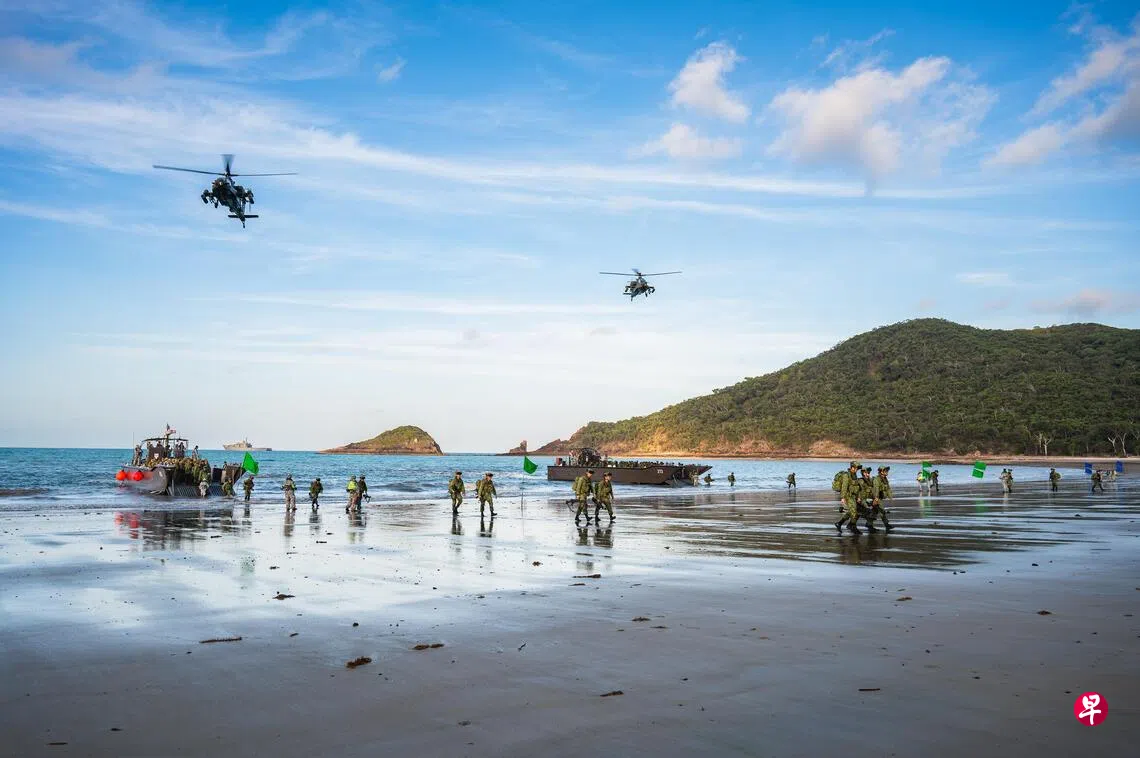
Singapore’s Ministry of Defence said in a statement last Sunday (15 November) that the 11th Exercise Trident is being held from 6 to 22 November at the Shoalwater Bay Training Area in Queensland, Australia. More than 1,600 military personnel from both countries are taking part, including personnel from the Singapore Army, Navy and Air Force.
Exercise Trident is the premier bilateral joint military exercise between Singapore and Australia. This year’s exercise involves two missions: seizing objectives in conventional terrain and conducting joint urban operations involving troops from both countries.
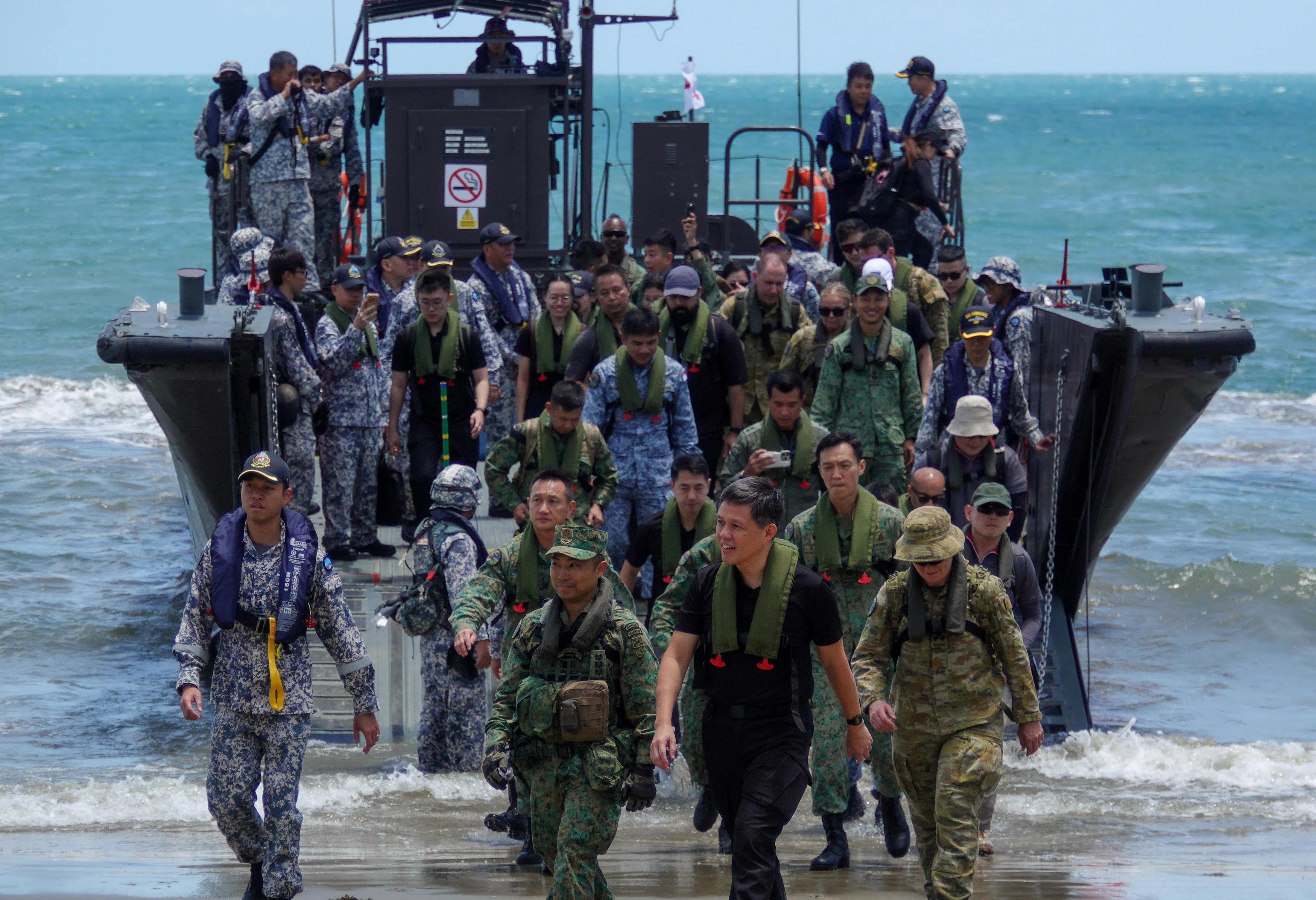
Coordinating Minister for Public Services and Minister for Defence Chan Chun Sing visited the participating troops in Queensland last Sunday. As part of his programme, he boarded the Republic of Singapore Navy’s Landing Ship Tank RSS Persistence, where he interacted with SAF and ADF personnel. He also observed an integrated exercise combining air, land and sea capabilities.
During the exercise, the Singapore Navy’s Fast Craft Utility vessels and the Air Force’s CH-47F helicopters transported troops and vehicles ashore from RSS Persistence, while AH-64D Apache attack helicopters provided close air support.
The Orbiter 4 drone, taking part in Exercise Trident for the first time, also provided aerial surveillance throughout the operation. The Orbiter 4 is a short-range drone introduced by the Singapore Air Force in 2022. It can fly for up to 24 hours and conduct aerial surveillance and reconnaissance in complex environments, including urban areas.
Beyond joint military operations, the two armed forces have stepped up the testing and use of new technologies this year. This includes testing how unmanned aerial and ground vehicles can carry out surveillance, reconnaissance and resupply missions. Both sides are also sharing operational experience through professional exchanges.
Singapore’s defence scientists and engineers are also working with ST Engineering, the Heat Resilience and Performance Centre at the National University of Singapore’s Yong Loo Lin School of Medicine, and their Australian counterparts to test how manned and unmanned systems can operate together, and to study ways to improve troops’ operational performance and safety.
At the end of his visit, Chan said that despite the evolving global security environment, defence ties between Singapore and Australia remain strong. This has allowed the SAF to continue using training areas in Australia for larger and more complex military exercises.
He also said the two armed forces had not only forged closer friendships but were also continuing to improve their interoperability across the air, land and sea domains.
“We are also very fortunate to have the ADF train with us, and with every iteration of the exercise, I can see how the relationship and camaraderie between the two armed forces are getting closer together, but most importantly, how they are able to interoperate across the air, land and sea dimensions.”
While in Queensland, Chan also hosted a reception for representatives of the Australian government, military and local community to thank them for their longstanding support for SAF training there.
