

From 16 November, Singapore and Malaysia will each raise their cross-border taxi quota from 300 to 500 vehicles. Two ride-hailing platforms — ComfortDelGro’s Zig app and Malaysian smart mobility platform Kumpool Sdn. Bhd. — will also be licensed to operate under the Cross-Border Taxi Scheme from the same day.
Announcing the changes in a joint statement on Friday (6 November), the two countries’ transport ministries said passengers and drivers can look forward to more options for cross-border point-to-point trips, greater convenience and a better travel experience.
On 4 May, Singapore and Malaysia announced several enhancements to the Cross-Border Taxi Scheme, including new designated pick-up points for ride-hailing bookings, more flexible drop-off locations, increased cross-border taxi quotas, and new requirements to support enforcement against illegal domestic point-to-point passenger services.
Cross-border taxi passengers can be dropped off anywhere in Singapore and within the operating areas of Johor Bahru, Iskandar Puteri, Forest City, Kulai and Senai in Johor. Families and business travellers can also choose larger and more premium vehicles.
The joint statement said officials from both countries’ transport ministries, Singapore’s Land Transport Authority (LTA) and Malaysia’s Land Public Transport Agency (APAD) continue to work closely to further improve cross-border taxi services.
CDG Zig and Kumpool will join GrabCar as licensed providers of cross-border taxi bookings from 16 November.
Ng Lang, chief executive of LTA, said the increase in taxi quotas is an important step towards strengthening cross-border connectivity between Singapore and Malaysia, reflecting their longstanding and strong cooperation. Expanding the availability of licensed cross-border services would give travellers more options and greater flexibility for their journeys.
Malaysia’s APAD Director-General Ahmad Radhi Ma’arof also said this would help strengthen first- and last-mile connectivity between Johor Bahru and Singapore, further improving connectivity between the two countries.
Senior Minister of State for National Development and Transport Sun Xueling said in a Facebook post that demand for cross-border travel could rise as the year-end holidays approached. She encouraged everyone travelling across the border to plan ahead and use only licensed providers for a safer journey.
Passengers hope competition will bring lower fares
Passengers interviewed welcomed the increased supply of cross-border taxis, hoping that the additional quota of 200 vehicles for each country and two more platforms would help lower fares.
Phillo Gan, 39, an IT professional from Malaysia who now lives in Singapore, said his main hope was that more taxis would lead to lower fares. Booking cross-border taxis through platforms is currently very expensive, but his family still require taxis when travelling together. If fares fell, he would consider booking a taxi to pick them up at home and take them directly to Johor Bahru.
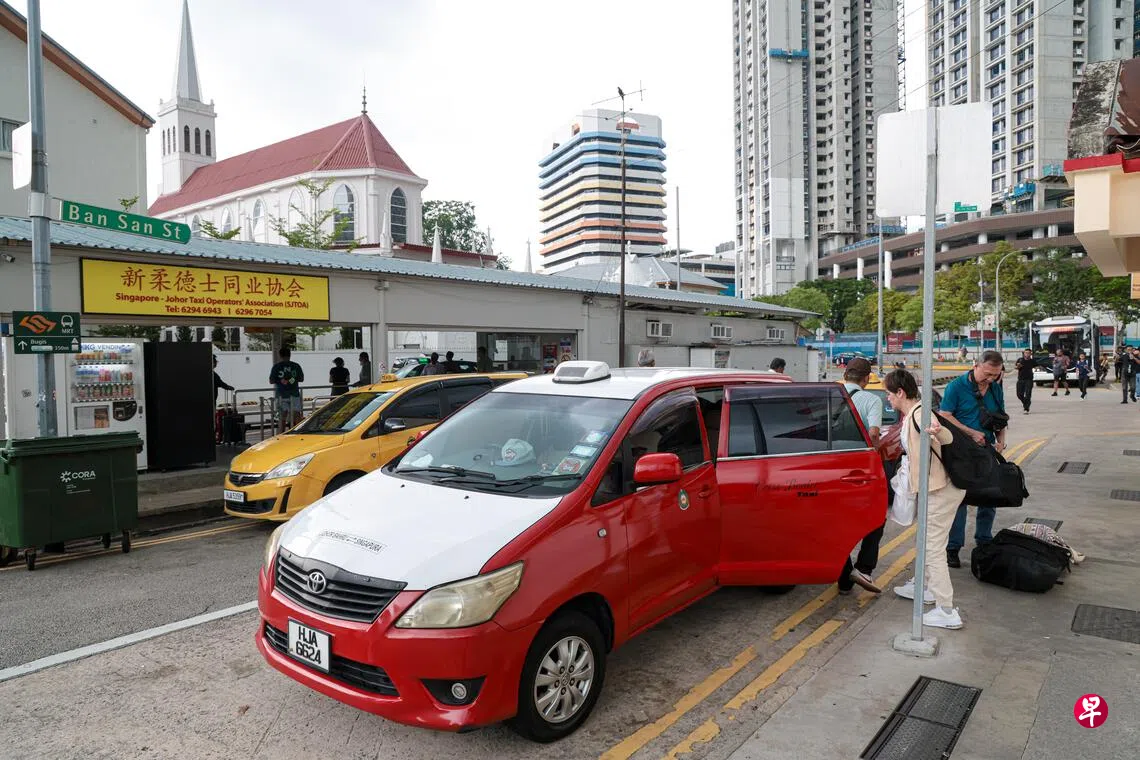
Jamie Sum, 65, a retiree, chooses to take taxis from the Ban San Street cross-border taxi stand, where she can pay S$20 per person. She would consider booking a taxi only when travelling in a group, but high fares remain her main concern. “I hope another platform joining will mean one company no longer calls all the shots, and competition will bring consumers more reasonable fares.”
Fu Sheng, 30, a civil servant, and his wife are used to Grab’s booking interface and said they would not switch to ComfortDelGro’s Zig app. Passengers who regularly cross the border by bus said the price gap was too large; taxis are not worth the cost though they are more convenient. Hence, they would not switch to cross-border taxis.
Drivers fear more competition will hurt business; association seeks phased rollout of additional licences
Taxi drivers interviewed said business had been poor recently and expressed concern about the competition that higher quotas would bring. ComfortDelGro taxi driver Shaik Ali, 67, said business had continued to deteriorate since the fixed fare for a four-seater taxi rose to S$80. Some passengers might have switched to buses because they found the fare too expensive, he said.
“Sometimes there’s a long queue of taxis here but very few passengers, so more competition will definitely affect business. I currently use several platforms including Grab and Zig, and I’ll try using Zig to pick up cross-border passengers later, but it’s too early to say whether it’ll work well.”
Strides Premier driver Abdul Aziz, 65, felt that a quota of 500 taxis from each country is sufficient. However, the opening of the Johor Bahru–Singapore Rapid Transit System (RTS) Link is also expected to have an impact, so whether the quota was just right remained to be seen.
During a two-hour visit to the Ban San Street cross-border taxi stand on Friday afternoon, a Lianhe Zaobao (LHZB) reporter observed six taxis queuing for passengers. All left with a full load within about 15 minutes. About six passengers were subsequently waiting at the stand, but no taxis arrived for some time.
National Taxi Association (NTA) Executive Secretary Teo Siew Pan said that with the taxi quota more than doubling within the same year, members are understandably concerned about job opportunities and their earnings. NTA had asked LTA to consider issuing the additional licences in phases to balance passenger demand and drivers’ livelihoods. She added that continued enforcement against illegal cross-border services remained important.
She said the last quota increase had been accompanied by new pick-up points in Johor Bahru, which had helped drivers secure more trips. With more taxis joining the scheme, now is a timely opportunity to review how it could better support drivers, including by adding more pick-up points.
