

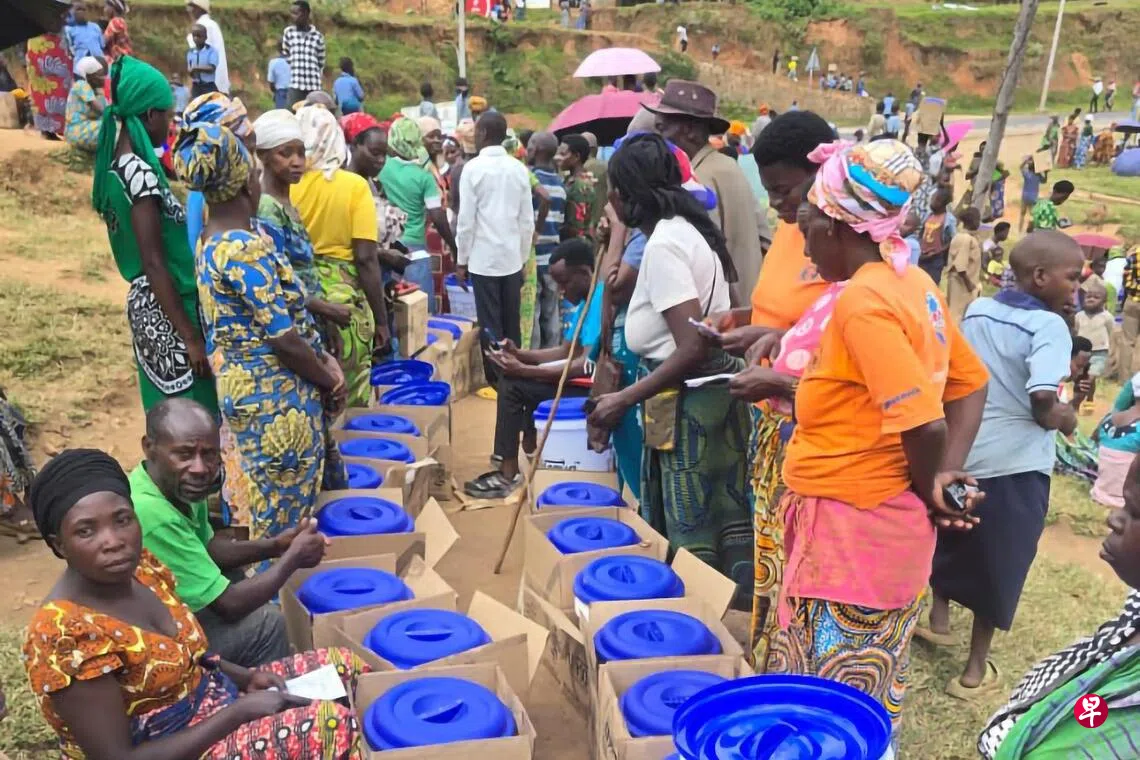
Singapore has approved its first carbon credit project, which will provide ceramic water filters in Rwanda to reduce carbon emissions by removing the need to boil water using firewood or charcoal. The project is expected to avoid about 780,000 tonnes of carbon emissions by 2030, generating carbon credits that can be used to offset Singapore’s emissions.
The 780,000 tonnes of carbon emissions are equivalent to the carbon dioxide that could be sequestered by planting 10 million trees.
Singapore has signed implementation agreements on carbon credit trading with 12 countries. Agreements with six of them — Rwanda, Bhutan, Ghana, Peru, Thailand and Mongolia — are operational, allowing developers to seek authorisation for eligible projects and paving the way for cross-border trading.
The National Environment Agency (NEA) said in a statement on Saturday (14 November) that Singapore and Rwanda had issued letters of authorisation for Climate Bridge International Pte Ltd’s carbon credit project to provide safe drinking water in Rwanda.
Under the two countries’ implementation agreement, the project can generate carbon credits compliant with Article 6 of the Paris Agreement. It is the first carbon credit project to receive a letter of authorisation from Singapore, marking an important milestone in the country’s efforts to advance international carbon market cooperation.
Article 6 of the Paris Agreement governs carbon trading markets. Article 6.2 allows countries to trade carbon credits under bilateral or multilateral agreements to meet their respective nationally determined contributions.
Under the Rwanda safe drinking water project, 300,000 ceramic water filters will be distributed to households and early childhood development centres, mainly in Western Province. Distribution of the first 10,000 filters began in June this year, with the remainder to be distributed progressively from 2027.
The project is expected to benefit about 1.8 million people. Removing the need to boil water using firewood or charcoal will help lower carbon emissions and improve indoor air quality. With no need to collect firewood, people will also have more time for education, work and community activities.
NEA said authorising the project puts the Singapore-Rwanda carbon credit implementation agreement into practice, mobilising financing that supports both emissions reduction goals and sustainable development in Rwanda. “Singapore and Rwanda will work towards authorising more projects under the Implementation Agreement.”
Singapore and Rwanda called for carbon credit project proposals in January this year. The two countries are currently assessing more than 20 projects for letters of authorisation.
Singapore and Bangladesh sign carbon credit memorandum of understanding
Singapore also signed a memorandum of understanding (MOU) with Bangladesh on carbon market cooperation at the 31st UN Climate Change Conference (COP31) on Saturday. It is Singapore’s first carbon credit MOU signed during COP31 and its 18th with another country to date.
Under the MOU, Singapore and Bangladesh will cooperate on carbon credit trading, sharing knowledge to jointly identify carbon credit projects that can meet climate goals and promote sustainable development.
Singapore’s Permanent Secretary of the Ministry for Sustainability and the Environment Melvin Ong said, “Carbon markets are a new area of partnership for Singapore and Bangladesh, and this MOU is an exciting next step in our relationship.”
Bangladesh’s State Minister, Ministry of Environment, Forest and Climate Change, Shaikh Faridul Islam, said Bangladesh looked forward to working closely with Singapore to advance their shared commitment to sustainable development, climate goals and global climate action.
Separately, global cross-industry coalition Carbon Measures announced on Friday (13 November) that it would establish an office in Singapore with support from the Economic Development Board (EDB). The office will serve as its Asia-Pacific hub, expanding its technical expertise and knowledge while deepening engagement with regional stakeholders.
Established in 2025, the coalition aims to develop a more precise carbon accounting framework to help businesses and governments make informed decisions on emissions reduction. Its first pilot will focus on carbon accounting for marine bio-liquefied natural gas.
EDB’s Executive Vice President, Lim Wey-Len, said, “Carbon Measures’ presence will also help develop specialised expertise in carbon accounting and create good jobs for Singaporeans.”
