

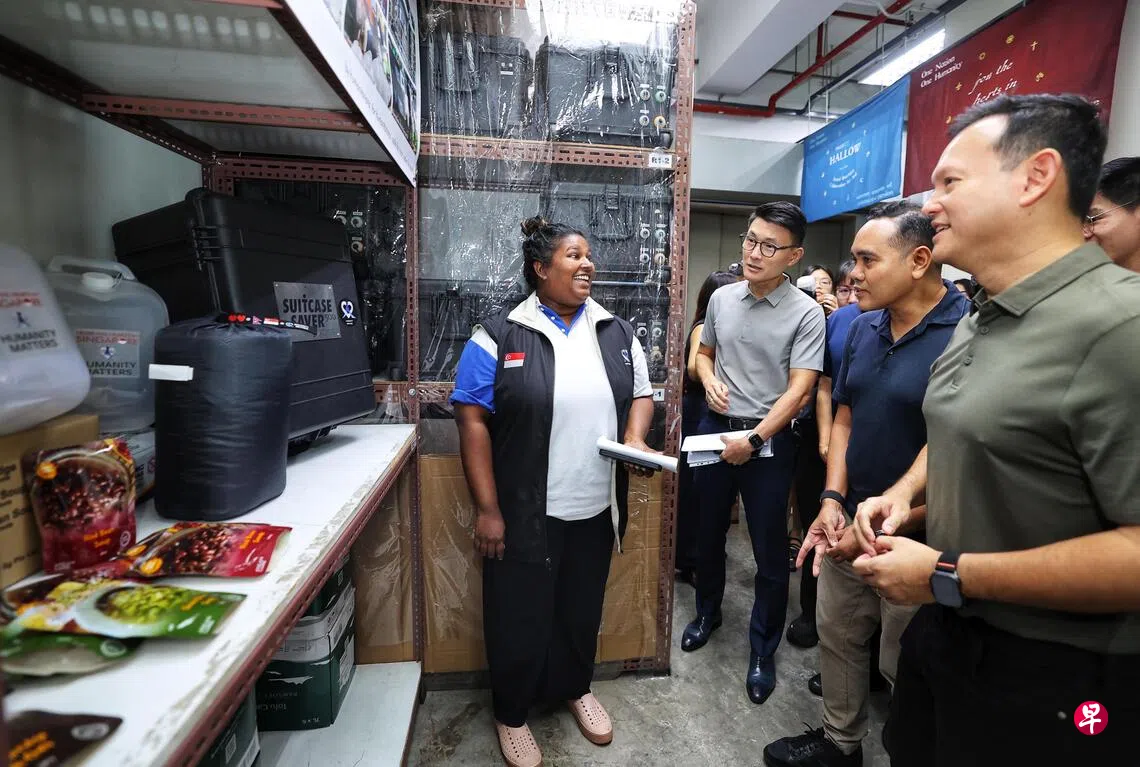
Singapore has set up a new coordination network bringing together the government, aid organisations and the wider community to help people in Gaza, with the aim of delivering relief supplies more effectively. The network will strengthen cooperation with overseas partners and give Singaporeans more opportunities to contribute to humanitarian relief efforts.
Acting Minister-in-charge of Muslim Affairs and Senior Minister of State for Defence Zaqy Mohamad, Minister of State for Foreign Affairs and Home Affairs Zhulkarnain Abdul Rahim, and Minister of State for Culture, Community and Youth and Transport Baey Yam Keng announced the formation of the coordination network, SG for Humanity, on Thursday (5 November).
The network will be coordinated by the Ministry of Culture, Community and Youth. Its initial partners are four humanitarian organisations: Humanity Matters, Mercy Relief, the Rahmatan Lil Alamin Foundation and the Singapore Red Cross.
These organisations will continue to lead their own aid projects. The network will serve as a common platform to pool their experience, resources and overseas connections, facilitate closer collaboration and identify opportunities for joint initiatives. The Singapore government will complement these efforts by facilitating engagement with overseas authorities and international humanitarian partners to improve the “last mile” delivery and distribution of relief supplies.
Since the Israel-Hamas conflict broke out in October 2023, the Singapore government, aid organisations and the wider community have donated more than S$25 million to provide people in Gaza with food, medical care, clean drinking water, shelter and education, among other needs. Last year, the government also provided S$1 million in seed funding, divided equally among the four aid organisations.
The four organisations have already delivered relief supplies to those affected through fundraising, providing supplies and working with international and regional partners such as the Egyptian Red Crescent and the Palestine Red Crescent Society.
Speaking to the media, Zaqy said Singaporeans across races and religions had shown compassion. Some had donated generously, while doctors and other medical personnel had asked whether they could go to Gaza to help. “The willingness to help is there, and we need to create more ways for Singaporeans to act.”
Egypt plays a key role in facilitating the delivery of supplies into Gaza. Zaqy said he would visit Egypt in the coming weeks to discuss with its government and aid partners on how Singapore could further support people in Gaza.
In an interview, Zhulkarnain said the government must ensure the safety of organisations and Singaporeans undertaking relief work, given the uncertain geopolitical landscape in the Middle East and its ever-evolving security challenges. SG for Humanity currently has only four partners, but more will join in future. If the model proves effective, it could also be replicated for humanitarian efforts elsewhere in the world.
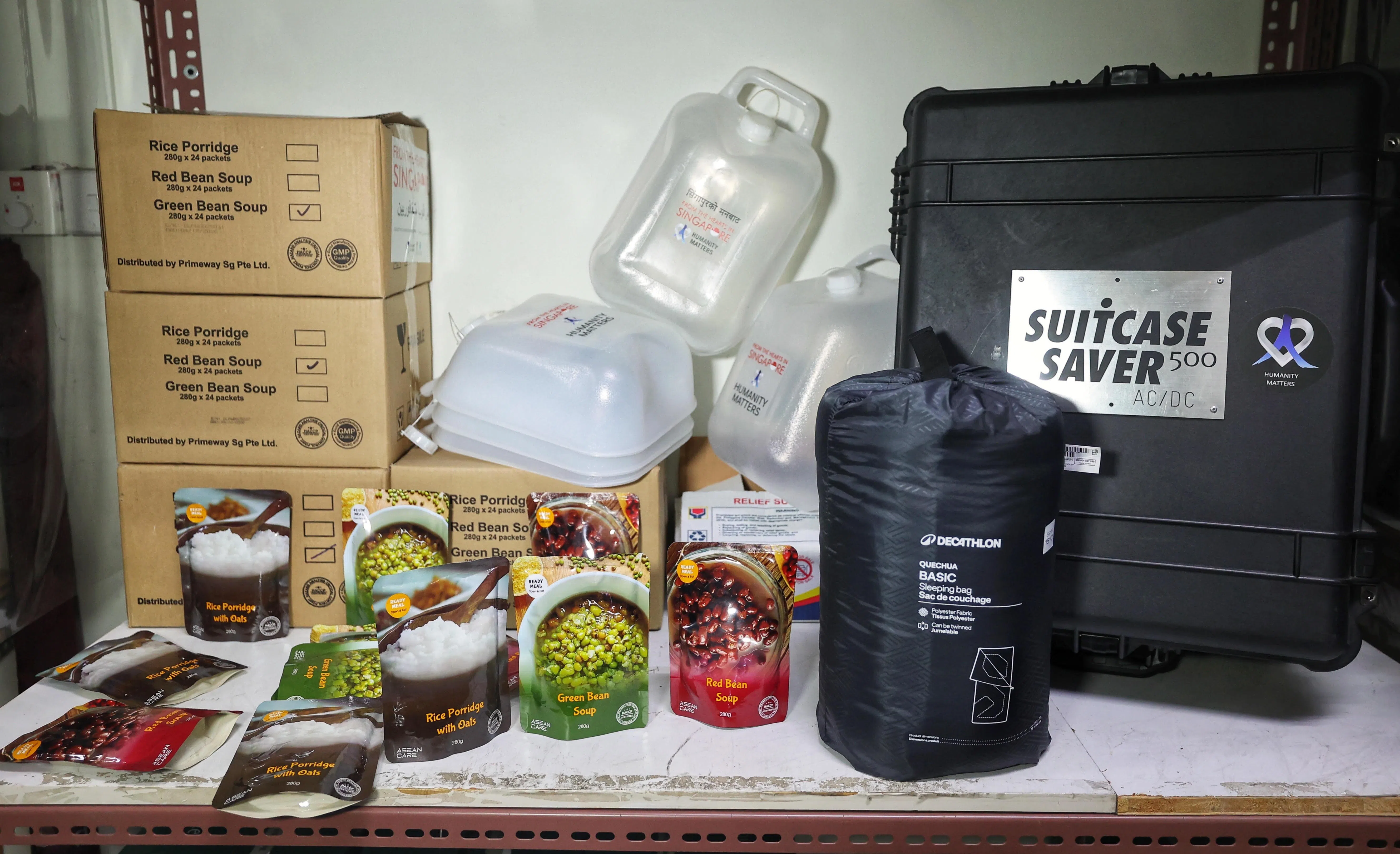
Leon Yip, chief executive of Mercy Relief, told Lianhe Zaobao (LHZB) he believed the network could bring together more support. Besides enabling organisations to gather relief supplies more efficiently, it would, more importantly, help them build closer ties with partners on the ground. This would allow them to keep abreast of conditions on the ground and changing needs and requirements.
Humanity Matters Special Advisor Hassan Ahmad said relief work for Gaza is a cross-border operation involving extensive administrative procedures and sensitive issues. Although the organisation had already delivered and distributed more than 100 tonnes of supplies in Gaza, government assistance would make its work more efficient.
Hassan said: “It would definitely be more convenient for us if the foreign authorities can be engaged by our Singapore government to help facilitate more smoother pathways for our teams to deliver aid into Gaza.”
He said the organisation had previously sent about 11 volunteers to Jordan and Egypt to coordinate the delivery of supplies. All had to undergo training before departing.
According to the Gaza Rapid Damage and Needs Assessment, jointly released by the UN, the EU and the World Bank in April this year, more than 1.9 million people in the Gaza Strip remain displaced. It estimated that the recovery reconstruction over the next 10 years would require more than US$71.4 billion (about S$96 billion), with about US$26.3 billion needed in the first 18 months alone to restore basic services, rebuild critical infrastructure and support economic recovery.
