


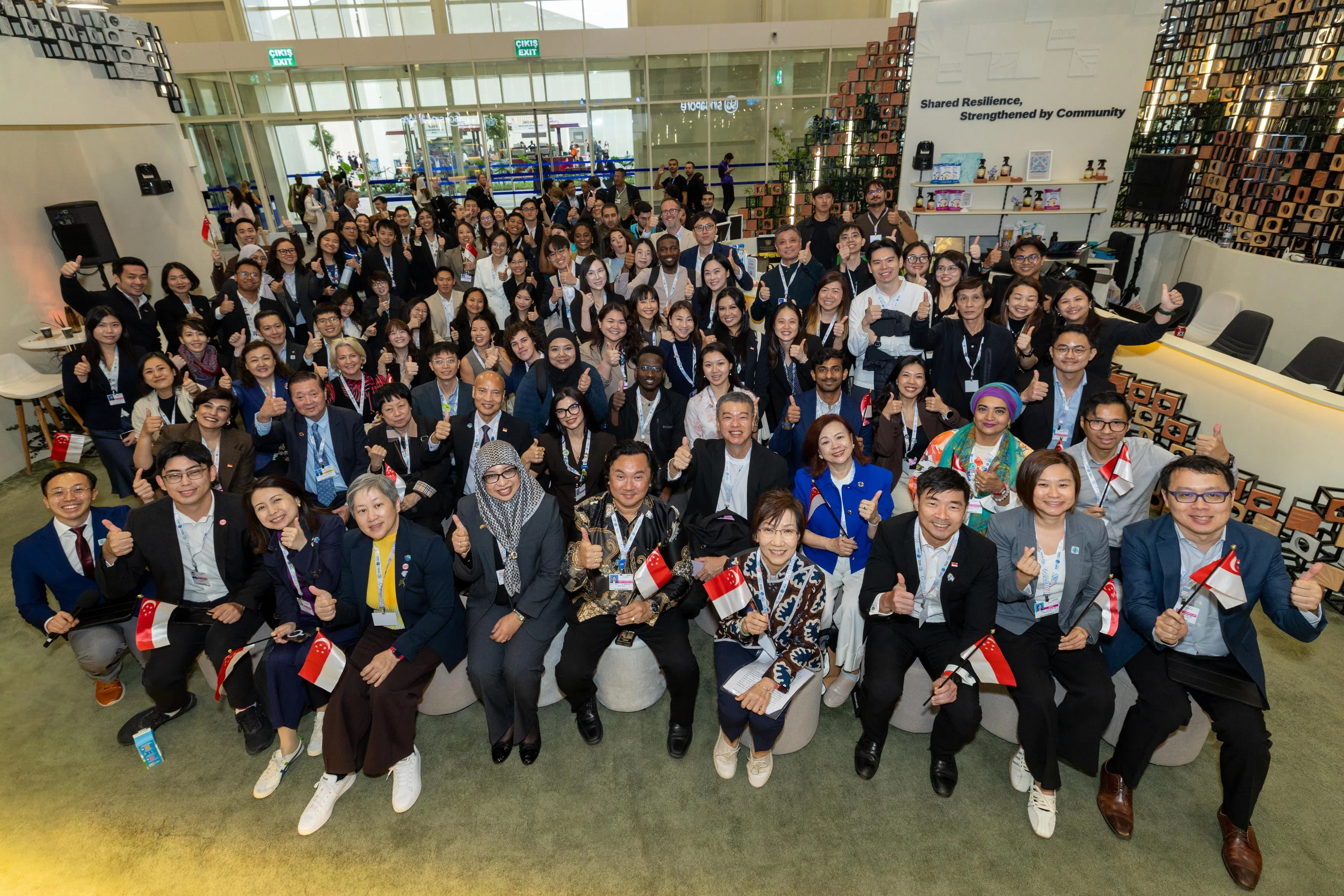
The Singapore Pavilion at the 31st UN Climate Change Conference in Antalya, Türkiye, officially closed on Thursday (19 November). It welcomed more than 10,000 visitors from around the world over the past 10 days, the highest attendance since Singapore first set up a pavilion at the climate summit in 2022.
Since opening last Tuesday (10 November), the Singapore Pavilion hosted more than 70 events, providing a platform for governments, international organisations, business representatives, academics, experts and communities to exchange ideas and advance climate action.
Speaking at the closing ceremony, Minister for Sustainability and the Environment Grace Fu said: “From the start, I wanted the Singapore Pavilion to be ‘always on’. Not for show. But as a space for serious conversations, impactful partnerships and lasting connections that bridge a fragmented world.”
She noted that the past year had not been an easy one for climate action. Global energy flows were disrupted. Countries' political systems were under strain because of the cost of living and high inflation. Geopolitical turmoil was widespread. Some had called for climate commitments to be put on hold until conditions improved.
Climate crisis does not wait as Singapore works with neighbours to advance climate action
Grace Fu stressed: Yet the climate climate crisis does not wait. This year, Southeast Asia has seen more hotspots, bringing transboundary haze to Singapore once again. Fortunately, delegates from around the world have still gathered in Antalya, determined to act on climate change. Next year, Singapore will take over the ASEAN chairmanship and work with its regional neighbours to take climate action forward.
During this year's climate summit, Singapore advanced bilateral carbon market cooperation with five countries at the Singapore Pavilion. It also announced SPIRE Asia, a programme to develop climate resilience projects and investment in Asia, to help Southeast Asian farmers strengthen their ability to cope with climate change.
Besides hosting talks on climate cooperation, the Singapore Pavilion gave visitors from around the world a taste of local culture. They could enjoy a cup of kopi-o, or black coffee, and sample Singapore snacks such as kaya biscuits, colourful iced gem biscuits and shredded cod snacks.
Sajini Kalna Wickramasinghe, a 29-year-old lawyer representing the Sri Lankan government in the climate negotiations, would visit the Singapore Pavilion for a drink and a short break between meetings.
Wickramasinghe, who was attending her fourth climate summit, told Lianhe Zaobao that her first impression of the Singapore Pavilion was its lush greenery and refined design. “I was pleasantly surprised to see iced gem biscuits here, because Sri Lanka has similar traditional biscuits. It made me feel the cultural common ground between the two countries.”
This year, 20 young people represented Singapore at the annual international gathering through the Climate Youth Development Programme. Besides helping to plan activities at the Singapore Pavilion, they also exchanged views with young people from other countries.
Among them was Victoria Lim, a 27-year-old civil servant. One of her takeaways was a deeper understanding of climate finance. She said climate action required funding. At the development banks’ pavilions, she learnt how banks assess whether projects meet just transition principles before deciding whether to provide funding, answering questions she had.
Singapore has yet to decide whether to set up a pavilion again next year.
Singapore and Johor sign memorandum to strengthen sustainability cooperation
The Singapore Environment Council and Johor Sustainability Centre signed a memorandum of understanding before the closing ceremony to strengthen sustainability cooperation between Singapore and Johor and explore possible joint projects. Areas covered include climate change and green technology, sustainable urban development, the circular economy and waste management, water and energy efficiency, and environmental outreach.
