

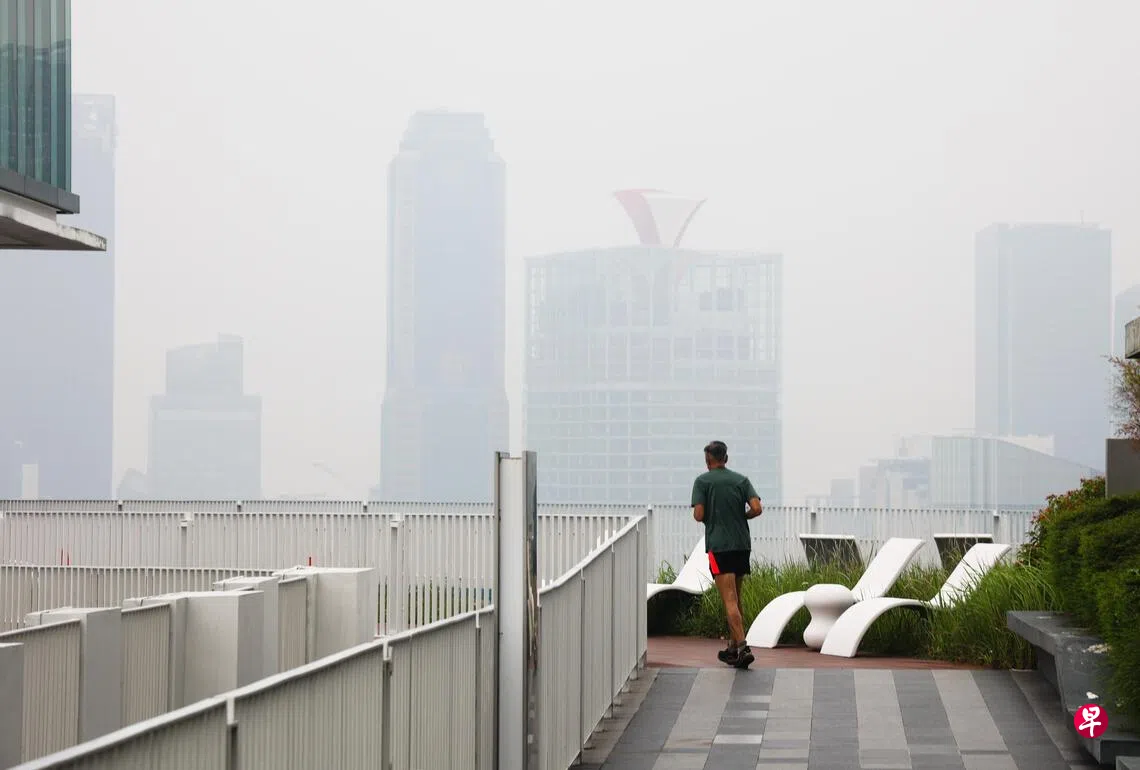
Singapore has amended the Transboundary Haze Pollution Act (THPA) to allow the government to apply economic pressure on companies and individuals suspected of illegal slash-and-burn practices, in addition to pursuing criminal prosecution. These measures include placing them on a “restricted list” and restricting other companies from doing business with them or providing them with loans.
Companies and individuals convicted of causing or contributing to haze pollution in Singapore, or condoning such pollution by third parties, will face a maximum daily fine of $1 million, up from $100,000. The overall maximum will rise from $2 million to $20 million.
Minister for Sustainability and the Environment Grace Fu introduced the Transboundary Haze Pollution (Amendment) Bill in Parliament on Wednesday (4 November) and sought to use a Certificate of Urgency to allow all three readings to take place on the same day. The Bill prompted vigorous debate among MPs from both sides of the House, with 24 of them speaking over more than six hours, before it was passed at its third reading.
Speaking during the second reading debate, Fu said irresponsible land-clearing and management practices such as slash-and-burn and peatland drainage may generate considerable commercial benefits for the companies responsible, while leaving millions of people across Southeast Asia to suffer and bear the consequences of haze pollution.
This is the first amendment to the Act since it was enacted in 2014. Fu stressed that when Singapore enacted the THPA, it sought to protect Singaporeans and hold errant companies accountable, while respecting the sovereignty of other countries, upholding international law and avoiding extraterritorial overreach. Following the recent haze episode, however, it is clear that the status quo is no longer tenable.
She said, “We need better ways to obtain and verify information, trace complex corporate relationships, and impose meaningful consequences on errant entities, even where criminal prosecution proves difficult. We also need to be able to intervene earlier, before haze pollution reaches Singapore.”
The economic tools introduced by the amendments will help expand accountability beyond the immediate concessionaires to their supply chains, related corporates and financiers.
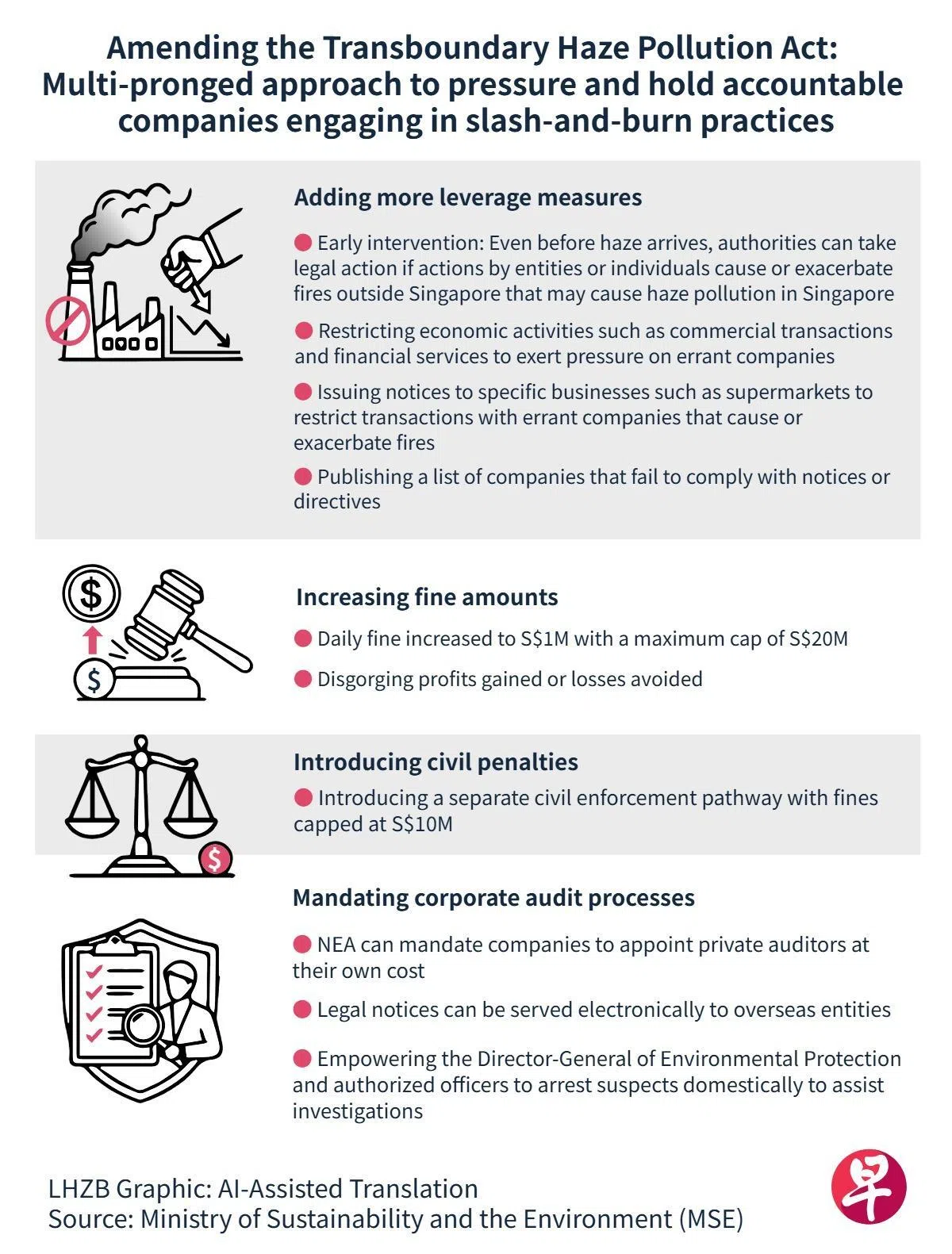
This will allow the government to restrict businesses such as supermarkets from dealing with those on the restricted list, including supplying or procuring goods and services, and providing loans and other financial services. Offenders face a fine of up to $1 million, with an additional fine of up to $100,000 a day for continuing offences.
The authorities will also be able to issue notices to businesses in specified sectors, such as forestry and agriculture, or those connected to the companies involved, requiring them to exclude companies that breach the THPA from their business dealings and supply chains.
NEA may publish names of companies that fail to comply with notices or directions
To ensure an open and transparent process, the National Environment Agency (NEA) may publish the names of companies that fail to comply with notices or directions, or are under review.
Under the existing Act, companies and individuals, whether within or outside Singapore, that cause or contribute to haze pollution in Singapore, or condone such pollution by third parties, face a maximum daily fine of $100,000, capped at $2 million in total. The amendments will raise both limits tenfold. Courts will also be able to order offending companies to surrender profits gained or losses avoided through their unlawful conduct.
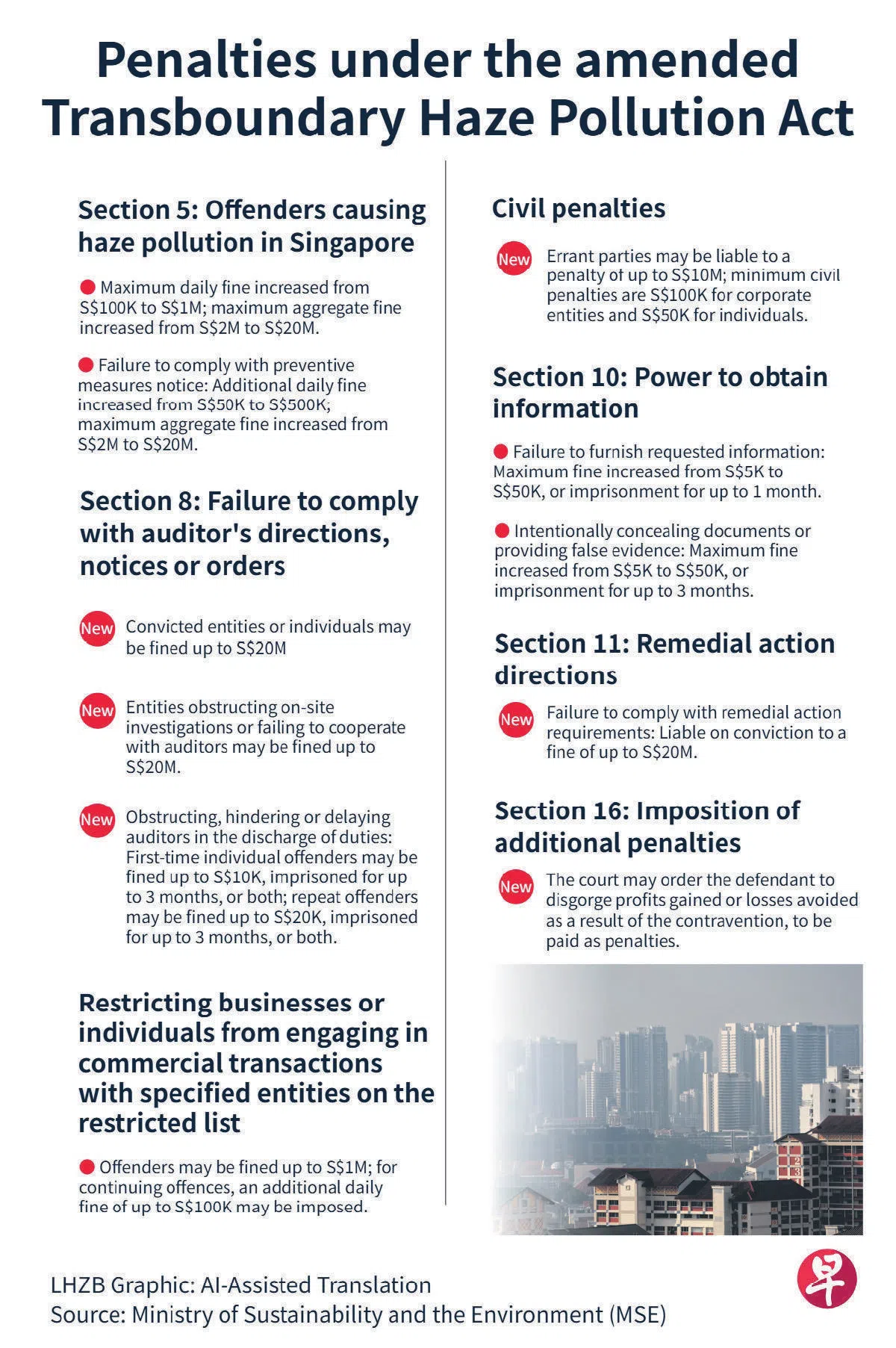
Fu explained that the authorities had calibrated the increase with reference to existing legislation and the financial scale of the companies involved. The maximum fine of $20 million is double the maximum under the Online Criminal Harms Act. The maximum fine under the Online Criminal Harms Act was recently increased from $1 million to $10 million.
New civil proceedings route has lower standard of proof
The amendments also introduce civil proceedings, giving the government another avenue to hold companies involved accountable, with penalties of up to $10 million. However, to avoid punishing a party twice, criminal and civil penalties cannot both be imposed for the same case.
Explaining the distinction in response to queries from Lianhe Zaobao, NEA said the standard of proof in criminal cases is “beyond reasonable doubt”, while civil proceedings use the “balance of probabilities”. Civil proceedings have a lower standard of proof and correspondingly lighter penalties.
During the haze episode that affected Singapore from 4 September to 25 October this year, the country's 24-hour Pollutant Standards Index was in the “unhealthy” range on 33 days and the “very unhealthy” range on another five days.
Currently, air quality must remain in the “unhealthy” range for 24 consecutive hours before the authorities can take enforcement action. Under the amended law, even before haze reaches Singapore, any entity that causes or contributes to forest fires overseas that pose a risk of haze pollution to the country can be held accountable.
Singapore Institute of International Affairs Chairman Associate Professor Simon Tay, who has followed the haze issue for many years, said the changes are interlinked and together give the THPA sharper teeth.
He said in an interview, “The maximum fine under the amended THPA is $20 million. More significant than the fine itself is the government’s ability to make errant companies a corporate pariah, which will have a chilling effect on their ability to do business here.”
Parliament has adjourned.
