

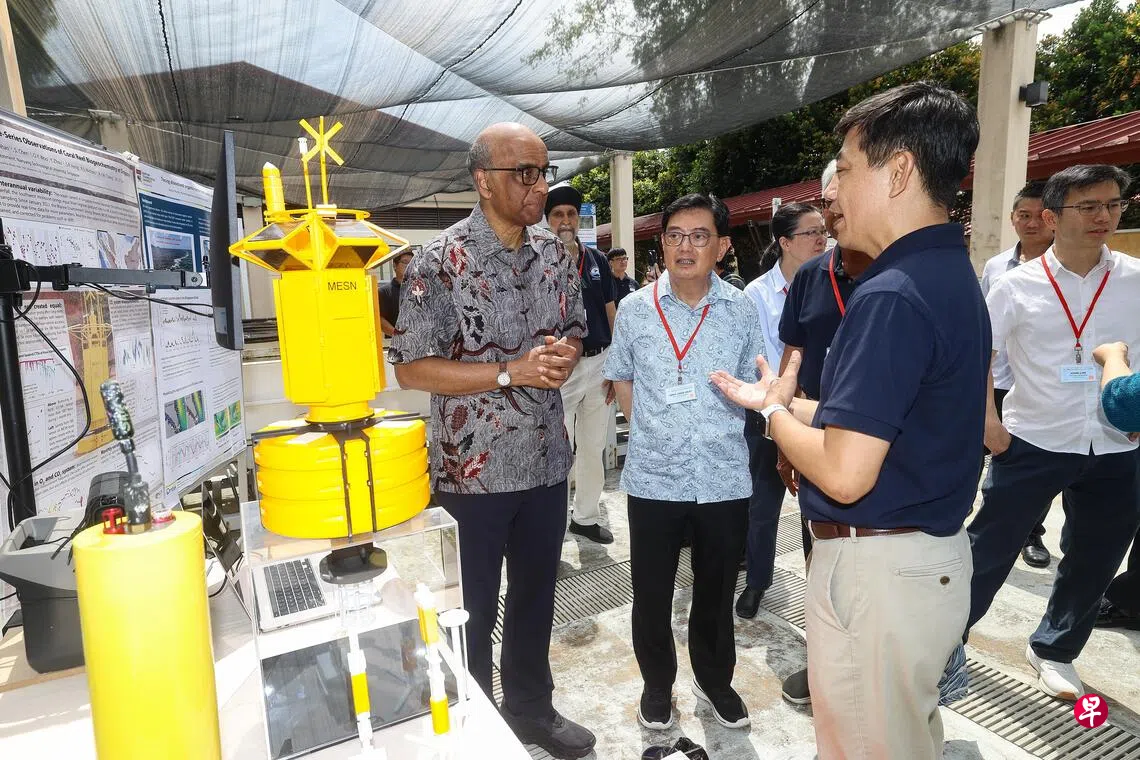
The National University of Singapore’s St John’s Island National Marine Laboratory, on St John’s Island south of the mainland, has been renamed the National Marine Research Station (NMRS) as its remit expands. It will lead Southeast Asia’s first marine research station network, coordinating marine environmental research by more than 10 institutions from countries including Singapore, Indonesia, Malaysia, the Philippines and Thailand to anticipate global climate change and inform policymaking.
Announcing the move in a joint statement on Wednesday (25 November), the National Research Foundation and the National University of Singapore said the renaming would give the national research facility, established in 2016, a broader role.
Besides providing laboratories and aquarium facilities for research and development, NMRS will take on marine monitoring, scientific training and public science outreach. It will also serve as a hub connecting talent, disciplines and ideas from Singapore and abroad, and as an offshore outpost for monitoring Singapore’s urban waters and the impacts of climate change.
President Tharman Shanmugaratnam attended the launch of NMRS on Wednesday, the first day of Marine Science Week. He said climate change, biodiversity loss and ocean health were closely connected. “Building on a decade of scientific work at NMRS, the new SEAMaRS network will bring together scientists from across Southeast Asia to learn from one another, and strengthen our collective ability to look after our seas, an effort that will matter even more in the years ahead.” SEAMaRS stands for Southeast Asian Marine Research Stations.
The new research station will be equipped with a new, locally built research vessel within five years to replace its existing vessel, Galaxea. The new vessel will have a larger deck, a moonpool and a diving platform that can be used in rough weather, among other features. A moonpool is an opening within a vessel, similar to a well, that connects to the sea. Researchers can use it to lower instruments or underwater robots into the water and retrieve them once their work is complete.
The station will also be equipped with more advanced plankton analysis equipment. It will promote the sharing of regional marine research resources and personnel training, and establish long-term coordinated data sharing.
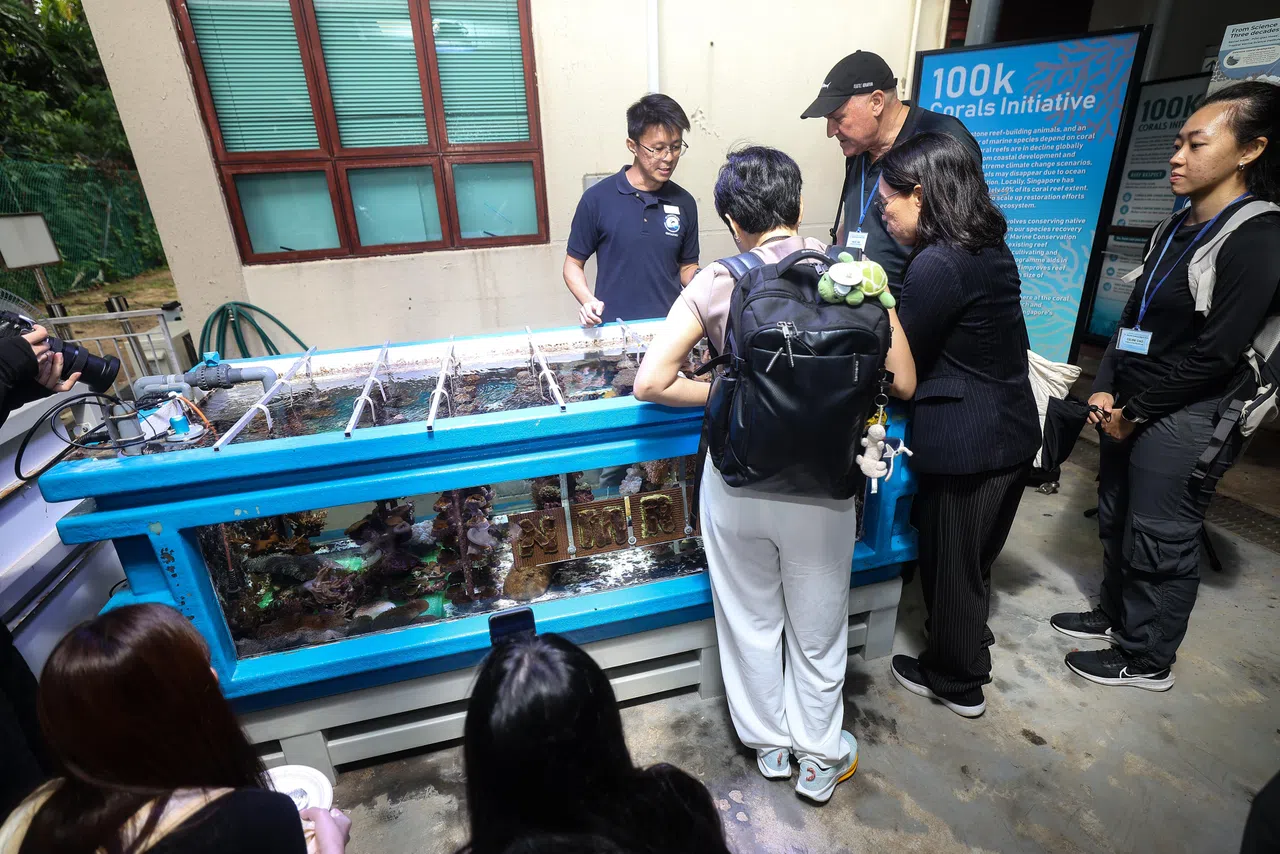
‘Ocean health closely linked to Singapore’s liveability’
National Research Foundation (NRF) chairman and former Deputy Prime Minister Heng Swee Keat said at Wednesday’s launch that Singapore places importance on international marine research because its relationship with the sea extends well beyond shipping and trade. “We must understand the marine environment in depth so that we can manage and protect it responsibly and sustainably.”
He said Singapore lies at the confluence of major ocean currents, and its surrounding waters support rich biodiversity that helps regulate the climate, protect coastlines, and provide food and other resources. The health of the marine environment is closely linked to the island nation’s liveability.
The Coastal Oceanography and Climate Change Research Center at Thailand’s Prince of Songkla University is among the first overseas research institutions to join the SEAMaRS network.
Associate Professor Mathinee Yucharoen from the centre told Lianhe Zaobao (LHZB) that, unlike many other international collaborations, SEAMaRS supports the sharing of research equipment as well as data. This makes it easier to monitor the impact of plastic pollution on the marine environment across borders. Travelling to marine research stations in Indonesia, Malaysia or Singapore for work is relatively convenient, and it is also easier to promote exchanges among young people.
She said, “Although Singapore is small in land area, its expertise, technology and facilities are outstanding. Conditions here are better, and there is much we can learn.”
NMRS is operated by the National University of Singapore with funding from NRF, and is part of Singapore’s Research Innovation and Enterprise 2030 (RIE2030) plan. According to NRF’s report on the research, innovation and enterprise plan for the next five years, released in late August this year, Singapore will invest a total of S$37 billion in RIE2030.
