

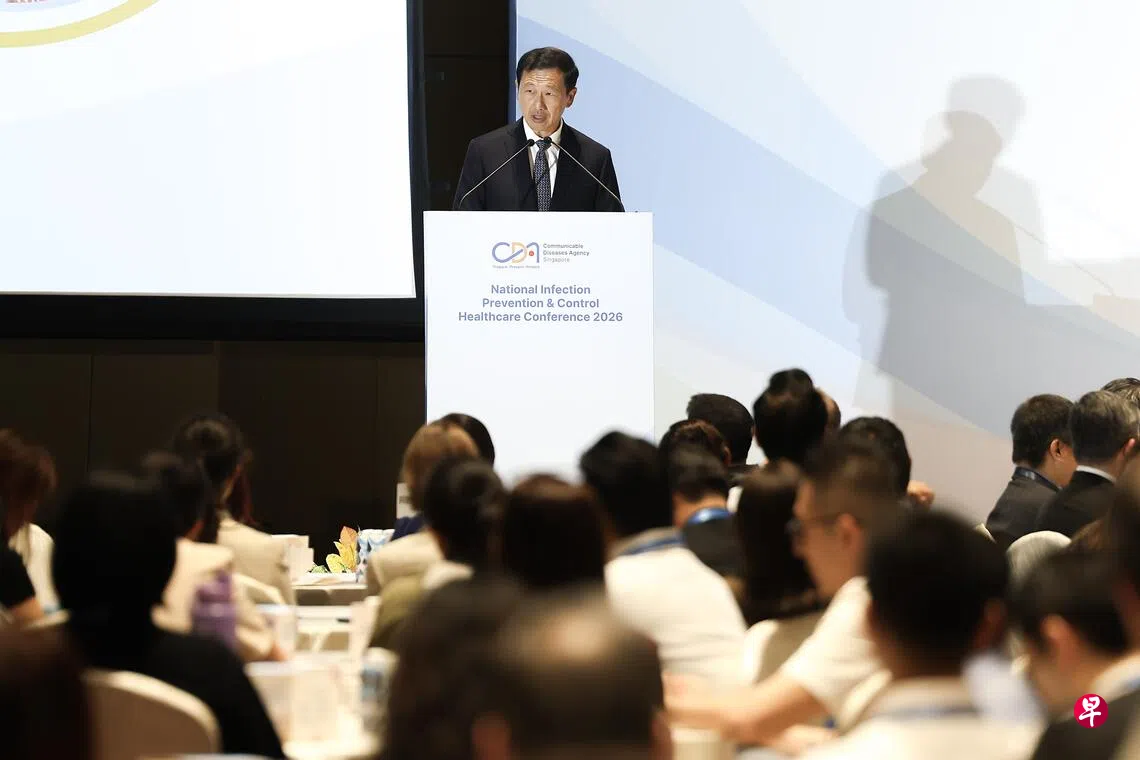
Singapore’s Communicable Diseases Agency announced on Monday (16 November) that the World Health Organisation had designated it the world’s first WHO Collaborating Centre dedicated to strengthening health systems through infection prevention and control (IPC), recognising Singapore’s expertise and sustained efforts to prevent infections in the healthcare system.
As a collaborating centre, the Communicable Diseases Agency will work with the WHO and its member states, particularly those in the Western Pacific Region, to help countries strengthen infection prevention and control.
This includes helping countries strengthen national programmes, conduct surveillance of healthcare-associated infections, provide technical expertise to support the development of international guidelines, and improve preparedness across healthcare institutions, including long-term care organisations.
The collaboration will also help Singapore learn from other countries’ experiences to review and improve local policies and measures.
The Communicable Diseases Agency also noted that, as Singapore’s population ages and healthcare services increasingly extend across hospitals, community care and long-term care facilities, it will continue working with healthcare institutions and industry partners to strengthen infection prevention and control across the continuum of care.

More than 3,100 foreign officials take part in Singapore’s healthcare training
Speaking at the opening of the National Infection Prevention & Control Healthcare Conference 2026, Coordinating Minister for Social Policies and Minister for Health Ong Ye Kung said Singapore would continue investing resources to strengthen national infection prevention and control capabilities, develop evidence-based guidelines and build close partnerships with healthcare institutions. Singapore also shares its experience with developing countries through the Singapore Cooperation Programme. More than 3,100 foreign officials have attended relevant courses to date.
Antimicrobial resistance and vaccine scepticism among four major challenges to global disease prevention
Ong Ye Kung said modern sanitation, vaccines and medical advances had significantly reduced infant mortality and lengthened life expectancy. Countries’ main health challenges were gradually shifting towards non-communicable diseases such as cancer. That said, infectious diseases remained a key concern. The challenge was not over but had evolved.
He identified four major challenges in the global fight against infectious diseases: antimicrobial resistance, climate change, vaccine scepticism and the next pandemic.
With antimicrobial resistance becoming increasingly serious, countries must work to curb the trend and even reverse it. “Infection prevention and control is an important part of this. By preventing infections, we can reduce the need for antibiotics. We also need to tighten discipline in the use of antibiotics in hospitals, in the community and on farms, and create incentives for pharmaceutical companies to invest in developing new antibiotics, even if these drugs may not offer substantial commercial returns.”
To address the challenges posed by climate change, countries should also share their experience in tackling related diseases, including vector control measures and ways to lower temperatures in hospitals.
On public doubts about vaccines and new technologies, he said people would naturally feel concerned about unfamiliar diseases and treatments, and might also worry about the risks posed by modern technology. The relevant authorities must therefore use education, transparent information-sharing and sustained communication to turn public scepticism into acceptance and trust.
He concluded that pathogens would continue to evolve, and humanity must keep pace. “And our defences will be bolstered through international co-operation, learning from each other, and building the global commons that keep us all safe.”
