

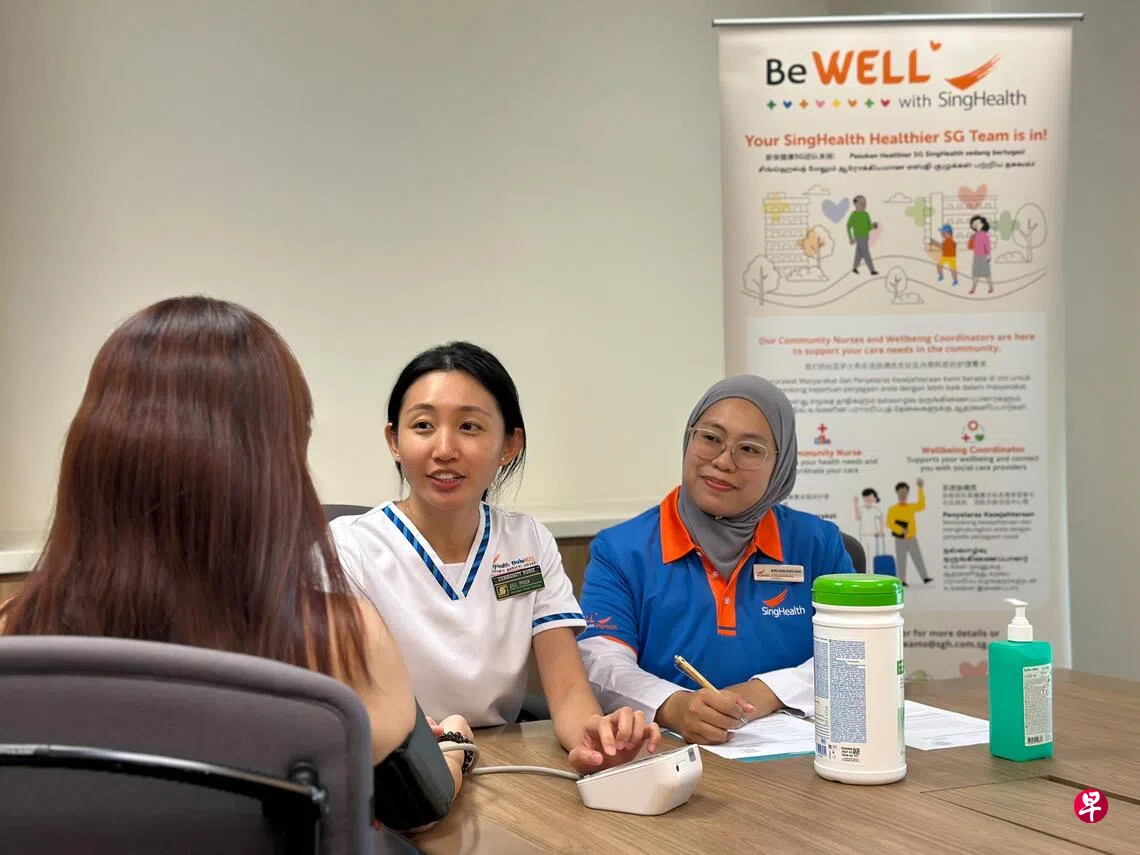
After SingHealth deployed more than 100 wellbeing coordinators in the eastern region under its care, emergency department visits fell by nearly half, inpatient admissions dropped by more than 50% and the average length of stay was reduced. More seniors were able to keep well at home and precious hospital capacity was freed up for those who need it most.
Professor Lee Chien Earn, SingHealth's deputy group chief executive officer for regional health, shared the findings of a recent survey of about 2,800 residents at the inaugural Global Population Health Conference on Monday (23 November).
In his speech, he said wellbeing coordinators (WBCs) now work with community nurses, general practitioners and community partners in more than 30 Healthier SG teams, providing residents with preventive care, chronic disease management and early intervention.
Wellbeing coordinators are a key part of the social prescribing programme launched by SingHealth Community Hospitals in 2019. The programme develops personalised health management plans based on residents' healthcare needs, interests and lifestyles.
Speaking to Lianhe Zaobao, Lee said SingHealth had integrated its existing community teams into Healthier SG teams over the past two to three years, including refining career development pathways for wellbeing coordinators and community nurses. Residents in the areas served can now access the teams' services simply by walking into a Community Health Post (CHP).
Community Health Posts give residents access to early intervention, health management and social support in familiar surroundings. Research and evaluation help identify effective measures that can be rolled out more widely to benefit more people.
One example is IMPRESSMIND²S, a programme SingHealth is rolling out in the community to prevent or delay dementia and cognitive decline. After two pilot runs involving 48 seniors, the results have been encouraging. Preliminary results from the first run show that 85% of participating seniors maintained or improved their cognitive outcomes.
The Agency for Integrated Care will next work with SingHealth to progressively introduce some of the programme's practices at Active Ageing Centres across Singapore.
Meanwhile, SingHealth has spearheaded the formation of the Global Alliance for Population Health Research and Implementation to facilitate international exchanges of experience and jointly develop and scale up effective approaches. The new alliance brings together 14 leading healthcare, academic and research institutions from Asia, Europe, North America and Oceania.
Believed to be the first such collaborative alliance in the world, it aims to advance population health and extend healthspan.
Lee said many countries face similar challenges, including ageing populations and a growing burden of chronic disease. Sharing research findings and practical experience through the alliance would help members learn from one another and shorten the process of trial and error.
“Our resources and capacity are limited, so we can’t do every study from scratch. A study may take three years, followed by the development of an implementation plan and a pilot; by the time it is scaled up, it could be five years from when the research began. But by drawing on what others have learned, we can start at the pilot stage, adapt the approach to our local context and evaluate it as we go—so residents can benefit sooner.”
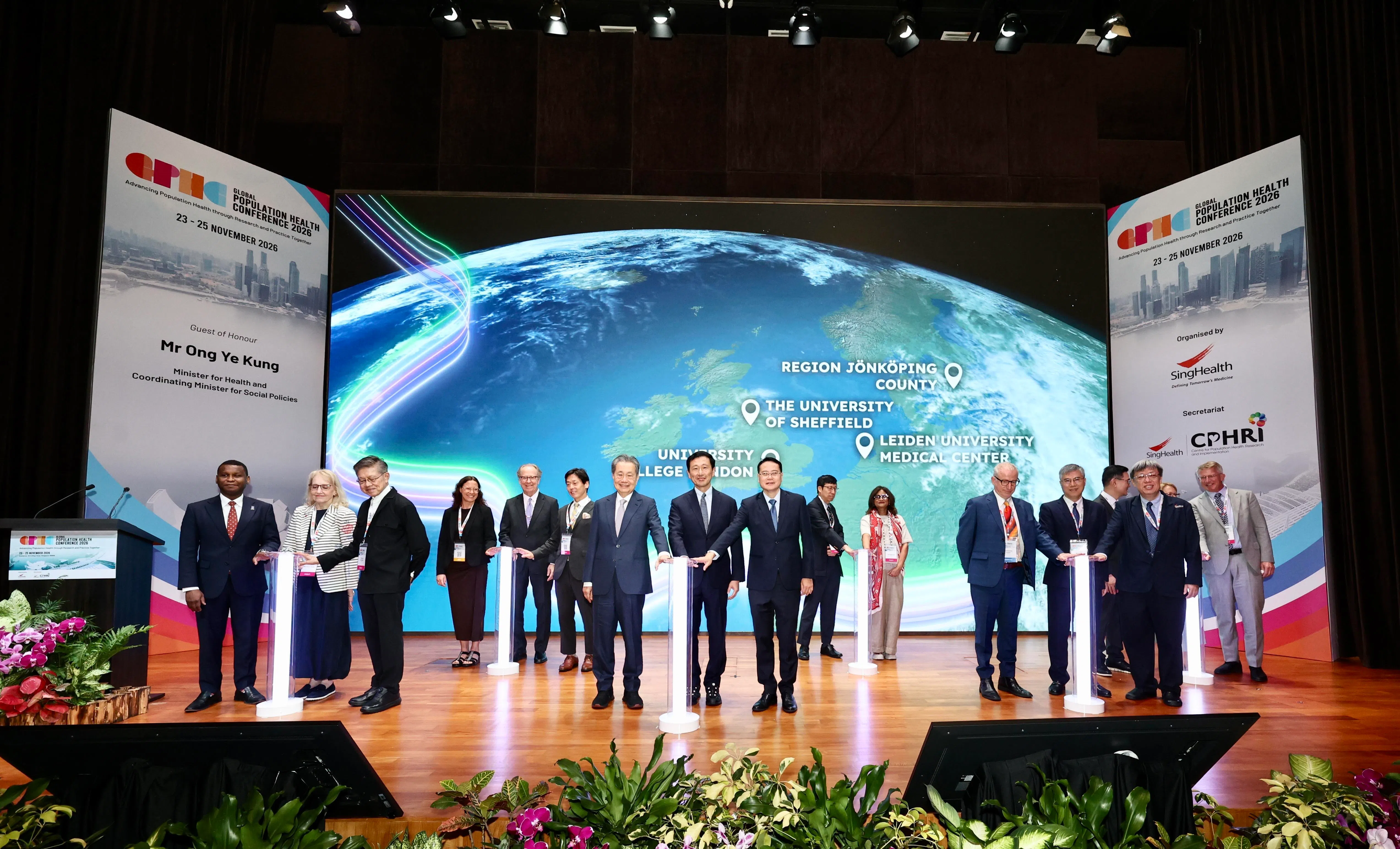
Coordinating Minister for Social Policies and Minister for Health Ong Ye Kung was the guest of honour at the inaugural Global Population Health Conference. Officiating at the launch of the new alliance, he said Singapore had placed population health and preventive care at the centre of its public health policies after the COVID-19 pandemic.
Singapore has made three major shifts over the past five years: moving public healthcare clusters to a capitation funding model; introducing Grow Well SG, Healthier SG and Age Well SG for children and young people, adults and seniors respectively; and combining technology, funding and cross-agency collaboration to strengthen community care. This includes progressively consolidating all public healthcare apps into the Enhanced HealthHub from today.
Ong said raising lifespan also widens the gap between lifespan and healthspan.
“Why are we raising lifespan when it is mostly in bad health? So I think this longevity question should not be about lifespan. We should be trying our best to raise healthspan, and if by raising healthspan, lifespan also increases, so be it. It's a consequence, but it's not our target nor our objective.”
