

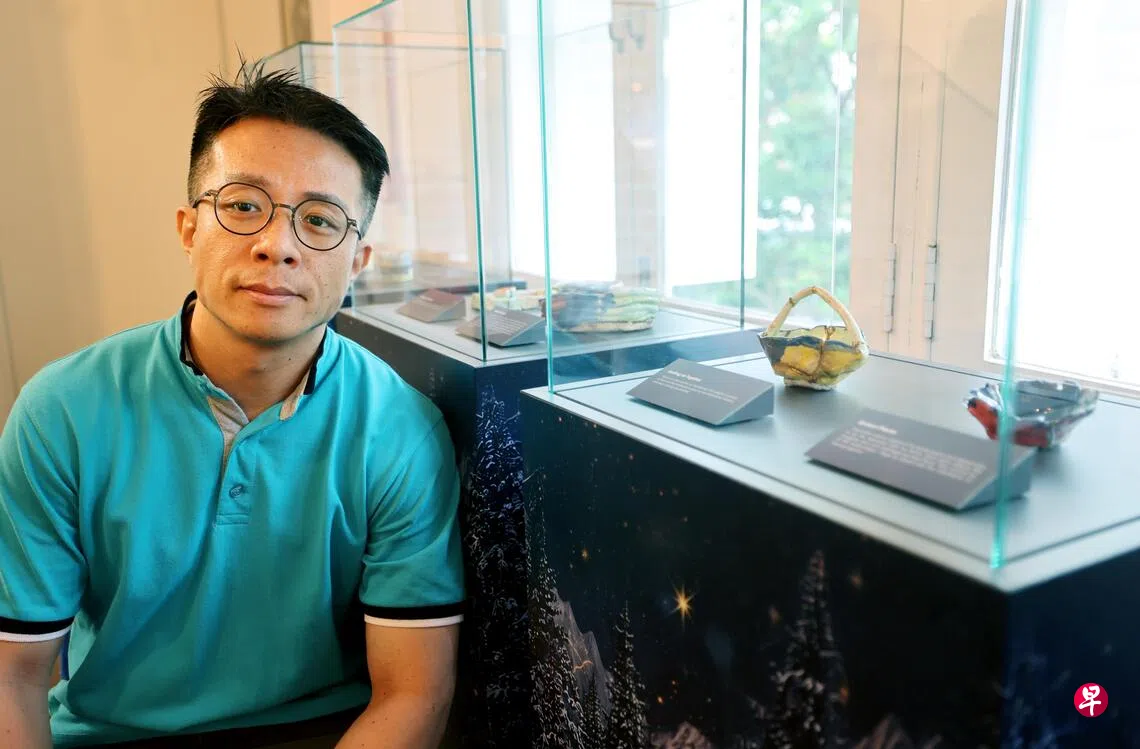
“I haven’t been good. I haven’t been a filial grandson.”
Ou Bailian, 43, finally voiced these long-buried feelings during a kintsugi pottery course in prison. His grandparents died one after the other during his five years behind bars, and he never got to see them a final time. That regret became a lasting source of pain. Prison deprived him of the chance to say goodbye to his loved ones, but pottery gave him a way to reflect on his past, learn to accept his own “cracks” and work towards repairing his relationships with his family.
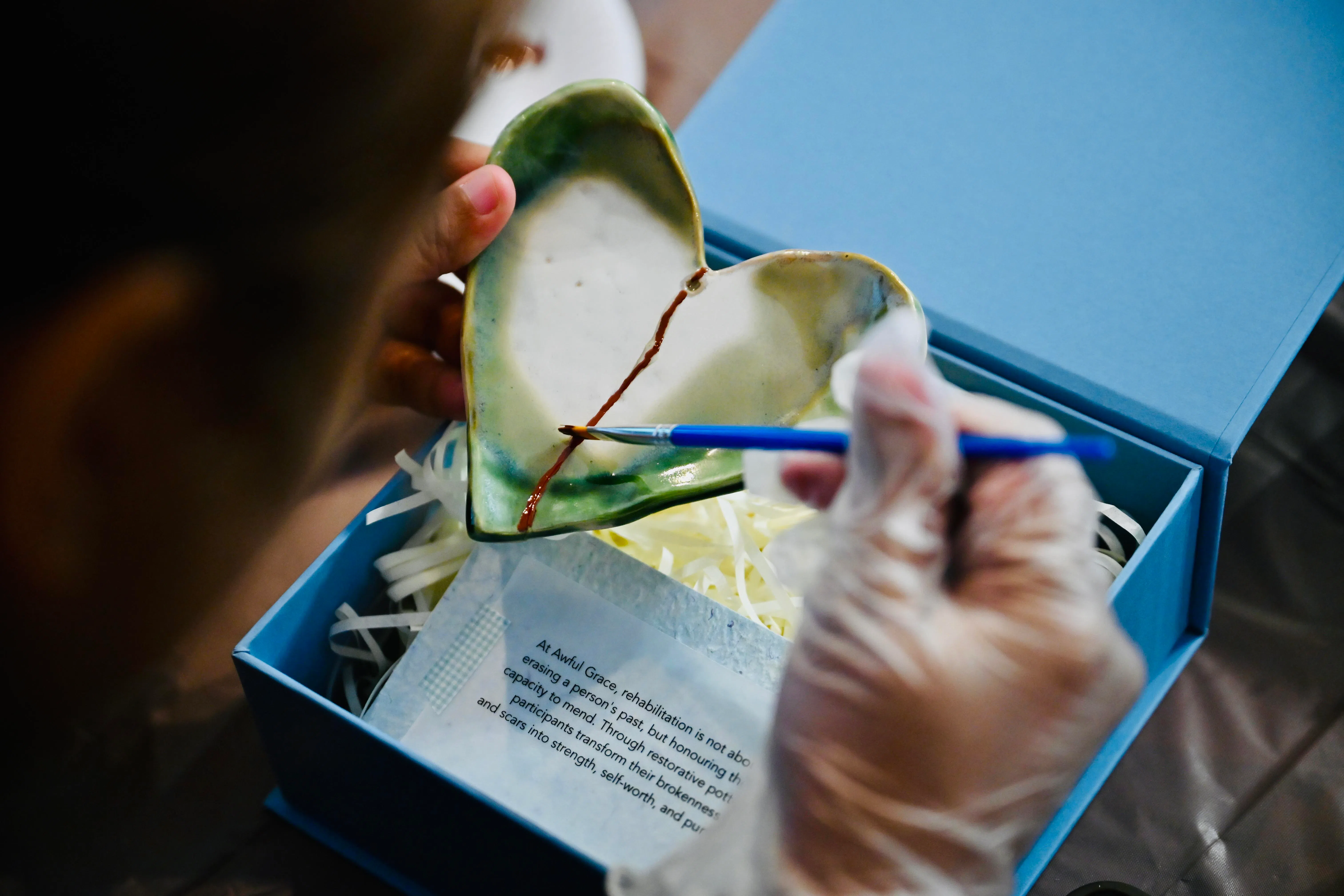
In 2023, Ou Bailian joined The Journey, a kintsugi pottery course run by the charity Awful Grace. Participants had to break their own ceramic pieces, then put them back together using natural lacquer and gold powder. He decided to make a traditional soup pot like the one his grandmother often used, in her memory. He had not expected the act of breaking it to unleash emotions he had suppressed for so long. Choking back tears as he recalled the moment, he said he broke down in front of his fellow inmates and said what he had always wanted to tell his grandmother: “I haven’t been good. I haven’t been a filial grandson.”
Last year, Ou returned to Hong Kong to pay his respects to his ancestors, taking the repaired pot to his grandparents’ graves. He had expected to break down, but felt unexpectedly calm. Only then did he realise that his experience in prison had helped ease his grief.
At first, he thought the course was simply about learning a craft. But through breaking and reassembling pottery, he came to understand that kintsugi was first about “mending myself”: before he could repair his relationships, he had to accept his own flaws. He had previously been reserved, set high standards and found it difficult to open up. Watching fellow inmates break their pottery and piece it back together helped him see that seeking help was not a weakness, but a source of strength to move forward.
He began to open up, making a lidded pot for his younger sister, from whom he had grown distant. Drawing on the Cantonese saying, “We are brother and sister for life”, he used the pot and its lid to symbolise their inseparable family bond. His sister said little, but they gradually grew closer.
After his release, Ou formally became a volunteer with Awful Grace in early 2026. “Others helped me back then. When I’m able to, I should help others too,” he said. Even if he cannot solve all their problems, he can at least offer sustained companionship, helping them understand that they are not alone as they rebuild their lives.
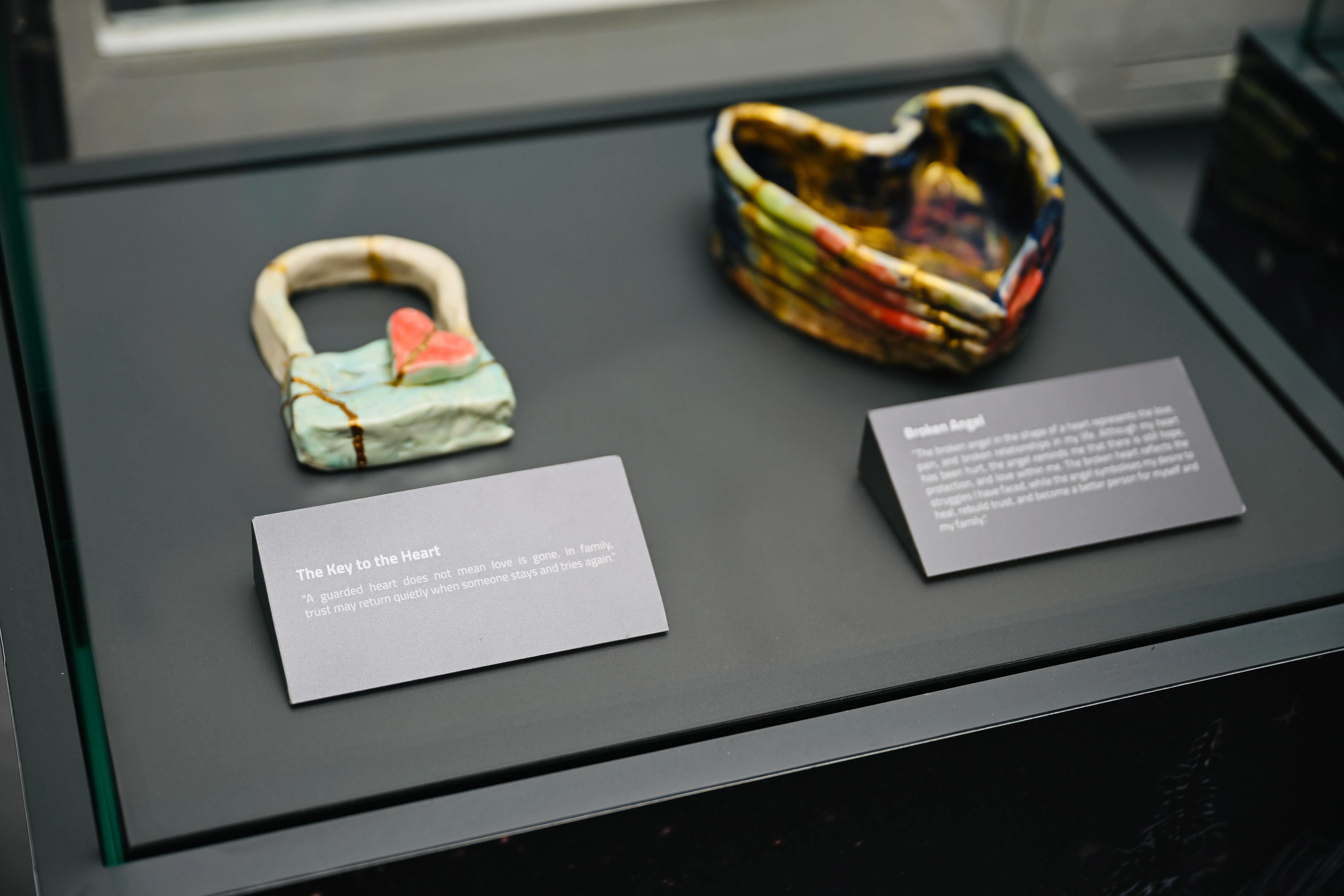
Awful Grace founder Christine Tan said pottery and kintsugi help participants grasp a truth often overlooked in everyday conversations: their cracks and scars are not flaws to hide, but marks of resilience and beauty. Shaping clay with their own hands, seeing it break and then gently piecing it back together with gold powder gives participants a deeply personal way to heal and feel whole again.
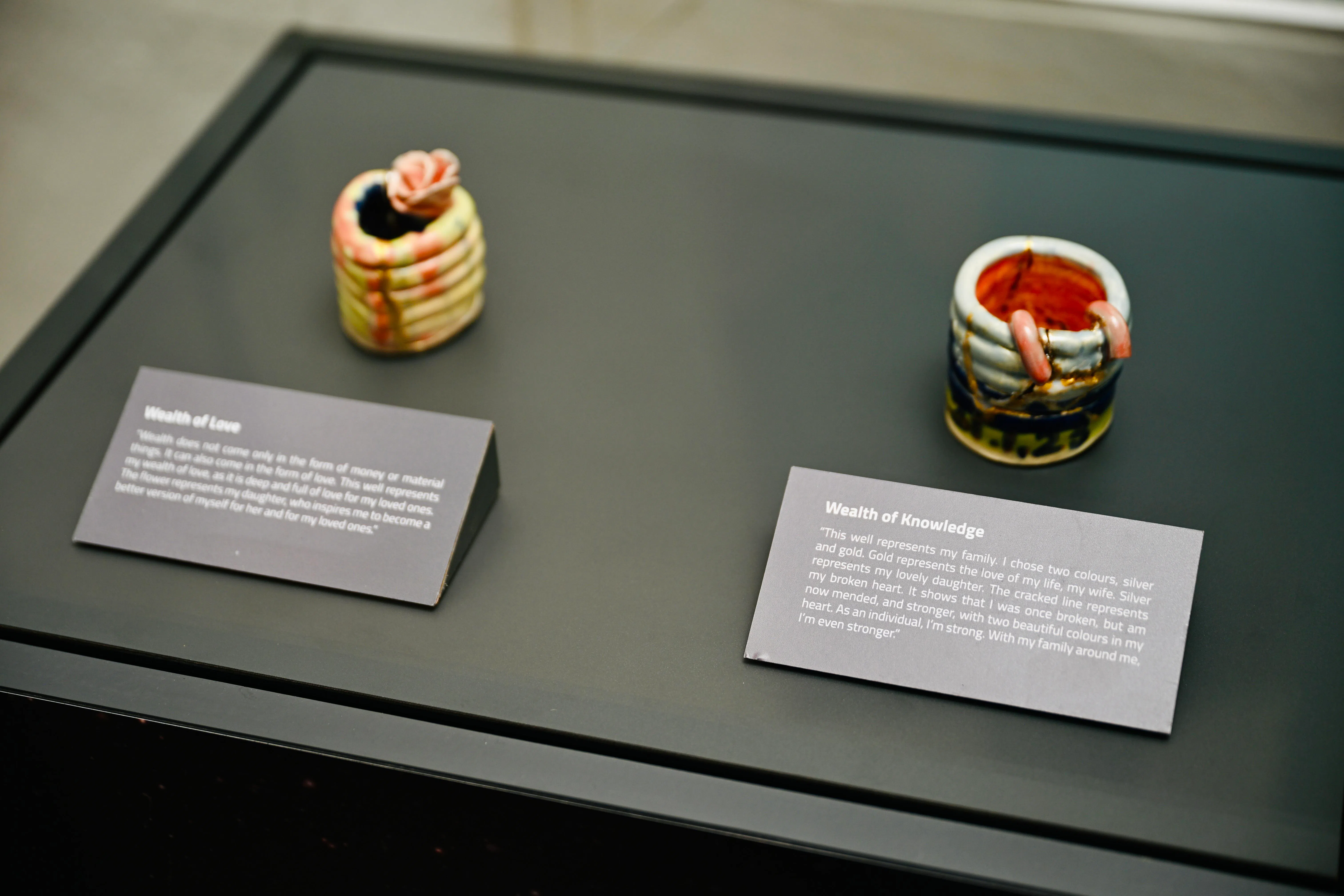
Electricity retailer Geneco has partnered with the Yellow Ribbon Project and Awful Grace to launch Forevermore. From 7 to 20 December, members of the public can visit a temporary exhibition space outside Wisma Atria on Orchard Road, or browse the initiative’s official website, to discover 10 kintsugi pottery pieces made by inmates and the stories behind them.
