

A regional study conducted in Singapore has found that while the impact of climate change on agricultural production varies across Southeast Asia, the overall risks are growing. A super El Niño could slash average yields of the region’s major crops by as much as 10%, with rice, a staple food, particularly hard hit.
The study was jointly conducted by the Singapore Food Agency and the National University of Singapore’s Tropical Marine Science Institute. Its findings were presented to and adopted by the 48th ASEAN Ministers on Agriculture and Forestry meeting, held in Singapore on Thursday (29 October).
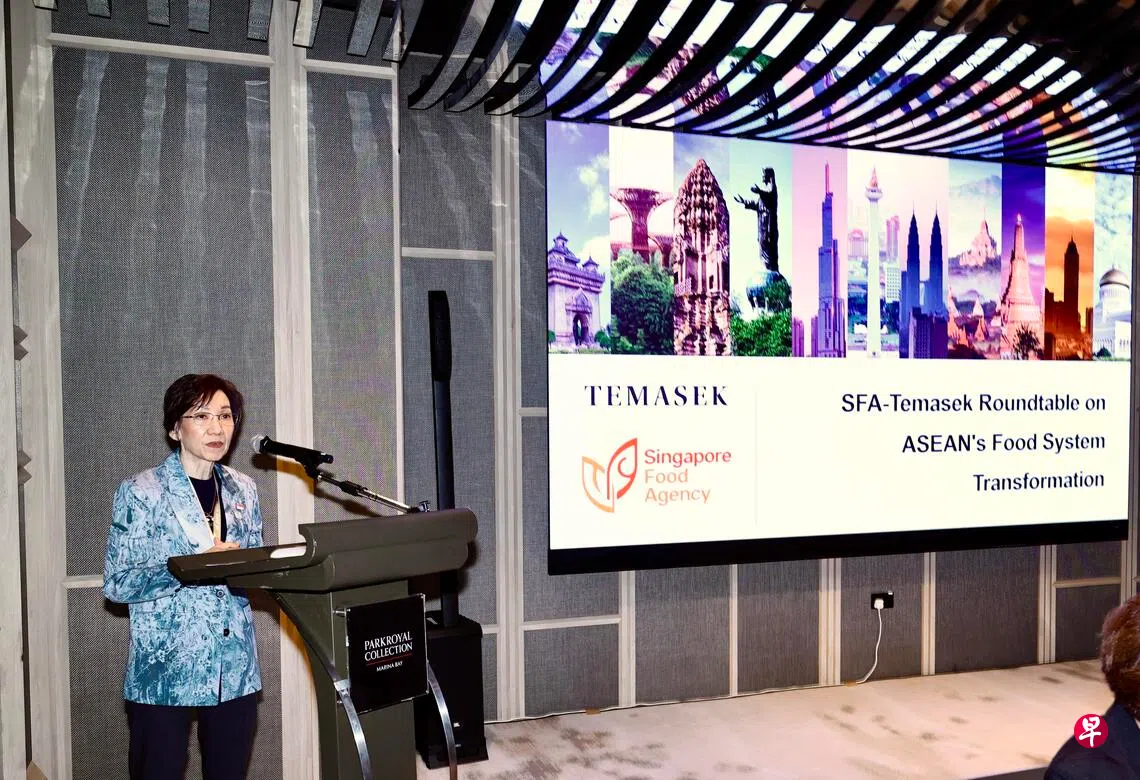
The Singapore Food Agency and Temasek also held a closed-door roundtable on ASEAN food systems transformation that day. Speaking as guest of honour, Minister for Sustainability and the Environment Grace Fu said the global agri-food landscape was undergoing rapid change.
She said: “Climate change is affecting agricultural production. Resources such as land and water are under increasing pressure. Supply chains are becoming more complex and vulnerable to disruptions. At the same time, technological developments are creating new opportunities to improve productivity and resilience. Together, these developments are transforming food systems around the world.”
Fu stressed that ensuring a reliable food supply remained a top priority for the region. All parties must help farmers and businesses adapt to changing conditions and stay competitive so they can seize new growth opportunities.
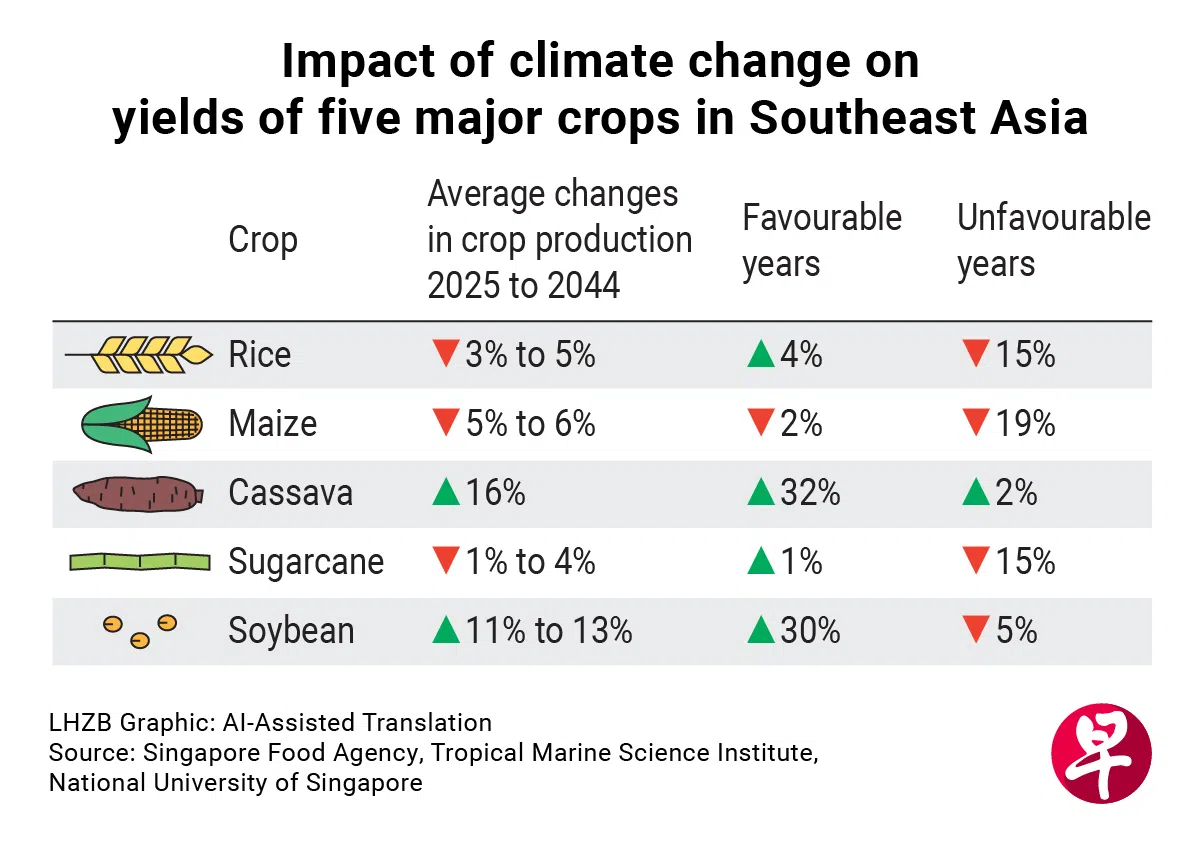
The study focused on five major crops covered by the ASEAN Food Security Information System (AFSIS): rice, maize, cassava, sugar cane and soybean. Using 1995 to 2014 as the baseline period, researchers assessed the potential impact on crop yields across Southeast Asia from 2025 to 2044.
Combining climate data from Singapore’s Third National Climate Change Study with crop models, the research team analysed the agricultural impact of changing temperature and rainfall patterns, extreme weather such as heavy rain, drought and heat stress, and El Niño. The aim was to identify which crops and cultivation practices face high risks.
The report projected that temperatures in Southeast Asia would continue to rise, with more frequent and prolonged heatwaves. Rainfall patterns would become more polarised: some areas could face heavy rain and flooding, while others could experience lengthy dry seasons or severe drought. These changes would directly affect water supplies, planting schedules and eventual harvests.
The simulations also showed that El Niño typically brings hot, dry weather to Southeast Asia, with a super El Niño potentially reducing average crop yields in the region by about 10%. Of all the crops assessed, rice could suffer the greatest impact. Farming systems that depend on seasonal rainfall are also more vulnerable than irrigated farmland.
The research team stressed that, as the effects of climate change vary across ASEAN, countries must tailor their measures to local conditions, crop types and planting seasons.
The study also warned that even crops with more favourable long-term average yield projections would not be entirely immune to climate-related risks. In unfavourable years, extreme heat, heavy rain or drought could still affect yields to varying degrees.
