

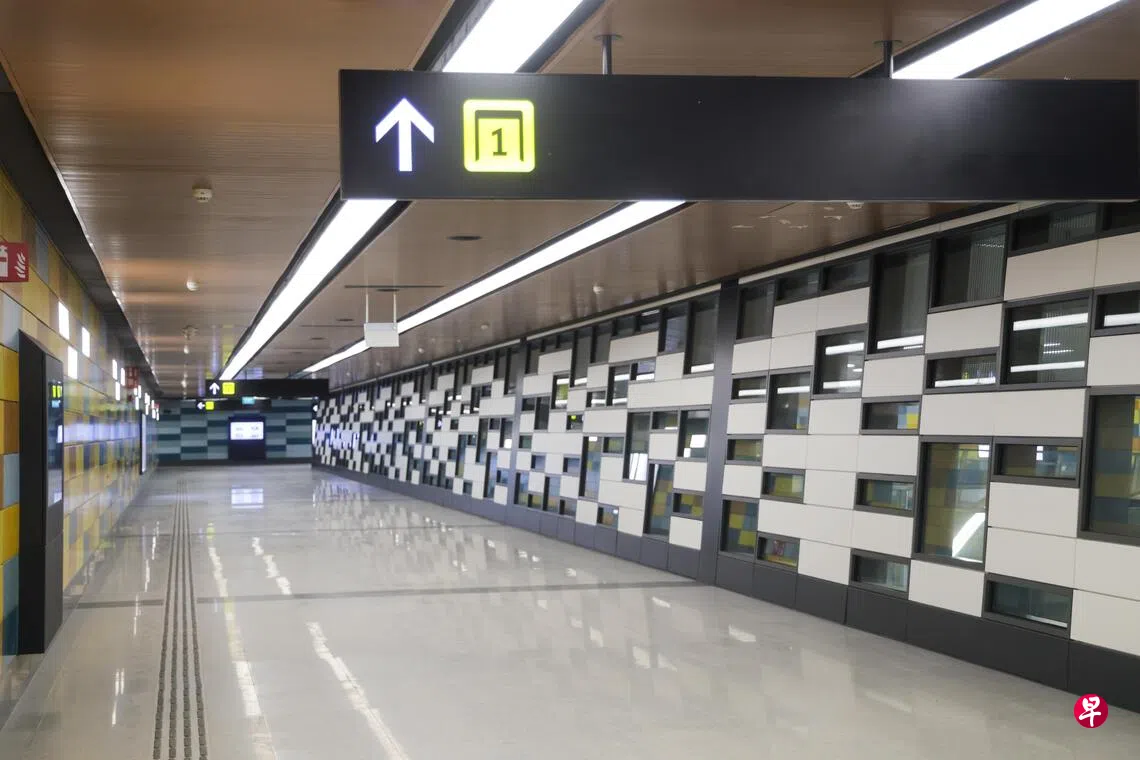
Three new MRT stations in the east, due to open on 26 December, will have clearer wayfinding signs showing not just exit numbers but also key landmarks and facilities near each exit. The Land Transport Authority (LTA) also plans to progressively update signs at existing MRT stations with similar designs.
Bedok South station on Stage 5 of the Thomson-East Coast Line (TEL), Xilin station on the Downtown Line (DTL) Stage 3 extension, and Sungei Bedok interchange station, which connects the two, will be the first to use the new wayfinding design. The improvements follow passenger feedback to LTA and aim to help commuters find their destinations more easily. Bedok South station will also use different wall colours to distinguish exits more clearly and further improve navigation within the station.
LTA invited local media to preview the three new stations on Wednesday (11 November).
Mr Michael Ong, deputy director of architecture at LTA, said in an interview: “The opening of the new stations will make it more convenient for people to live, work and travel in the east. In designing these stations, we have paid close attention to the commuter experience, with features to support easier access, greater comfort, and first-and-last-mile connectivity.”
Existing MRT stations and platforms, for example, have multiple wayfinding signs that tell passengers how to reach a particular exit as soon as they alight. However, these signs show only exit numbers. Commuters must first establish which exit is closest to their destination before following the signs to it.
At the three new stations, wayfinding signs will also list major landmarks near the exits, helping commuters find their way to their destinations as soon as they get off the train.
Different colours to distinguish exits
Bedok South station is 21 metres underground, with its exits marked in green, purple, blue, red and yellow.
Its five exits are: Exit 1, which connects to the residential area around Kew Crescent; Exits 2 and 3, which connect to future developments in Bayshore; Exit 4, which leads directly to Temasek Secondary School; and Exit 5, which leads to Siglap Community Club and Temasek Primary School.
The concourse at Bedok South MRT Station will also have direct links to SAFRA Bayshore and an integrated transport hub in future.
Sungei Bedok station has three exits, leading respectively to Bedok Camp, Bedok Food Centre and the residential area near Eastwood Lodge.
Sungei Bedok is an interchange station jointly operated by SMRT and SBS Transit, which run the TEL on level B2 and the DTL on level B3 respectively.
The interchange station, 28 metres underground, will be the first in Singapore’s rail network to feature a stacked interchange configuration, with the TEL and DTL located one above the other. Commuters will be able to transfer between the two lines using a single escalator ride up or down, rather than having to walk a long distance to another platform as they do at other interchange stations.
Xilin station is 27 metres underground. Exit 1 leads to Laguna National Golf Resort Club, Dusit Thani Laguna Singapore and the East Coast Integrated Depot, while Exits 2 and 3 connect to facilities including Tanah Merah Country Club, Changi Business Park and Singapore Expo.
Bicycle parking at all three stations
To improve first-and-last-mile connections to and from the stations, Bedok South and Xilin stations have sheltered parking for 210 and 124 bicycles respectively.
Sungei Bedok station has an underground bicycle parking facility with space for 298 bicycles. Retail space has also been set aside for interested operators to offer bicycle repairs and related services.
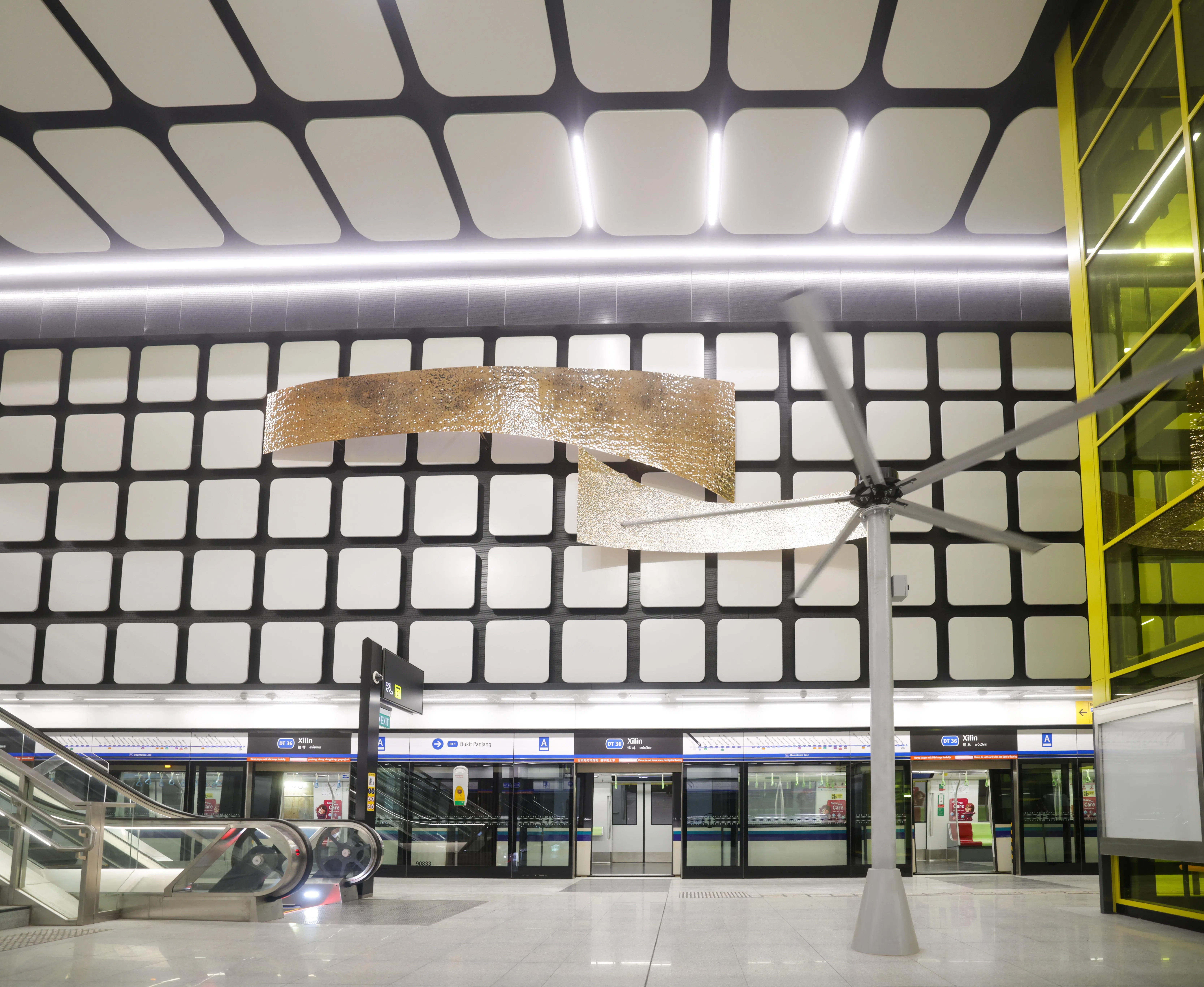
All three new MRT stations use hybrid cooling, with fans installed on the platforms to keep the surroundings cool without having to set air-conditioning temperatures too low, saving energy.
All three new stations can also serve as public shelters during emergencies.
Minister for Transport and Second Minister for Finance Jeffrey Siow announced on 4 November that the three new stations would open on 26 December as a Christmas gift to the public. Stage 5 of the TEL and the DTL Stage 3 extension span a total of 4.3 kilometres.
