

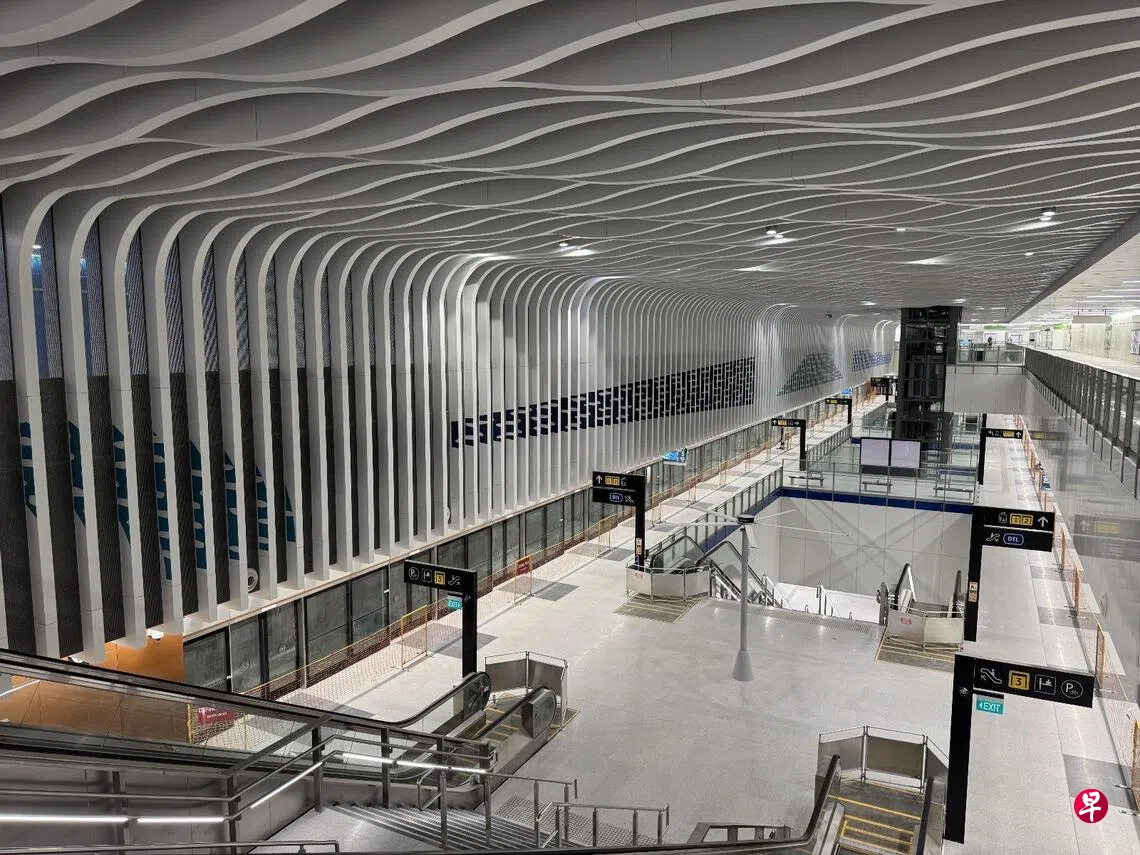
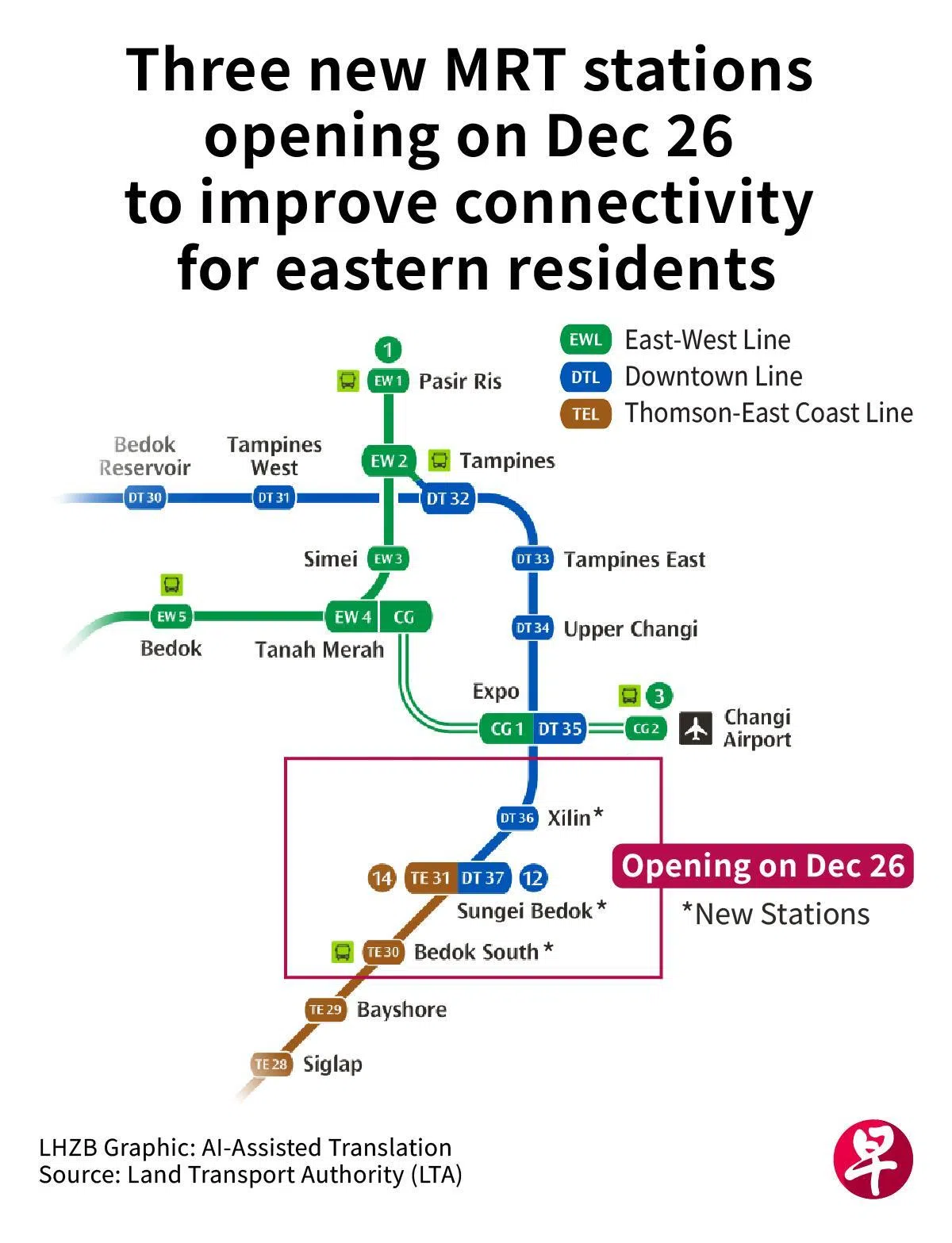
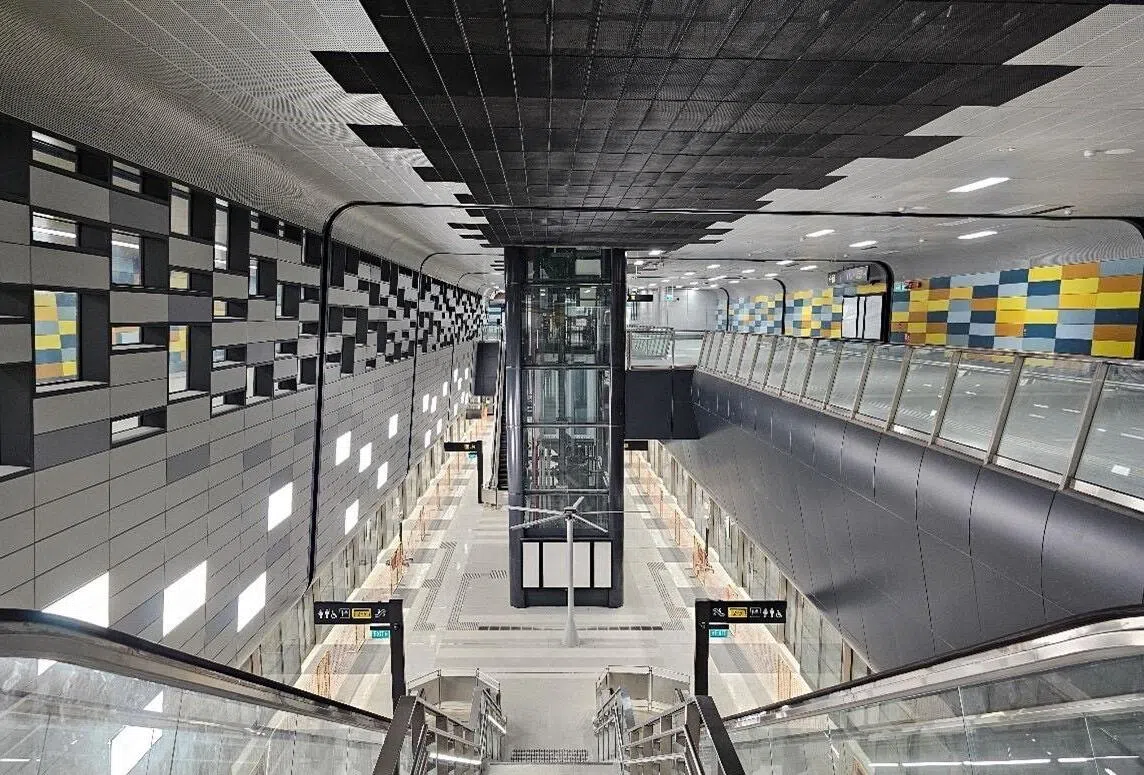
Thomson-East Coast Line station Bedok South, Downtown Line station Xilin, and Sungei Bedok interchange station which connects the two, will open on 26 December. This will allow residents in the east to travel directly to the city centre on the Thomson-East Coast Line. In future, they will also be able to transfer at Woodlands North station to the Johor Bahru–Singapore Rapid Transit System to reach Johor Bahru.
Minister for Transport and Second Minister for Finance Mr Jeffrey Siow announced the opening of the three new stations at the opening ceremony of Singapore Urban Mobility Week on Wednesday (4 November). He said with a smile, “Hope residents in the East enjoy this Christmas present.”
With the opening of the new stations, residents in the east will be able to take the Thomson-East Coast Line directly to the city centre and continue north to Woodlands. Once the Johor Bahru–Singapore Rapid Transit System begins operations, expected in February next year, passengers will also be able to transfer to it at Woodlands North station on the Thomson-East Coast Line, making travel between Singapore and Johor Bahru in Johor more convenient.
Journeys between the east and city centre could be up to 25 minutes shorter
The Land Transport Authority (LTA) said in a statement that Stage 5 of the Thomson-East Coast Line and the Downtown Line Stage 3 extension span a total of 4.3km. With the three new stations in service, Sungei Bedok will become the second interchange between the two lines, giving residents in the east more route options and improving access to destinations such as Changi Business Park and Tampines Regional Centre. The first interchange between the two lines is Stevens station.
Passengers travelling between the east and other parts of Singapore can also expect shorter journeys once the new stations open. For example, the journey from Havelock station to Changi Business Park will take 45 minutes, down from about 70 minutes now — a saving of 25 minutes. Travel time from Marine Parade to Tampines could also be cut by about 10 minutes.
With the opening of Stage 5 of the Thomson-East Coast Line, more than 240,000 households will be within a 10-minute walk of a station on the line. Similarly, with the opening of the Downtown Line Stage 3 extension, over 220,000 households will be within a 10-minute walk of a Downtown Line station.
LTA to publish quarterly autonomous vehicle deployment reports from next month
Besides announcing the opening of the new MRT stations, Siow also said that LTA will publish quarterly reports on autonomous vehicle deployment from December. These will cover the size of the fleet in service, passenger experiences and safety outcomes, giving the public access to data to assess the technology’s performance more objectively.
He said that as Singapore gradually scales up autonomous vehicle deployment, the authorities hope to strengthen public confidence in the technology through greater transparency.
There are currently 25 autonomous passenger vehicles on Singapore’s roads, alongside a handful of autonomous commercial vehicles being trialled.
Siow said public feedback on autonomous passenger vehicles has been very positive, with passengers generally finding the journeys smooth and comfortable. Existing data also shows that the vehicles have a good safety record.
Singapore set up its first autonomous vehicle test centre as early as 2015 to study how the technology could work in local road conditions. In recent years, advances in artificial intelligence (AI) and sensor technology have enabled autonomous vehicles to operate on city streets.
Siow has experienced autonomous vehicle rides in Guangzhou, China, and the San Francisco Bay Area in the US, seeing for himself how the vehicles navigated complex urban traffic. This convinced him that the technology was ready for deployment and that Singapore needed to prepare early.
He said autonomous vehicles could give the public more travel options, for example, by serving areas not covered by public transport or providing safe late-night journeys.
On the impact of autonomous vehicle technology on drivers’ jobs, Siow said that although there would be no immediate impact, the government was already planning ahead. It was working closely with operators and unions to help drivers acquire new skills and transition into skilled roles in the autonomous vehicle industry.
LTA Deputy Chief Executive (Technology) and Chief Technology Officer Lam Wee Shann said more than 20,000 people had used the service since LTA partnered with Grab and ComfortDelGro to provide autonomous shuttle services in Punggol. Passenger feedback has generally been positive.
Besides passenger services, retail and logistics operators are also using autonomous vehicles for deliveries in Joo Koon and Tampines respectively.
Lam said LTA would advance autonomous vehicle deployment in three ways: prioritising safety to ensure the technology is safe and reliable; continuing to work with operators to expand services; and raising public awareness of and confidence in the technology to encourage wider acceptance.
The three-day Singapore Urban Mobility Week is jointly organised by LTA, its wholly owned subsidiary MSI Global and MP Singapore. Its theme is “Driving the Future: Autonomous Innovation, Smart Infrastructure and Urban Mobility”.
The event will explore how emerging technologies can be used to build smarter, more sustainable and well-connected urban transport systems.
More than 200 exhibiting companies and brands will showcase electric and autonomous vehicle technology, AI transport solutions, MRT and bus systems, and the latest logistics technologies to improve first- and last-mile connections. Organisers expect the three-day event to attract more than 8,000 participants from over 50 countries.
