

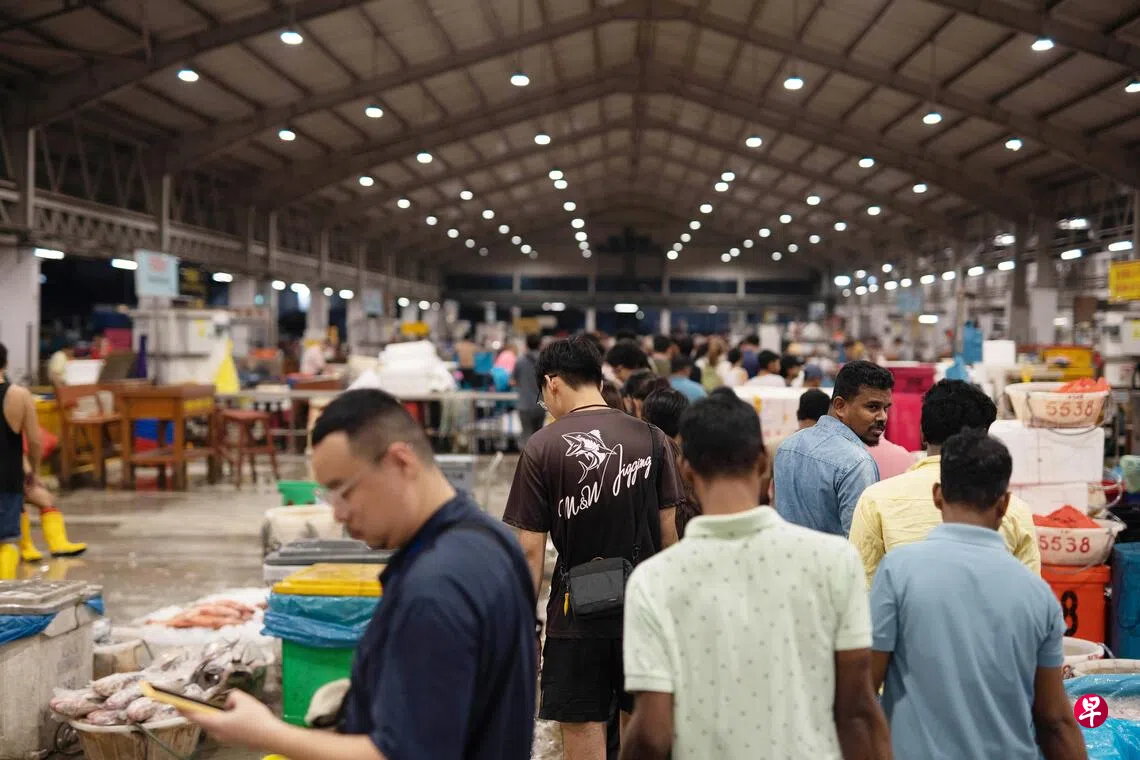
Beyond buying books and watching performances, SG Culture Pass can take participants to wet markets and Jurong Fishery Port — and even uncover little-known murders from the port’s early years.
Since September last year, every Singapore citizen has been entitled to $100 in SG Culture Pass credits, valid until the end of 2028. The credits can be used to buy local literary works, watch local films and performances, and join cultural tours, among other activities.
Tour operator Hidden Heritage Collective is one of the local groups exploring Singapore’s cultural heritage and history. Its late-night tour of Jurong Fishery Port’s wholesale fish market is among the tours eligible for SG Culture Pass credits.
Co-founder Xie Zhihao, 27, told Shin Min Daily News that the roughly two-hour tour traces the port’s origins and development before taking participants through its office areas to hear stories from its past.
“Many people don’t know that serious crimes took place at the port. For example, some business owners there used to wear gold jewellery to show their wealth, only to be robbed and murdered.”
The team recruited young fishing enthusiasts through social media to serve as guides. Xie Zhihao said their extensive fishing experience allows them to bring explanations of local fish ecology and behaviour to life. “It is particularly meaningful to have young people pass on our historical and cultural heritage.”
At the end of the tour, participants can enjoy freshly cooked squid and other dishes at the port’s canteen. Xie said some participants, having learnt how to judge the freshness of seafood by sight, were inspired to host seafood parties at home.
A wet market tour exploring culture and food
Local fish research and education platform Pasarfish also offers a cultural and food tour centred on the wet market at Chinatown Complex, which is likewise eligible for SG Culture Pass credits.
Co-founder Lu Yongyi, 34, said that before formal hawker centres existed, large numbers of immigrants gathered in Chinatown to make a living. The Cantonese were one of the main communities selling cooked food on the streets. Cantonese food culture, including the tradition of making soups with dried seafood and fresh seafood, therefore remains deeply rooted in Chinatown’s market scene.
He described Chinatown Complex’s wet market as one of Singapore’s most distinctive live seafood markets, with one of the widest selections. “Chinatown Complex’s wet market is one of the very few markets with a steady supply of live swamp eels, frogs and snakeheads. These are characteristic offerings — snakehead, for instance, is traditionally regarded as a nourishing food for people recovering from surgery.”
By comparing actual specimens, participants also learn to distinguish fish species and understand their ecology and flesh characteristics, making this a distinctive local tour.
‘Ghost tours’ can also open doors to history and culture
Local cultural tour group Haunting Heritage offers Walk with Hantu: Changi (《与幽灵同游樟宜》), challenging stereotypes of conventional tours by combining rigorous historical and cultural research with vivid storytelling to explore the sombre past of this eastern coastal area.
For founder Zheng Jieming, 47, ghost stories are not simply about conjuring up scares, but a way to open doors to history and culture.
“For example, Changi Beach was one of the sites of the most horrific massacres during the Japanese Occupation, with more than 50,000 people killed. Large numbers of young Chinese men were shot here and buried where they fell. Guides do not need to embellish the stories to prompt participants to reflect.”
For the full report, read the 19 November 2026 edition of Shin Min Daily News.
