

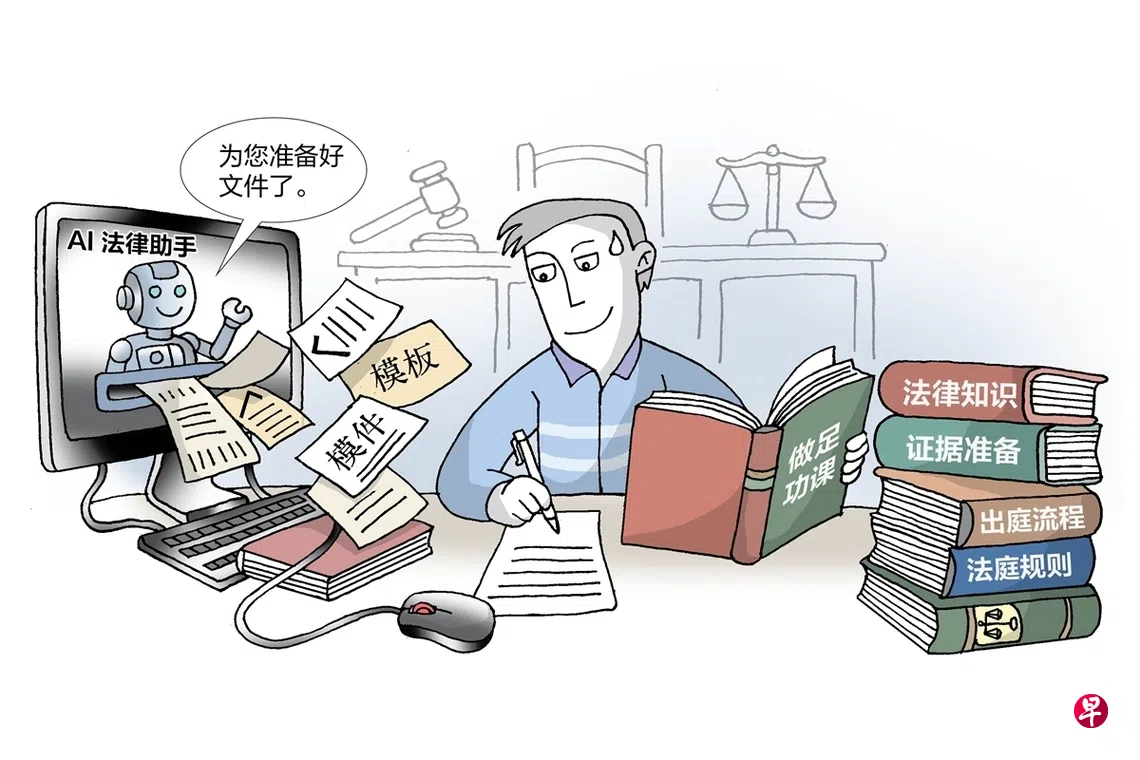
Following his divorce, a man became embroiled in a fresh dispute with his ex-wife over access arrangements for their two daughters. He applied to the Family Justice Courts for a personal protection order, but cited 14 false cases in documents he filed himself. Only when questioned by the judge did he admit that he had used ChatGPT to compile local case precedents and submitted the material without verifying the information.
In grounds of decision issued last September, a Family Justice Court Magistrate noted that some of the cited cases were clearly fictitious, while others appeared genuine at first glance but were not.
The number of litigants in persons, also known as self-represented persons, in Singapore’s courts has risen in recent years, possibly in connection with the rise of artificial intelligence (AI). Readily available AI tools can help people understand legal procedures and terminology and organise the facts of their cases, and can also lower barriers to preparation and accessing information.
However, lawyers interviewed cautioned that this does not necessarily translate into lower barriers to successfully pursuing legal action or improve the chances of winning. Furthermore, it is not the same as reducing the risks of conducting a case without legal advice.
According to the Singapore Courts website, members of the public involved in litigation can choose to engage a lawyer or represent themselves. Those who choose the latter must handle all the necessary preparations, attend court in person, comply with court rules and orders, and familiarise themselves with the relevant laws and procedures for presenting their defence. While this is a personal choice, the courts advise parties to weigh the advantages and disadvantages of each option before deciding.
Ang Tze Phern, deputy head of employment disputes at Rajah & Tann Singapore, said that in the Small Claims Tribunals and Employment Claims Tribunals, self-representation is not just allowed but required: lawyers are not permitted to represent parties in such matters. Litigants in person are most commonly seen in family matters, harassment claims, employment disputes, and smaller civil and debt disputes.

In family matters, self-representation can arise in divorce proceedings and disputes over maintenance, the division of matrimonial assets, and children’s custody, care and control, and access.
Weigh the long-term consequences, not just the savings
Jonathan Wong, founder and principal lawyer of Tembusu Law, said the question is not simply whether someone may represent themselves, but whether they can manage the complexities that may arise in the case and understand both parties’ claims and the long-term consequences.

In divorce cases, for example, Wong said the outcome may affect a person’s finances and children for years to come. But when appearing in court, parties may focus too much on airing their grievances about the marriage and the wrongs they have suffered, losing sight of the core issues that need resolving, including arrangements that best serve their children’s interests.
Wong stressed: “The decision should therefore be based on the case's complexity and consequences, not simply the wish to save legal fees.”
Self-representation can save on private legal fees, but it may not be cheaper overall. Some cases may still involve filing fees, valuation or expert expenses, and costs arising from time taken off work to handle the litigation. Errors in documents that require repeated applications can also add to the expense.
Wong said full private representation or no advice at all is not necessarily the best option for someone worried about cost. “An early consultation or a defined review may help identify the risks before an important decision, and eligible individuals can explore available legal assistance.”
Court standards remain unchanged: Self-represented litigants must prepare thoroughly
Even if self-represented litigants have no legal knowledge, the courts will not relax procedural rules or the standards applied in hearing their cases. They must prepare thoroughly, present their cases to the same standards as parties represented by lawyers, and take full responsibility for everything from pre-trial preparations to appearing in court.
Sharon Lin, dispute resolution partner at Withers KhattarWong, said the procedure depends on the type of case and the court or tribunal involved. Both those bringing a claim and those responding to one should understand the relevant process.

Lin cautioned that the legal merits of a case can sometimes be undermined by procedural missteps. Thus, Anyone considering self-representation should carefully consider whether they have the time, resources and ability to manage the litigation process from beginning to end.
All three lawyers agreed that AI can help litigants handle their cases. Since last December, the Small Claims Tribunals have also made a generative AI case-summary feature available to the public. It helps parties identify the key issues, legal arguments and evidence so they can better prepare and present their cases.
AI hallucinations can cloud judgement; personal data also needs protection
However, the lawyers cautioned that users must be alert to the risk of AI “hallucinations”.
Wong said AI can sound very confident even when it produces incorrect information, such as using an outdated, an invented case or a real judgment that does not support its conclusion. It can also infer a user’s position from the instructions and documents provided, then generate responses that reinforce that position rather than remain neutral.
Wong warned that in criminal or divorce cases, the false confidence AI provides can influence decisions with lasting consequences.
Confidentiality also matters. Criminal statements, medical reports, bank records and children’s information contain highly sensitive material and should not be uploaded indiscriminately. Removing names and other identifying details alone may not be enough to protect personal privacy.
Ang advised parties not to rely solely on AI to draft documents. They should also verify AI-generated cases and statures against resources such as LawNet, eLitigation or Singapore Statutes Online.
Court self-help tools widen access to justice
The courts exist to serve everyone, regardless of their background or experience. Guided by this principle, the Singapore Courts are committed to providing resources that lower barriers to legal assistance, ensuring the justice system is fair and open, and making it easier for people to exercise their right to seek legal redress.
The Singapore Courts have established an Access to Justice (A2J) division. Through resources such as guided electronic questionnaires in public beta, video guides and information booklets, it helps people use court services with greater confidence.
The lawyers cautioned that while self-represented litigants can use these self-help resources to prepare for hearings, they remain responsible for ensuring their documents are accurate. Those who decide to represent themselves should also seek advice early. Anyone concerned about costs can seek help through Pro Bono SG, legal clinics or the Legal Aid Bureau.
What AI can help with
Simplify legal terminology
Organise information from different sources and prepare a chronology of events
Help edit submissions for clarity and tone, making them more structured and measured
Act as a “sparring partner” to anticipate questions or counterarguments the other party may raise
What not to leave to AI
Rely solely on it in finding case law
Make strategic calls requiring judgement, such as whether to sue or appeal
