

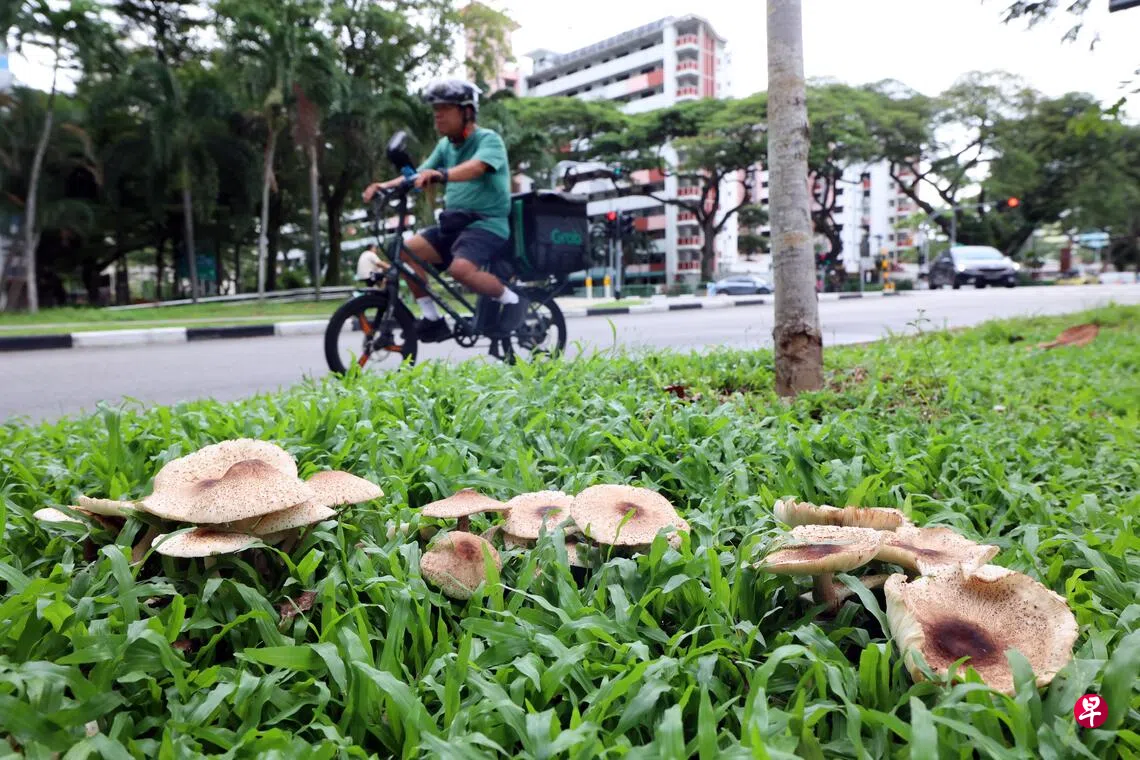
Frequent rain across Singapore recently has soaked the soil, bringing a flush of wild mushrooms to lawns in many areas. The National Parks Board (NParks) has reminded the public to avoid picking or touching these mushrooms, and never to eat them. Picking mushrooms in parks, nature reserves and roadside green verges is also illegal.
It has rained on most days in Singapore over the past two weeks, with about half the island recording above-average rainfall. Discussions in the Facebook group Mushroom Spotters Singapore have been particularly lively recently, with sharp-eyed members even spotting mushroom species not seen here for years.
From 1 to 16 November, the group had 163 posts about wild mushrooms in Singapore, up 54% from 106 in the same period last month. Group founder Chan Wai Yeng told Lianhe Zaobao: “With more rain recently, there has been a good appearance of mushrooms. Many of us have been finding unusual-looking mushrooms at Bukit Timah Hill.”
Singapore has a rich diversity of fungi. A Guide to Macrofungi in Singapore (《新加坡大型真菌指南》), published in 2023, features more than 165 species across 103 genera and 51 families.
Senior Director of Singapore Botanic Gardens Dr Thereis Choo, of NParks, said mushrooms can survive for anything from one or two hours to several days. Those commonly found in residential areas include the false parasol (Chlorophyllum molybdites, also known as the green-spored parasol), Leucocoprinus cretaceus (Leucocoprinus cretaceus), Russula bellissima (Russula bellissima), and mushrooms in the genera Lepiota and Macrocybe.
Responding to queries, she stressed that the public should avoid picking, touching or eating wild mushrooms, as misidentifying them can easily lead to poisoning. In one case of mushroom poisoning in Singapore in recent years, a person who ate wild false parasols developed severe abdominal pain, vomiting and diarrhoea, and was taken to hospital for emergency treatment.
Dr Choo advised: “Parents and caregivers should also advise children not to pick or handle wild mushrooms. As a precaution, pet owners should prevent their pets from ingesting or coming into close contact with wild fungi.”
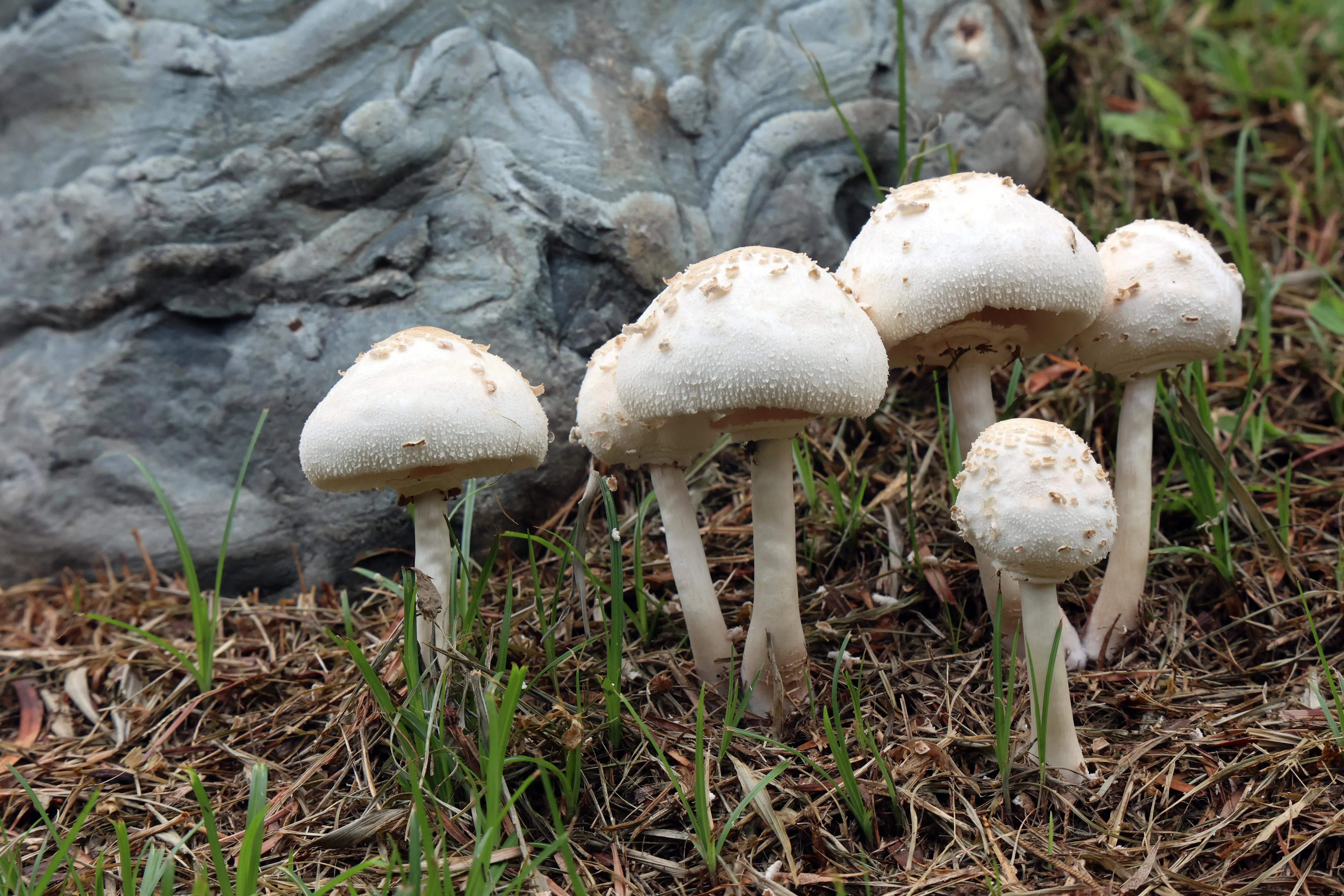
Dr Amy Choong, Senior Lecturer at NUS Department of Biological Sciences, said in an interview that identifying mushrooms was not easy. Some different species look very similar, and molecular sequencing techniques are usually needed to confirm their identity. She is also a co-author of A Guide to Macrofungi in Singapore.
When identifying mushrooms, researchers also narrow down the possibilities by examining the shape and structure of their caps, gills and stems. Chan said members of the mushroom-spotting group share photographs of mushrooms seen in Singapore every day, with experts helping to identify them online.
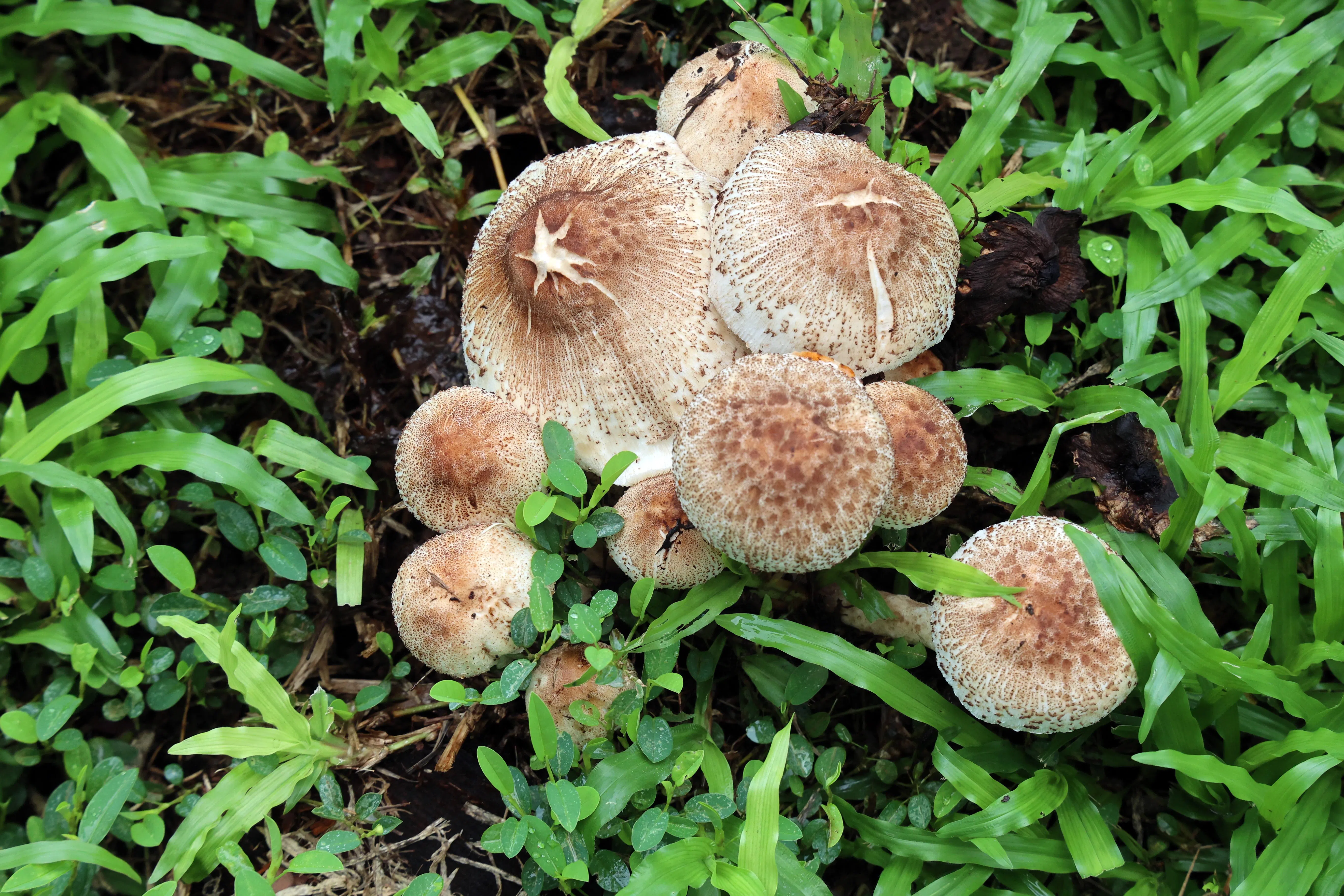
Chan, a patent agent, became fascinated by the wild mushrooms she often saw on walks and hikes, and set up the mushroom-spotting group ten years ago. It now has more than 9,700 members. She estimates that she has spotted 70 to 80 mushroom species over the years. She now also holds a research permit and consults mycologists at Singapore Botanic Gardens when she comes across rare mushrooms, occasionally helping to collect specimens.
“For me, mushroom spotting is like a forever Pokemon hunt. Sometimes I challenge myself to find 15 mushroom species in a day. When I manage it, I feel a real sense of achievement.”
Under the Parks and Trees Act, however, picking or collecting plants or plant parts without permission in parks, nature reserves and roadside green verges managed by NParks is an offence. Those convicted face a fine of up to $50,000, up to six months in jail, or both.
