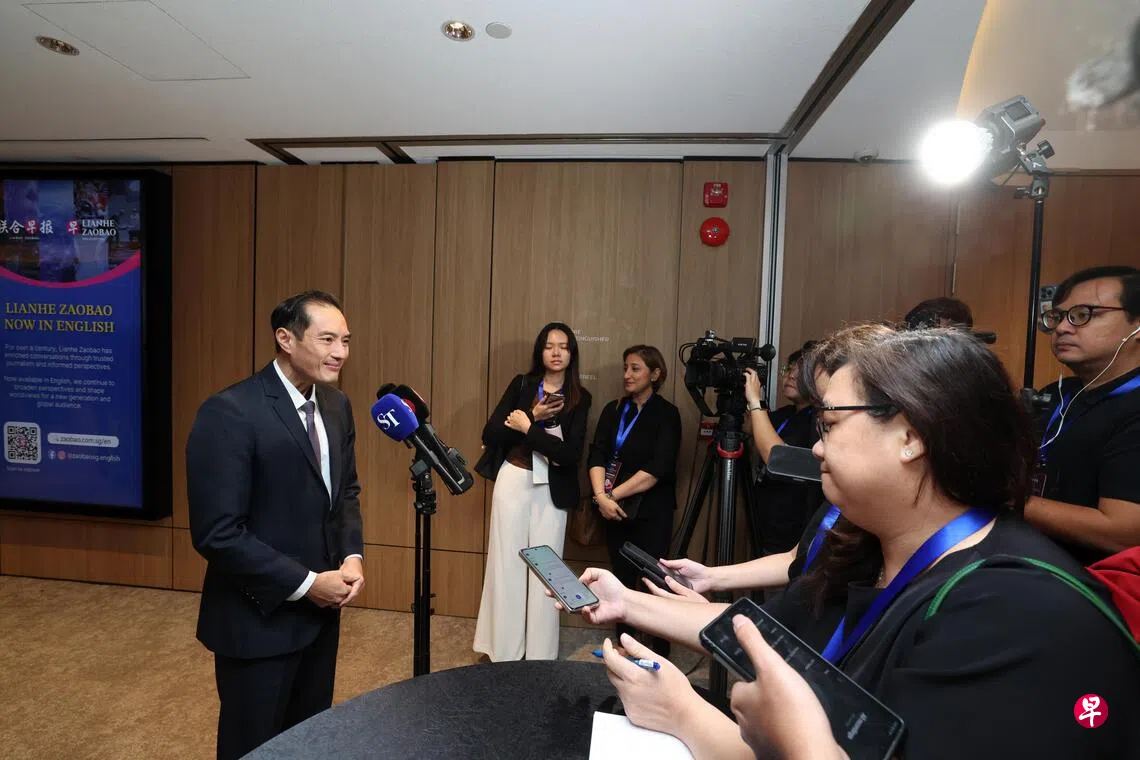
Lianhe Zaobao (LHZB) has launched an English edition using artificial intelligence (AI), bringing news coverage and distinctive perspectives previously aimed mainly at Chinese-language readers to a wider audience across language backgrounds. Senior Minister of State for Digital Development and Information and for Health, Tan Kiat How, said AI technology could help local media expand their audiences and open up more possibilities.
Speaking to reporters after the launch of the Zaobao English Edition (ZBE) website, Tan said LHZB had long been an important part of Singapore’s news ecosystem, providing news and different perspectives for Chinese-language readers. He welcomed the English edition, which would give more readers access to quality Chinese-language journalism and views.
Tan, who also chairs the National Translation Committee, stressed that translation was not just about overcoming language barriers, but, more importantly, about bringing people closer. By reading news from other communities, readers from different language backgrounds could gain a deeper understanding of one another’s perspectives and views, fostering mutual understanding.
Workers’ Party secretary-general Pritam Singh said he occasionally shared pieces on social media from ThinkChina, LHZB’s English-language digital publication focusing on developments in China. He said the perspective, angle and thought process behind how these pieces dissected different issues were original.
Singh said that in Singapore’s multiracial and multireligious society, where communities could have different biases and norms, it was especially important to understand one another better. He believed ZBE could expose more readers to the distinctive analytical perspectives of Chinese-language media, broaden their horizons and foster mutual understanding between communities.
“If you’ve never been exposed to one particular culture and suddenly you’re exposed to it, you become a bit more empathetic because you understand it better. But until you’re exposed to it, you’re still stuck in your own bubble.”
China’s ambassador to Singapore, Cao Zhongming, said the launch of ZBE was a positive development. He praised LHZB as an important Chinese-language media outlet and a mainstream Singapore publication with considerable influence in the Chinese-speaking world and many readers in China.
“Lianhe Zaobao’s coverage of China, Southeast Asia and international news is, on the whole, objective, fair and balanced. I hope more international readers will be able to understand how Zaobao views changes in the international landscape and China’s development, including China’s relations with Singapore and ASEAN countries.”
Hopes for greater spotlight on local Chinese culture and clan history
Azhar Othman, deputy president of the Singapore Malay Chamber of Commerce and Industry, strongly supported the launch of ZBE and hoped the Malay-language newspaper Berita Harian would follow suit in future.
He said ZBE could help young people understand the issues covered by Chinese-language media in a language they were more familiar with.
Thomas Chua Kee Seng, president of the Singapore Federation of Chinese Clan Associations, said the launch of ZBE was an important step in keeping pace with the times. With most of the younger generation accustomed to reading in English, the English edition would offer them an accessible bridge.
He hoped ZBE would cover not only current affairs, but also more stories on local cultural heritage, traditional festivals and the modernisation of clan associations. He also hoped to see stories reflecting local cultural identity and the spirit of the Chinese community. These would give people from different backgrounds an opportunity to learn about Singapore’s distinctive Chinese culture and the history of its clan associations, strengthen younger generations’ cultural pride and sense of identity, and help other communities better understand the cultural roots of the local Chinese community.
“I hope Lianhe Zaobao English Edition will become an important gateway connecting younger generations with Chinese culture, encouraging more young people to take an interest in and participate in Chinese community affairs.”
Former LHZB editor-in-chief Lim Jim Koon said the newspaper had long enjoyed a strong reputation among Singapore’s English-speaking elites. They recognised its value, but their limited command of Chinese meant they could access it only through occasional translations or accounts relayed by friends. The launch of ZBE fulfilled their wish to read LHZB directly, opening a window onto Chinese-language knowledge for a broad English-reading audience.
“However, as I have repeatedly stressed in the past, Lianhe Zaobao is a newspaper produced by Singaporeans for Singaporeans. Although it is widely read among overseas Chinese, and its readership abroad even far exceeds that in Singapore, we would never change Zaobao’s editorial policy to cater to overseas readers. Now that Lianhe Zaobao English Edition has been launched, English-language readers may become increasingly important. But I hope Zaobao will likewise not change its editorial policy to cater to them.”
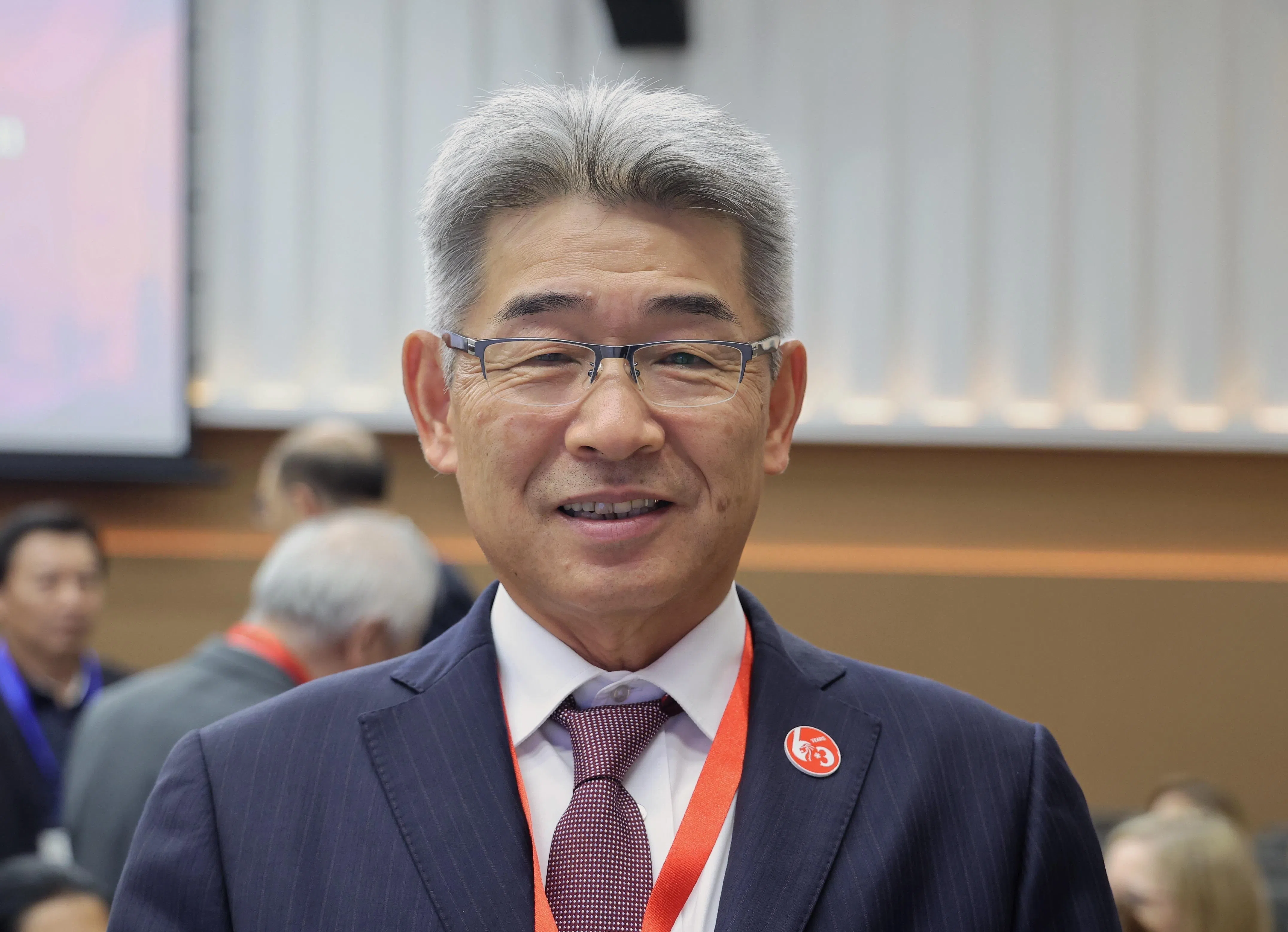
I read Lianhe Zaobao every day. I find the newspaper very objective, especially in its news about China. Its China section is very interesting, with in-depth reporting and rich content. It not only covers mainland China, but also gives a very clear account of developments in Taiwan. Zaobao’s commentaries also present a wide range of views, making them well worth reading and learning from for readers abroad. So I think launching an English edition to give more foreign readers access to this content is very meaningful. — Hiroshi Ishikawa, Japan’s ambassador to Singapore
The launch of Zaobao English adds to the diversity of opinions. For foreign diplomats who do not speak Mandarin, it will be a very important tool for keeping up with the issues and stories covered by a major Chinese-language media outlet in Singapore. This will not only deepen our understanding of Singapore, but also improve the quality of our reporting back home on the country. — Artis Bertulis, the EU’s ambassador to Singapore

UOB has many Chinese business customers with a strong command of Chinese. But other customers, especially those of the younger generation, may not be as proficient in the language. As economic and trade ties with regional business partners, including companies in Greater China, grow closer, they hope to gain different perspectives and deeper insights through media coverage that can help them in both their personal lives and their businesses. — Janet Young, managing director and head of Group Channels and Digitalisation, Strategic Communications and Brand, UOB