

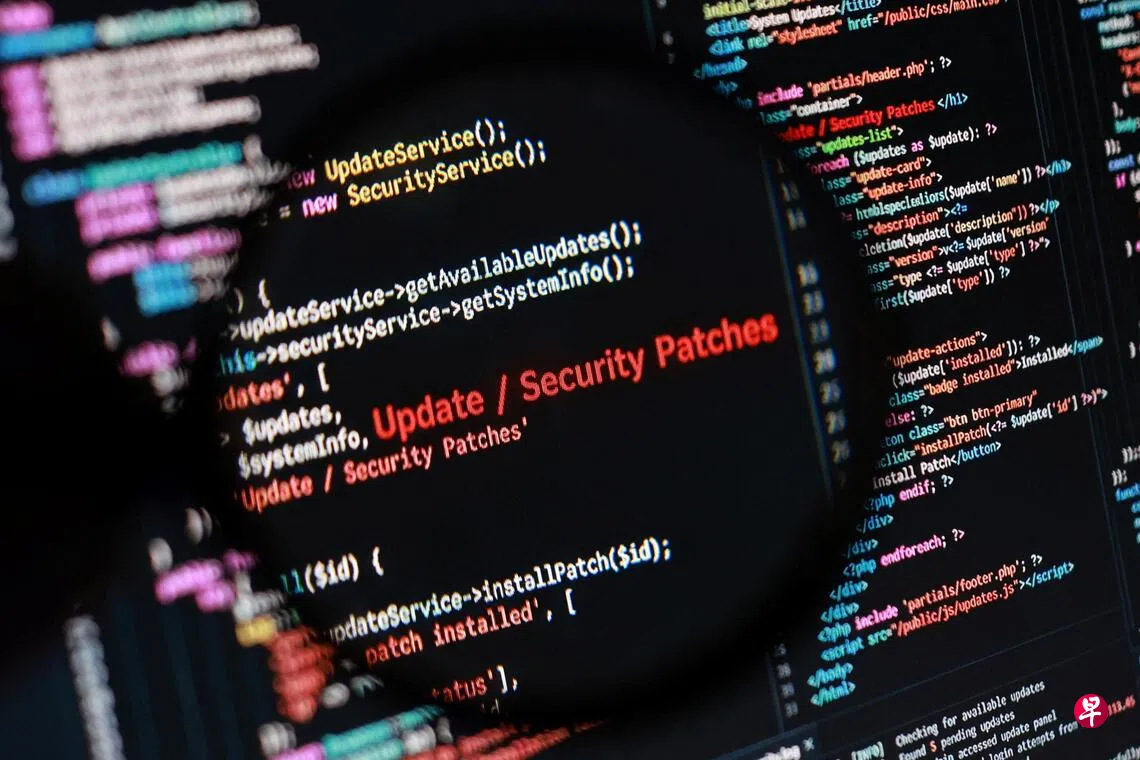
A spate of sudden outages at airlines, businesses and online banking services worldwide has disrupted work, travel and money transfers for many people. Cybersecurity experts and US officials say frequent security patches — updates issued by businesses to fix a growing number of vulnerabilities in the age of artificial intelligence (AI) — may well be the main cause of the repeated system crashes.
Finding software vulnerabilities used to take considerable time and effort, but the widespread availability of AI tools has made the process quick and easy.
Data from cybersecurity firm Qualys shows that Microsoft has fixed more than 1,200 vulnerabilities this month, nearly 20 times the number in the same period last year. Another firm, VulnCheck, has recorded as many as 100,000 software vulnerabilities disclosed worldwide in 2026, of which 1,363 have been exploited by hackers.
With so many vulnerabilities, businesses seeking to fend off hackers have little choice but to install “emergency patches” in their core systems within just hours. Experts explain that these patches often cannot be fully tested in time, yet directly alter the software at the heart of the systems. Changes made too hastily and on too large a scale can end up crashing systems that were working normally.
The banking sector has been among the hardest hit by the outages. Executives at several banks said their teams had been working through the night to fix problems caused by the patches after online services were disrupted this week. US banking regulatory authorities have also launched investigations, requiring banks to assess the impact and promptly reassure customers.
Industry insiders say many financial institutions accumulated considerable “technical debt” by failing to upgrade ageing systems in their pursuit of cost savings and speed. With AI now bringing sweeping changes, these legacy systems are close to buckling under the strain of frequent patching.
