


After Nvidia chief executive Jensen Huang admitted to an extramarital affair, Alice Huang, the woman involved, quickly became the subject of intense online scrutiny. Internet users dug into everything from her age, education and marital status to the travel experiences she shared on WeChat Moments. Even photographs from her secondary school days surfaced.
With so many claims circulating online, which can be substantiated and which are merely speculation? What is Singapore investigating? And how should readers form their own judgements amid competing Chinese and US narratives about espionage and “counter-espionage”?
The third instalment of Beyond Fact and Fiction (《真假之外》) begins with Alice Huang’s publicly available career history, separating known facts from unverified claims in the controversy and examining how the various parties are competing to shape the narrative.
What is known — and unknown — about Alice Huang
So far, the personal details that can be confirmed are that Alice Huang is a Chinese national from Hunan and holds Hong Kong permanent residency. Her career history can be cross-checked only as far back as November 2015.
Accounts of her earlier work in the media and finance industries come mainly from her own descriptions and those of the companies concerned. They have not been independently confirmed by the relevant organisations.
Even with these roles included, substantial gaps remain in her career history. People claiming to be her former classmates, roommates or colleagues have also emerged on social media, sharing stories about her past in an attempt to fill those gaps. Their identities and accounts, however, have yet to be verified.
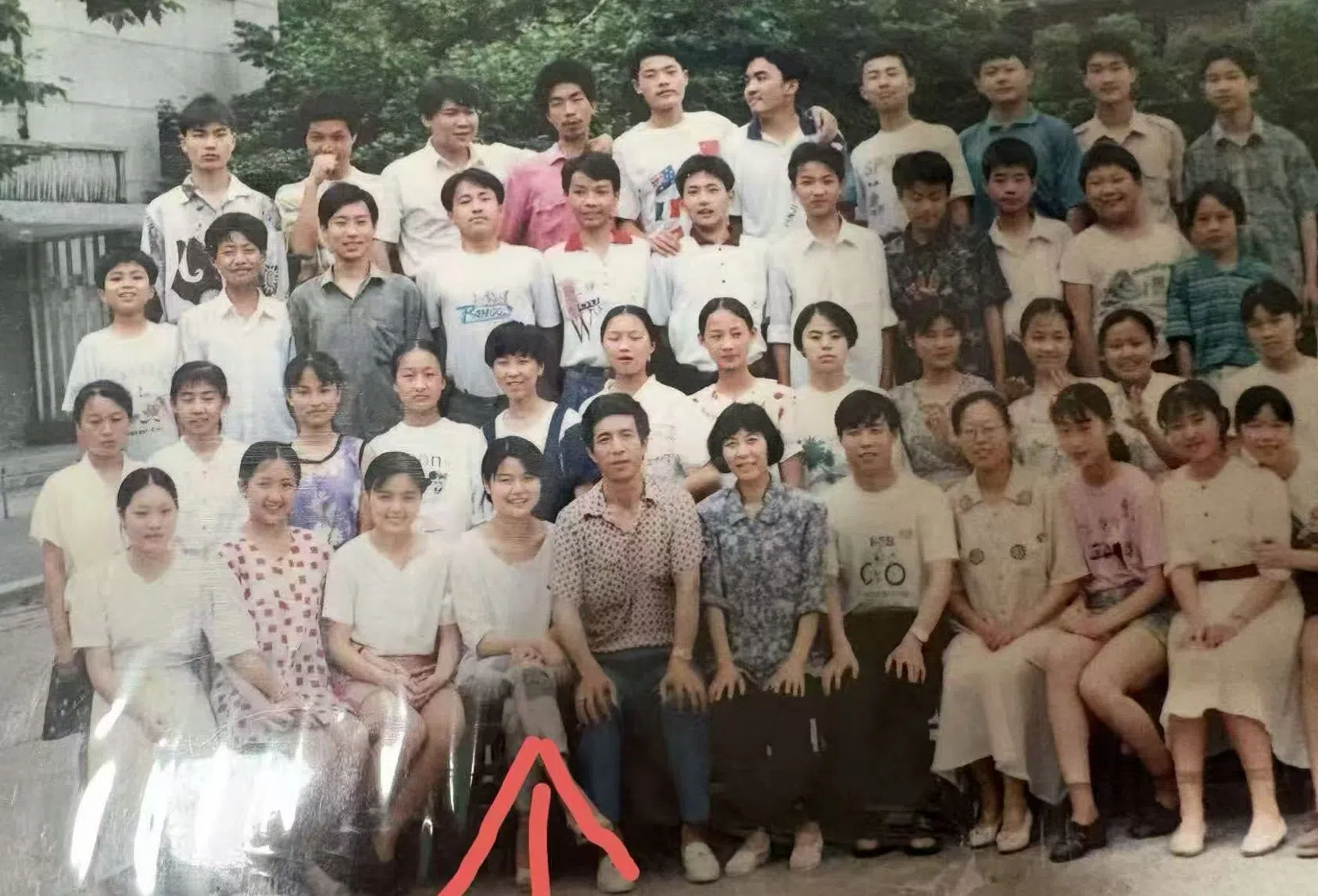
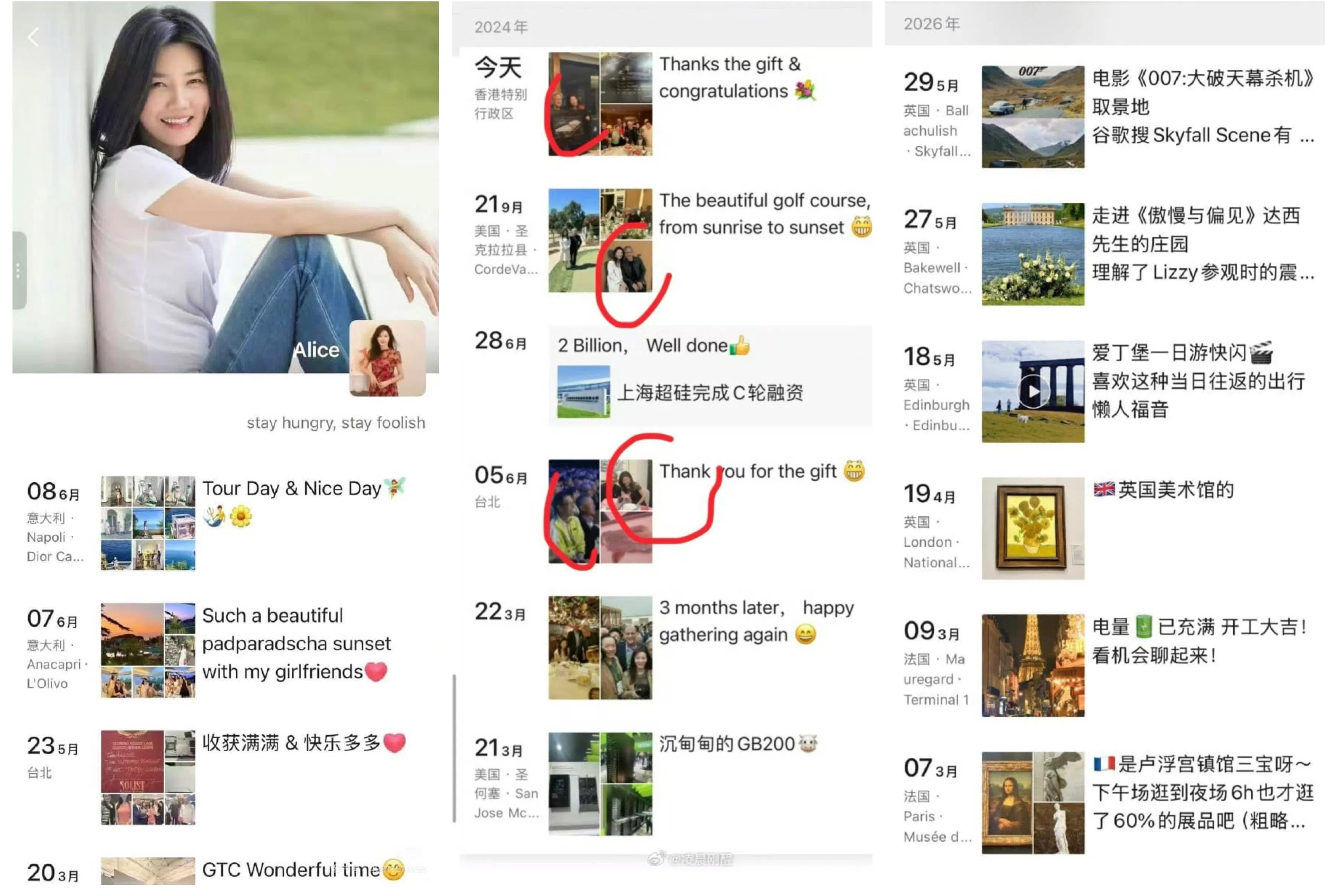
Much about Alice Huang’s marital status and family relationships remains unknown and requires verification. Even her age is in doubt.
Singapore’s investigation is confined to Megaspeed
Is Singapore investigating Megaspeed? The answer is yes.
But Singapore is investigating whether a company’s local transactions and declarations breached local laws, not whether Alice Huang is a spy.
The Wall Street Journal (《华尔街日报》) reported on 30 October that Singapore officials were concerned about Alice Huang’s close relationship with Jensen Huang and the possibility that she was providing intelligence to China. The Ministry of Home Affairs issued a statement the following day denying that officials had expressed such concerns and stressing that the investigation did not target her. Rather than joining the war of words between China and the US over the affair, the authorities set out the facts they could confirm and the scope of their enforcement powers.
Many questions surrounding Megaspeed remain unanswered. A review by Lianhe Zaobao (《联合早报》) on Tuesday (10 November) of financial records from Singapore’s Accounting and Corporate Regulatory Authority (ACRA) found that Megaspeed’s total assets stood at just US$32.89 million (about S$42 million) in the 2023 financial year. The figure surged to US$2.97567 billion the following year — an increase of about 90-fold in just one year.
Shin Min Daily News (《新明日报》) reported the same day that although Megaspeed’s registered address displayed the company’s signboard, it was also the registered address of an association, a construction company and a financial management company.
The newspaper had found the previous day that one of Megaspeed’s 10 directors, a Singaporean surnamed Wong, served as a director for just over a month in 2020 before being disqualified. He currently lives in a rental HDB flat in Ang Mo Kio.
The Megaspeed case sits at the intersection of the global chip supply chain and China-US technological competition. The company’s rapid asset growth, its huge volume of chip imports and the equipment’s ultimate destination are all under scrutiny.
Although the police have not disclosed details of the investigation, they have made clear that while Singapore does not enforce export controls imposed unilaterally by other countries, it will not allow companies to use Singapore to circumvent those restrictions. The authorities will act if companies or individuals are suspected of breaching local laws, including through fraud or false declarations.
China and the US compete over the espionage narrative
No evidence establishing whether Alice Huang is a spy has been made public. But China and the US have already developed their own accounts of the controversy.
The US espionage allegations stem from a secret memorandum whose detailed contents have yet to be made public. According to The New York Times (《纽约时报》), the memorandum was drafted by Secretary of State Marco Rubio. It alleged that Alice Huang had been recruited by China’s Ministry of State Security to gather information about Jensen Huang and US artificial intelligence chips, and that she may have sought to influence Nvidia’s policy on chip exports to China.
“Would a spy really be so high-profile?” That is a question many online have raised. Some members of the US intelligence community are trying to broaden public understanding of what constitutes intelligence.
Peter Mattis, a former CIA counter-intelligence analyst and now president of the Jamestown Foundation, wrote on X on 9 November: “Anyone who thinks China’s Ministry of State Security is interested only in classified information probably does not understand intelligence work at all.”
He added that whether information was classified when collected was not important. Such information had commercial value, but its political value deserved greater attention.
Canadian intelligence scholar Dennis Molinaro also noted that even without classified material, Jensen Huang’s knowledge of Nvidia’s business plans and customers, as well as what he heard in Washington, could have intelligence value. Under this interpretation, business dealings, private conversations and even personal relationships could all be re-examined through a national security lens.
China, meanwhile, has repeatedly denied the espionage allegations. A Ministry of Foreign Affairs spokesperson stressed that claims about a so-called “Chinese spy” were entirely unfounded smears.
In Chinese public discourse, the espionage allegations have largely been interpreted as a product of US political infighting and racial prejudice against people of Chinese ethnicity. Former Global Times (《环球时报》) editor-in-chief Hu Xijin argued that the US Democratic Party and the political establishment were using the opportunity to target Jensen Huang and Donald J. Trump. The independent blogger “Chairman Rabbit” put it more bluntly: Huang’s “greatest fault” was being ethnically Chinese.
In short, China and the US are both seeking to make their respective accounts hold together. But neither national security risks nor political persecution or racial prejudice can be established as fact through speculation alone. Ultimately, the test must be the evidence, not which side tells the more convincing story.
