

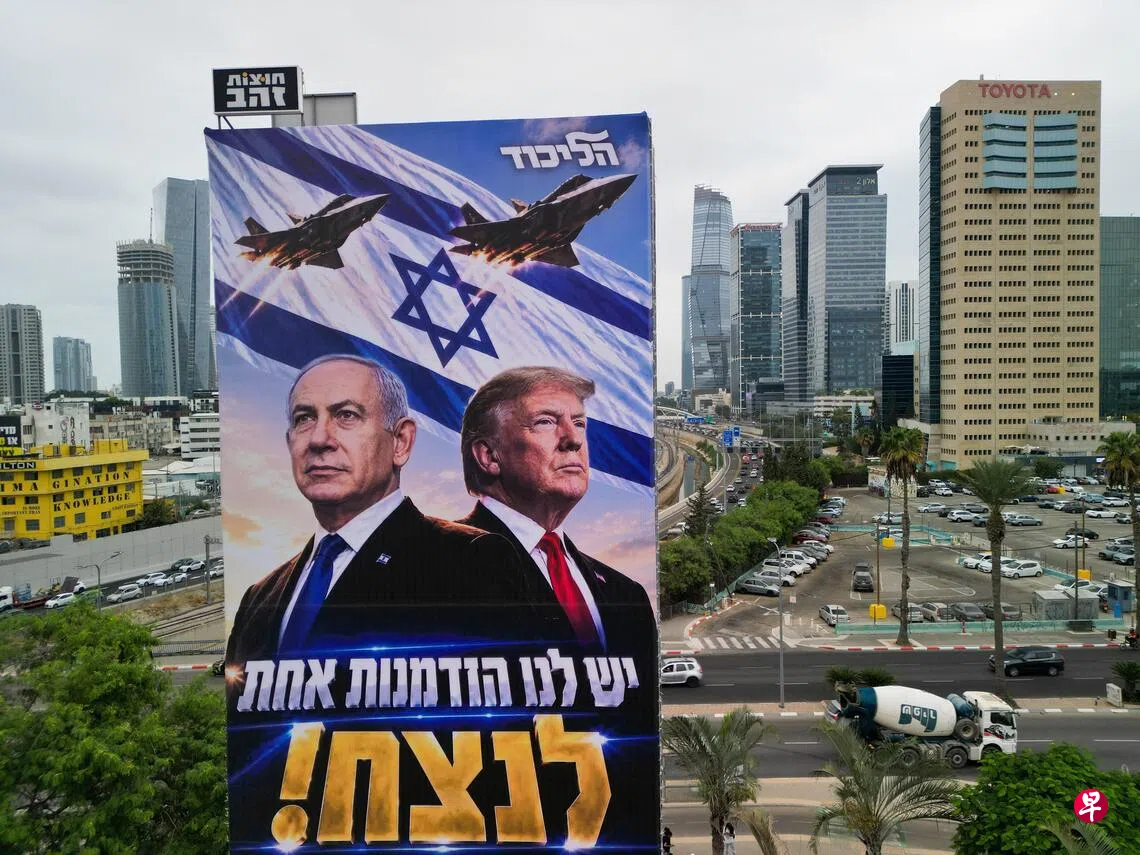
After Israel’s inconclusive general election on 27 October, the US midterm elections were decided on 3 November. Within just a week, the two strategic centres shaping the course of the Middle East’s wars underwent successive political upheavals.
In Jerusalem, a deeply fragmented parliament has left politics mired in deadlock. Neither the bloc supporting incumbent Prime Minister Benjamin Netanyahu nor the camp opposing him crossed the 61-seat threshold needed to govern. Netanyahu remains the caretaker prime minister for now, but his power base has been severely shaken.
In Washington, the Democrats have taken full control of both the Senate and the House of Representatives, leaving President Donald Trump facing formidable legislative checks.
Yet this is by no means a sign that the White House will soften its stance towards Tehran. Given both the president’s constitutional powers to use force abroad and the Middle East’s tangled security dilemmas, the political upheavals in the US and Israel have not curbed their hard line on Iran. Instead, they have further narrowed the scope for diplomatic compromise.
A change in Congress cannot stop the Oval Office from using force abroad
Middle Eastern diplomatic sources said Iran had closely tracked the US midterm campaign and stepped up harassment of commercial vessels in the Strait of Hormuz. Its aim was to push up global energy prices and inflation expectations, putting pressure on American voters and forcing the Trump administration to make concessions over the military and sanctions impasse.
As soon as news broke of the Democrats’ sweep of both chambers, Tehran claimed it as a success for its own maximum-pressure strategy. Iran’s Speaker of the Parliament and chief negotiator Mohammad Bagher Ghalibaf declared that the change in control of Congress showed American voters were using their ballots to say a clear “no to war” abroad.
International political observers, however, see Tehran’s optimistic assessment as wishful thinking. Experts broadly agree that congressional constraints may tighten the administration’s domestic budget, but cannot meaningfully prevent the White House from escalating its military deterrence against Iran.
In an interview with the Financial Times on polling day, Trump sent an intriguing tactical signal. He said the US had no immediate plans to strike Iran, while insisting of the US military: “We’re ready”.
This apparent pause in the pace of operations, while keeping forces poised to strike, was interpreted as psychological warfare after consolidating leverage on the battlefield – not a strategic withdrawal or concession.
Cal Jillson, a political science professor at Southern Methodist University in Texas, told Lianhe Zaobao (LHZB): “Presidents have a great deal of flexibility in war-making, especially once troops are engaged, though Congress can hold hearings and inquiries and limit funds that might put pressure on the president over time.”
US constitutional history in wartime shows that congressional checks on presidential war powers have often had limited effect against a determined chief executive.
The Democrats rode an anti-war wave to regain both chambers in the 2006 midterm elections. Yet then-president George W. Bush announced a major troop surge in Iraq in early 2007 and repeatedly used his veto to block withdrawal timetables.
From Richard Nixon pressing ahead with air strikes despite anti-war opposition, to Bill Clinton pursuing NATO military intervention without House authorisation, and Barack Obama intervening in Libya without explicit congressional approval, the White House has followed a consistent logic in using force abroad.
Congress cannot intervene in the operational chain of command, and assembling the two-thirds supermajority needed to override a presidential veto is extremely difficult.
This means that even if the new Democratic-controlled Congress seeks to pressure the president through budget hearings and funding restrictions, the ultimate decision on whether to escalate or ease the Middle East’s conflicts remains firmly in the hands of the Oval Office.
Trump did not relax the blockade of Iranian ports and shipping lanes before the elections. He is even less likely to surrender geopolitical dominance in the Persian Gulf afterwards.
Israel’s security doctrine is entrenched
Meanwhile, Israel’s strategic thinking on security has been fundamentally reshaped since war erupted on multiple fronts on 7 October 2023.
A cross-party consensus in Jerusalem holds that, whoever ultimately becomes prime minister, Iran is the foremost threat and one on which there can be no compromise. Forward defence and pre-emptive action have become non-negotiable priorities.
Israel’s current security doctrine rests on three pillars: dismantling the threat from Iran’s proxies on the front lines, establishing defensive buffer zones beyond its borders, and restoring deterrence through high-intensity retaliation.
Political observers say the disagreement between Israel’s government and opposition is not over whether to contain Tehran, but over the means, timing and scale of mobilisation.
In an analysis published by Reuters, Michael Young, a senior editor at the Carnegie Middle East Center, noted that Israel’s security establishment and most of its politicians share a closely aligned strategic vision: concentrating forces against Iran, building security barriers and maintaining absolute deterrence. This sharply limits Israel’s room for a diplomatic shift.
For Netanyahu and his right-wing allies, this military hard line takes an even more offensive form. Behind Netanyahu’s repeated assertion that attacking was the best form of defence lies the ultimate goal of dismantling the regime in Tehran – an ambition already deeply embedded in Israeli military planning.
Netanyahu’s former adviser Aviv Bushinsky said bluntly that Netanyahu has no room to retreat on military deterrence abroad. “The wars against Iran, Hamas and Hezbollah will continue.”
A dangerous contest amid structural deadlock
The political turmoil in Washington and Jerusalem is deeply intertwined with the Middle East’s long-standing structural tensions. In the Persian Gulf, US naval escort groups remain bogged down by low-cost drone warfare and asymmetric harassment.
After enduring repeated targeted strikes and intense sanctions pressure, Iran is determined to offset US technological superiority through a prolonged war of attrition. It hopes the crisis in shipping lanes will wear down the strategic patience of the US and its allies.
Caught in the middle, the Gulf Arab states face a dilemma. They are wary of the growing spillover from Israel’s offensives on multiple fronts, fearing that local clashes could spiral into all-out war. Privately, however, they have to acknowledge that only Israel has the military resolve to substantially weaken Tehran’s network of proxies on the front lines.
Abdulaziz Sager, chairman of the Saudi Arabian think tank Gulf Research Center, described this ambivalence: the destructive impact of fighting on multiple fronts is beyond doubt, but “if Iran’s role is not curbed, the region could be heading toward 50 years of Iranian hegemony”.
More troubling still, a sense of existential danger is driving Tehran’s leaders to adjust their means of deterrence. With conventional retaliation faltering, unprecedented security anxiety has prompted Iran to accelerate high-level uranium enrichment and move closer to the nuclear threshold, seeking the ultimate security shield.
The US and Israeli elections are over, but the political upheaval has created no room for manoeuvre in the Middle East crisis.
As Washington’s commitment to maximum pressure collides with Israel’s uncompromising security doctrine and Tehran’s desperate drive to break out of its predicament, this life-or-death struggle for survival and dominance in the Persian Gulf is sliding into uncharted danger, without any diplomatic buffer.
How will Trump play his hand against Iran after losing Congress?
The midterm elections have set Congress against the White House, while Israel’s political leadership remains stuck in a struggle to form a government. Yet neither development has materially weakened the White House’s authority or freedom to use force abroad.
While accepting the loss of both chambers, Trump has already made clear that he will frequently use the presidential veto to counter congressional attempts to constrain him through legislation.
On Iran, Trump is maintaining a characteristic posture of “transactional deterrence”. He refuses to rule out military strikes and declares US forces “locked and loaded”, while also expressing satisfaction with the current blockade and pressure campaign. The threshold for military action is deliberately being kept highly ambiguous.
CNN global affairs analyst Brett McGurk wrote that, with presidential wartime prerogatives protecting his freedom of action, Trump’s immediate strategic choices on Iran fall mainly into three paths:
Option one: Declare victory unilaterally, then ease tensions tactically
After several rounds of symbolic operations, US forces could unilaterally declare that they have achieved their interim deterrence objectives. Tactical concessions could then secure the full reopening of the Strait of Hormuz, easing domestic energy prices and inflationary pressure.
McGurk, however, considers this scenario unlikely in practice. If Trump had intended to ease tensions across the board to relieve pressure on the domestic economy, he should have acted before the elections. Having borne the political and economic costs of maintaining a tight blockade before the vote, he has even less reason afterwards to readily abandon the pressure he has built up.
Several scholars interviewed by LHZB also said this kind of “tactical withdrawal” lacked a practical basis.
Sina Toossi, a non-resident senior fellow at the US think tank Center for International Policy, said a US military withdrawal at this point would be seen by Tehran as a strategic victory for the “axis of resistance”. It would give Iran breathing space to rebuild its nuclear and missile arsenals and its regional proxy network.
Adrian Ang, a research fellow with the US Programme at the Institute of Defence and Strategic Studies, Singapore’s S. Rajaratnam School of International Studies, Nanyang Technological University, also believes such a tactical exit is highly unlikely.
He told LHZB, “A tactical off-ramp based on the current situation appears unlikely, as it would be difficult for Mr Trump to accept an accommodation with Iran to re-open the Strait of Hormuz without it appearing as a capitulation. His strategic reputation would struggle to withstand that cost.”
Option two: Maintain the blockade with targeted retaliatory strikes
This is the compromise that Washington’s national security establishment currently considers best suited to the situation: maintaining tight sea and air restrictions and naval escorts, while carrying out asymmetric precision strikes on military assets such as Iranian coastal radars and missile positions.
McGurk’s assessment is that this option is not intended to start an all-out war. Instead, it seeks to restore deterrence even at great cost, turning battlefield pressure into leverage to force Tehran back to negotiations on nuclear issues and shipping security.
Trump’s remark in the interview that “we seem to be getting everything we want” underlines his belief that he can retain the initiative without risking full-scale hostilities for now. Yet this maximum-pressure approach is extremely fragile: even a small miscalculation could escalate the conflict.
Option three: Escalate the conflict to reshape the regional security order
Midway through his second term, Trump may also seek a more decisive geopolitical legacy.
Under this high-risk scenario, US forces could join Israel in devastating strikes on key strategic and nuclear facilities inside Iran. The aim would be to break the Middle East deadlock through overwhelming military superiority, force a revival of the Abraham Accords stalled by the Gaza conflict, and bring about diplomatic relations between Saudi Arabia and Israel.
Whichever option the White House ultimately favours, the gulf between US and Iranian strategic perceptions is sharply increasing the risk of miscalculation. Toossi told LHZB that all these options carry enormous dangers because the past two years of warfare have fundamentally reshaped Tehran’s strategic logic.
Iran’s leaders now believe their earlier restraint only invited continued attacks, and that “deterring more aggression requires imposing immediate, sustained, and escalating costs on the US and its allies”.
The central danger today is that both sides are trapped by their assumptions about a war of attrition. Washington is convinced that maximum economic pressure and targeted military deterrence will ultimately force Tehran to yield. Tehran is determined to use the regime’s resilience to keep driving up US economic costs and the expense of naval escorts.
Both are convinced that time is on their side, drawing the Middle East into a vicious contest with no safe way out.
Netanyahu’s political survival: Cracks in the US-Israeli alliance?
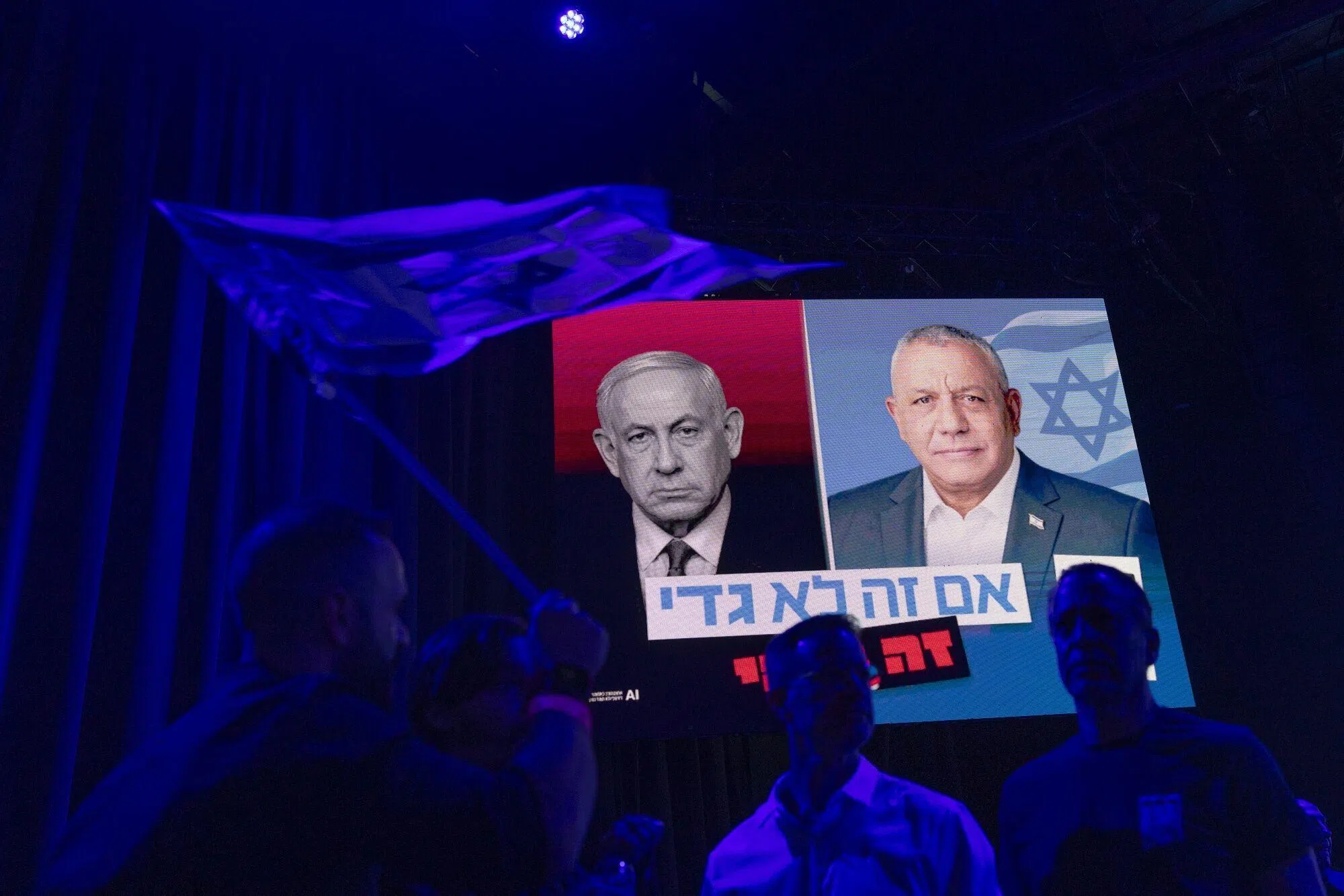
Israel’s inconclusive general election has once again left it in constitutional limbo. Although the opposition camp has enough seats collectively to challenge the government, it is divided into numerous factions.
Netanyahu’s Likud narrowly retained its position as the largest party, but the once-solid coalition of right-wing and religious parties faces collapse. With protracted coalition negotiations ahead and the prospect of another election looming, Netanyahu is governing as caretaker prime minister. This not only constrains Israeli domestic politics, but also disrupts the White House’s strategic timetable.
Netanyahu is a longstanding political acquaintance with whom Trump has dealt for decades. Publicly praised by Trump before the election as a “Warrior Prime Minister”, he is also the strategic partner Trump knows best.
By contrast, former Israeli military chief Gadi Eisenkot, leading the opposition for the first time, commands respect in the armed forces but lacks a deep foundation of political trust in Washington.
Although strategic observers in Washington have urged Israel’s government and opposition to set aside their differences and form a unity government, deeply rooted political grievances leave very little room for compromise.
Asked in a recent interview with US news website Axios whether he would intervene to help Netanyahu break the deadlock, Trump said only, “I will take a look”.
The remark reflects both the White House’s detached stance towards Jerusalem’s fragmented politics and its sense of powerlessness. A caretaker cabinet with insufficient legitimacy will inevitably cast a shadow over the two countries’ long-term defence cooperation.
Netanyahu turns to external threats for survival, with escalation offering a political way out
Nevertheless, US-Israeli defence cooperation remains firm on the central issue of containing Iran.
Jonathan Panikoff, director of the Middle East Security Initiative at the US think tank Atlantic Council, said Israeli leaders across the political divide are closely aligned with the White House on the strategic imperatives of eliminating Iran’s nuclear threat and ballistic missile proliferation.
The deeper risk lies in Israel’s domestic political crisis directly dictating military decisions. Facing the twin pressures of criminal charges and declining poll ratings, Netanyahu is inclined to tie the national agenda to external threats to consolidate support on the right and among his core voters.
During the caretaker period, with coalition talks unresolved, a hard line against Iran and its proxy network has become central to Netanyahu’s political survival. Escalating military risk-taking for political self-preservation is dismantling the already fragile restraints on US-Israeli wartime coordination.
On one side is a caretaker prime minister whose legitimacy is under intense scrutiny and who relies on wartime mobilisation to stay in power. On another is a White House incumbent intent on securing his historical legacy through strategic deterrence. Added to this are Tehran’s leaders, under maximum pressure and staking everything on a dash towards the nuclear threshold.
The two elections in the US and Israel have resolved none of the historic impasses. Instead, driven by their respective domestic political imperatives, all three sides are sliding more rapidly into a deeper confrontation that will be difficult to reverse.
