

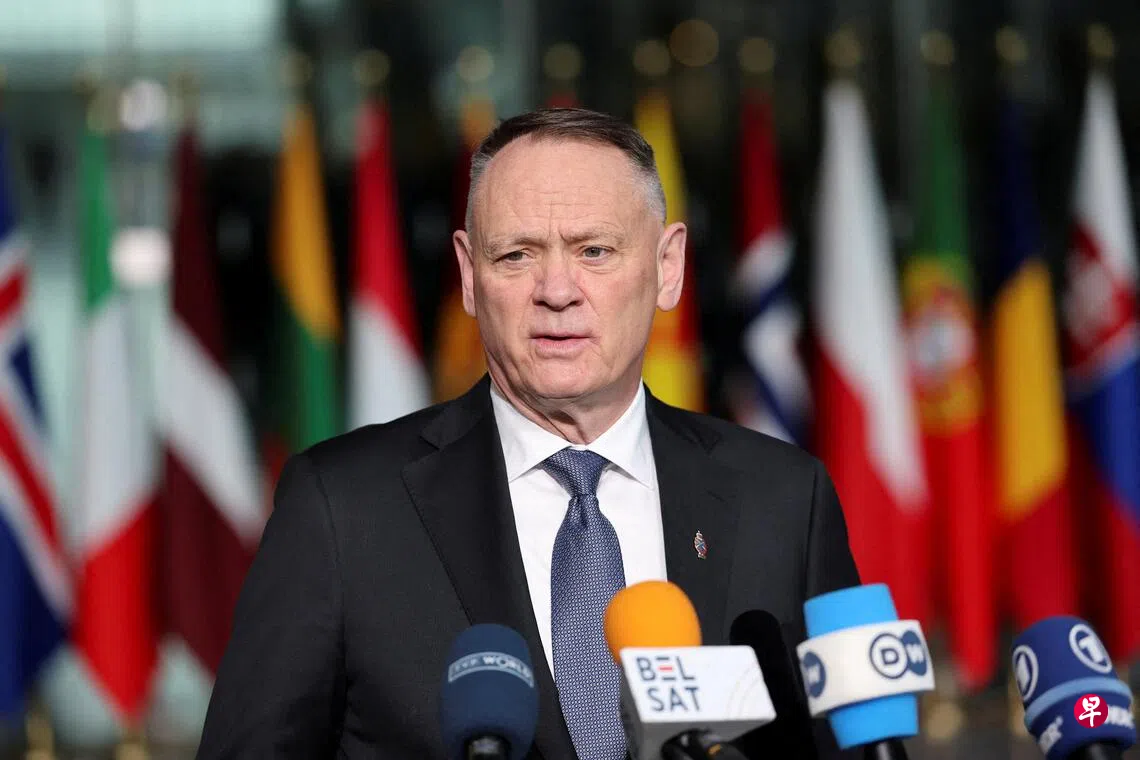
Responding to a report that the US had issued a classified memorandum restricting military cooperation with Canada, Canadian Defence Minister David McGuinty said he had not seen the document and stressed that the two countries’ armed forces continued to work closely together.
Reuters reported that McGuinty made the remarks in an interview on Saturday (21 November) while attending a security conference in Halifax, the capital of Canada’s Nova Scotia province.
The Washington Post had earlier cited sources as saying that US Secretary of War Pete Hegseth had issued a memorandum imposing new restrictions on cooperation between the Canadian and US militaries.
In response, McGuinty said: “I still see no daylight between what we're doing, military to military, and otherwise.”
He said the Canadian and US militaries continued to work “hand in glove” on a range of activities, including deploying ships in the Caribbean to intercept the smuggling of illicit drugs such as cocaine and fentanyl, operating integrated missile systems, and scrambling fighter jets over North America.
Despite US President Donald J. Trump’s repeated threats to annex Canada, McGuinty said there had been no change in how the two countries’ militaries continued to cooperate.
He said: “The 70-year relationship we have with the US under NORAD has been a frankly, extremely effective continental defense system and one that we want to continue to invest in and cooperate with.”
However, McGuinty also said Canada must take greater responsibility for its own defence and security, including protecting its vast Arctic region. Canada is also working to build a homegrown satellite network to rival Starlink and safeguard its communications sovereignty.
He acknowledged that some of Canada’s recent defence adjustments had indeed been prompted by Trump’s threats. As Canadian Prime Minister Mark Carney had described it, the current global order was fracturing, requiring Canada to substantially increase investment in national security.
Under Carney’s leadership, Canada’s defence spending reached NATO’s target of 2% of gross domestic product for the first time last year. The government also plans to raise that share to 5% by 2035.
McGuinty acknowledged: “We’ve been in a comfortable position for decades, but things have now changed.”
