

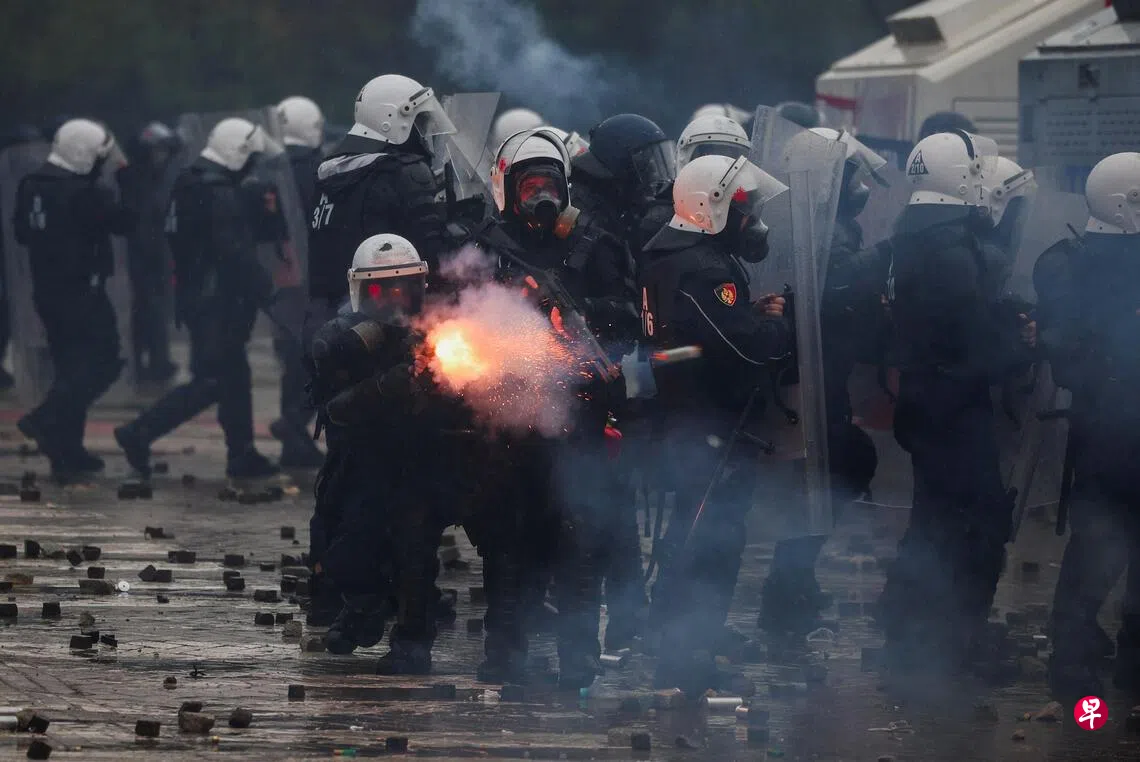
Months of anti-government protests in Albania have escalated further, with student-led demonstrations again turning violent as protesters demand Prime Minister Edi Rama’s resignation.
Saturday’s (28 November) protests coincided with Albania’s Independence Day, with large crowds gathering in the capital Tirana and throwing stones and petrol bombs at riot police.
Police deployed water cannon vehicles and fired tear gas and rubber bullets to disperse the crowds.
Anger over government corruption, a lack of jobs and poor educational standards has fuelled waves of protests in Tirana since mid-October, with demonstrations spreading to other cities. The protests have frequently turned violent, with demonstrators setting fire to government buildings and banks, smashing shop windows and tearing up paving stones to throw at police.
Reuters journalists at the scene on Saturday saw protesters, some masked, pelt a government building with stones and attempt to advance towards Rama’s office before being pushed back by police.
Protesters are demanding that the government improve living standards and healthcare services. Eralda Baze, a 45-year-old engineer, said: “Enough is enough; the corruption, the poverty, the emigration.”
Rama’s government has denied allegations of corruption and called for dialogue on the protesters’ demands. It has also introduced a series of measures to ease public anger, including cuts to fuel prices and increased financial aid for poor families.
Rama, who has been in power since 2013, is facing his toughest political challenge since taking office. Before this wave of unrest, residents held months of largely peaceful protests this summer against a luxury coastal development. Rama had defended the project as entirely legal and said local natural habitats would be protected.
Frequent corruption scandals have severely damaged Albania’s image over the years. Analysts say the country may have become a hotbed for criminal gangs laundering money through drug and arms smuggling.
Rama insists, however, that his government is cracking down on corruption with unprecedented vigour. Albania is currently the frontrunner among the Balkan countries seeking EU membership and aims to join the bloc before 2030.
