

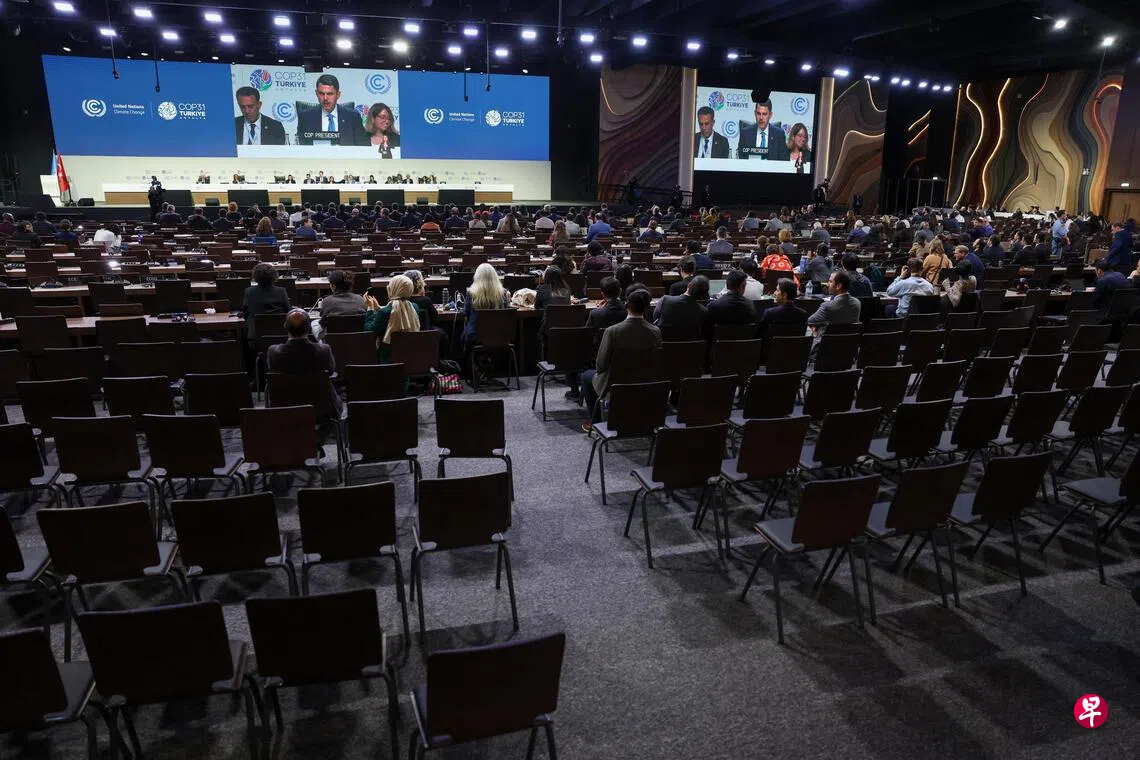
(Antalya, agencies) Talks at the UN climate change conference (COP31) in Antalya, Turkey, collapsed over deep divisions on fossil fuels, failing to produce a final political agreement despite running a record of more than 49 hours into overtime. The outcome has outraged climate advocates and prompted strong calls to reform the UN climate negotiation process.
Australian Climate Change and Energy Minister Chris Bowen, who served as COP31 president of negotiations, acknowledged on Sunday (22 November) that he had been unable to overcome the “unbridgeable red lines” separating nearly 200 countries. He said it was deeply disappointing that the parties could not agree on the conference’s political declaration.
He and Australian Prime Minister Anthony Albanese blamed the failure on a difficult and complex geopolitical environment, citing the fallout from the war in the Middle East and soaring energy prices.
UN Secretary-General Antonio Guterres, who had made an impassioned appeal at the conference for countries to let fossil fuels go “the way of the dinosaurs”, also expressed deep frustration at the outcome. He said bluntly that the conference’s failure would not change the reality of climate change, and that countries must act immediately and do more to tackle the climate crisis.
He warned: “Temperatures keep shattering records. Climate extremes keep intensifying. Emissions remain far too high. And every delay makes our task harder and more costly.”
The collapse of talks once again over the highly contentious issue of fossil fuels also reflected the lack of engagement by major powers, leaving the conference unable to bring opposing sides together and deliver positive results. The US was absent for the second consecutive year, while China participated but kept a low profile throughout.
Peter Prengaman, global climate and environment news director at the Associated Press, wrote that at previous conferences, national delegates had often threatened to walk out but ultimately returned to preserve the overall negotiating process. This year, however, they refused to endorse another weak agreement.
The conference’s influence is also waning as renewable energy becomes increasingly attractive economically and businesses no longer rely on the climate summit to guide their investments.
This has also prompted countries frustrated by the conference’s inertia to form smaller coalitions to accelerate emissions cuts. For example, around 90 countries, including the UK and Mexico, are expected to send representatives to the “Conference on Transitioning Away from Fossil Fuels” (TAFF), to be held next year in the Pacific island nation of Tuvalu.
With a handful of oil-producing countries frequently exercising their vetoes, representatives from several countries, led by former US vice-president and climate advocate Al Gore, have called for sweeping reforms to the climate conference process, including reducing its size and duration.
