

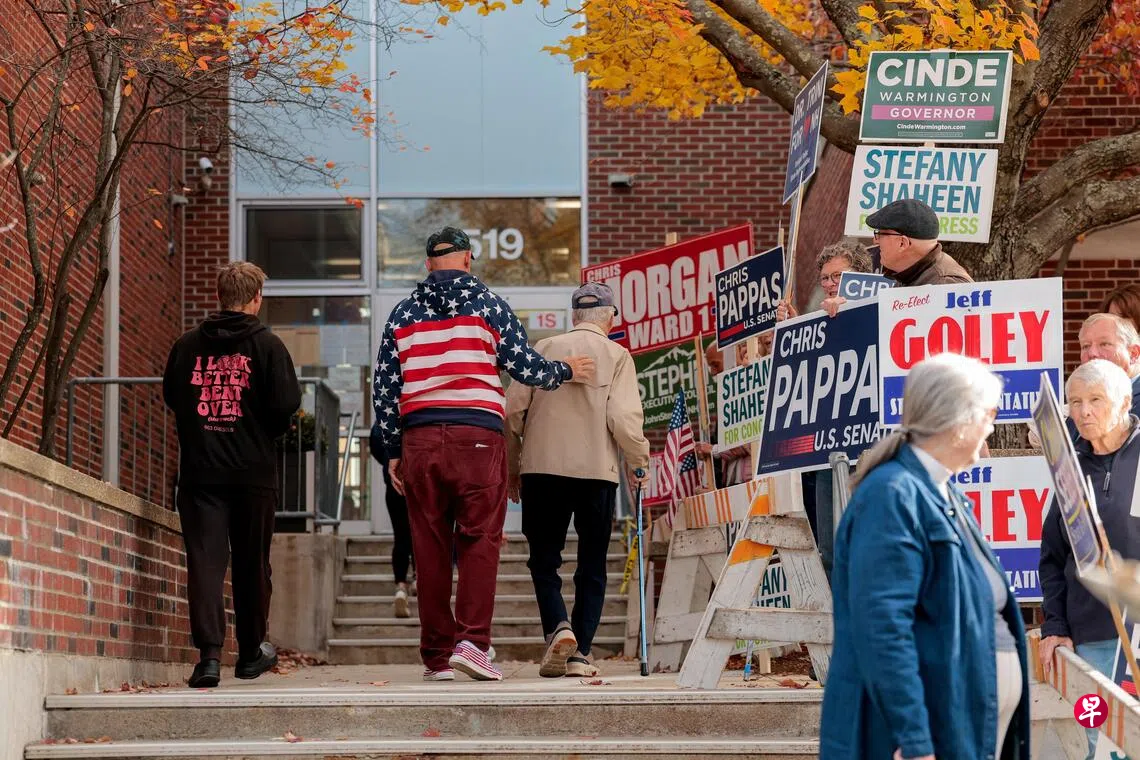
Polling day for the US midterm elections falls on Tuesday (3 November). Polling stations across the country will close between 6pm Eastern time that day (7am on Wednesday in Singapore) and 1am on Wednesday, with states then beginning to count the votes. If the races are close, it could take several days to determine control of both houses of Congress.
On the eve of polling day, Democrats and Republicans made their final campaign push. Democrats focused on promoting their economic policies in traditionally Republican states such as Iowa, Ohio, Kansas and Texas, while trying to contain the electoral fallout from infighting. Republicans sought to portray their Democratic opponents as dangerous radicals.
Texas has not elected a Democratic senator since 1988, but that could change this time. On the final day of campaigning, Democratic Senate candidate James Talarico attacked the Trump administration’s “corrupt tariffs” for driving up grocery prices, and said President Donald Trump had sent fuel prices soaring by starting a new war in the Middle East.
Texas Republican Senate candidate Ken Paxton avoided the economy, instead attacking his opponent on culture and values. He called Talarico “a vegan who hates meat” and claimed without evidence that both Talarico and New York Mayor Zohran Mamdani were democratic socialists.
Paxton acknowledged, however, that Republicans were in a difficult position this time. “Texas has never been this close to slipping away.”
In Michigan, Muslim Democratic Senate candidate Abdul El-Sayed also focused on the economy and pushed back against Trump’s description of him as a “jihadist”.
He told voters, “My name and my faith are not the reason you can’t afford your gas. They’re not the reason you can’t afford your groceries, not the reason you can’t see a doctor. It is their policies that are doing that.”
El-Sayed said almost nothing about the expulsion of Michigan Democratic congresswoman Haley Stevens from the party after she broke ranks to back Republican Senate candidate Mike Rogers. Instead, he stressed that he was running for voters. To supporters anxious about the episode, he said, “Go vote.”
Trump dwells on renovation projects at final campaign rally
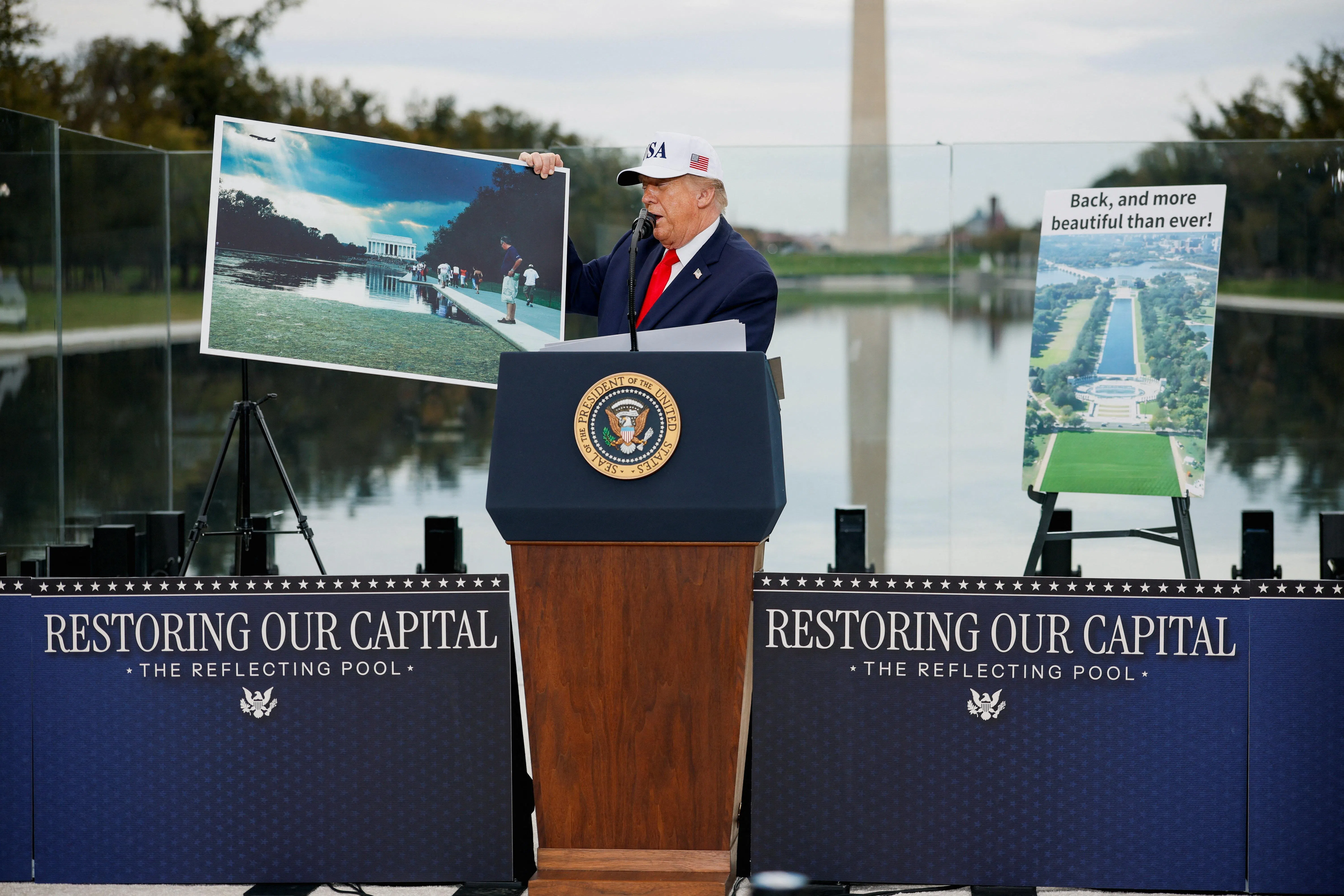
As Democrats sought to hold him to account over the economy, Trump devoted much of his final pre-election rally to renovation projects in Washington, appearing out of touch with public concerns.
Speaking in front of the Lincoln Memorial Reflecting Pool on Monday, he spent considerable time detailing its renovation, including the challenges of removing algae and relaying turf. He also presented new projects across Washington, including golf courses and landscaped walking trails. On the economy, voters’ foremost concern, he again offered only the broad assertion that “the American economy is doing very well”.
Trump also attacked the Democrats, saying they had “nominated the most extreme and dangerous slate of candidates in American history”, but acknowledged that Republicans could lose the election. “For some reason, the sitting president doesn't win the midterms. But we gave this a very strong shot.”
A Reuters/Ipsos poll completed on Monday found that only about 32% of Americans surveyed approved of Trump’s performance in office, close to the low of 31% recorded two weeks earlier. Among registered voters, about 46% said they would vote for Democratic candidates, while 38% chose Republicans.
Republicans currently control both the Senate and the House of Representatives. Democrats are widely expected to win control of the House in this election, while control of the Senate remains uncertain.
As the parties battled fiercely, the Trump administration suffered successive setbacks in its legal efforts to intervene in the election. On Monday, the Justice Department filed an emergency application with the Supreme Court seeking to temporarily block California from counting postal ballots cast by more than 20,000 registered voters, saying they might not be US citizens. The court rejected the application within hours.
US District Judge Tanya Chutkan on the same day temporarily barred the administration from implementing a plan purportedly aimed at preventing non-citizens from voting.
Under the plan, the Justice Department and the Department of Homeland Security would send states lists of registered voters who might not be citizens. State election officials would be required to segregate their ballots and not count them until their citizenship had been confirmed.
