

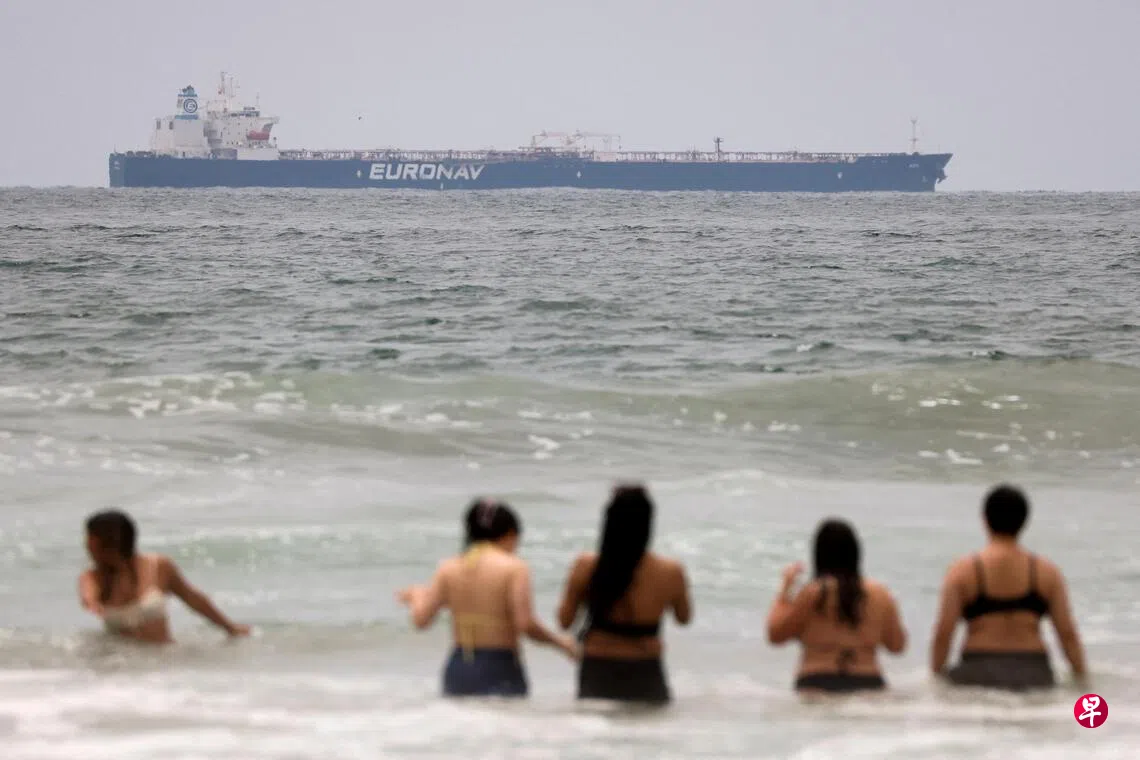
(Washington) Ships passing through the Strait of Hormuz face the threat of attacks by Iran, but vessels sailing elsewhere in the world are also facing cyberattacks. People familiar with the matter said as many as 50 ships carrying oil or other energy products have been targeted so far, with some also receiving ransom demands or bomb threats. The US is investigating whether Iran or Russia is linked to the incidents.
The Wall Street Journal reported on Monday (23 November), citing US officials and people familiar with the matter, that as many as 50 ships carrying oil, liquefied petroleum gas, chemicals and other explosive materials are believed to have been hit by cyberattacks. Some vessels also received warning messages and bomb threats saying they could be blown up.
The report quoted US officials as saying Iran was the prime suspect in the attacks, with Russia also seen as a possible culprit.
Officials said the US Coast Guard had recently deployed cyber protection teams to board at least four targeted vessels as they approached the US. Other ships targeted were sailing in waters near Europe and Asia.
For example, two ships bound for Texas were reported in September to have suffered cyberattacks and received bomb threats. One ransom note was posted on a Russian-language Telegram channel for shipping operators, while news that another vessel's systems had been breached also first emerged on a Russian-language channel.
Other people familiar with the matter said some ships had received threatening messages in Persian, Iran's official language, warning them not to load US products.
However, an official in Donald J. Trump's administration said in response to queries that the US had not found any evidence of Iranian involvement. The official also said there had been only four attacks so far, all of which were minor nuisances with no material impact.
The report said hackers had exploited vulnerabilities in Fortinet routers widely used in the shipping industry. Alon Ayalon, co-founder of Israeli maritime cybersecurity company Cydome, said ships had now become deliberate targets of cyberattacks.
“The disturbing truth is that most ships sailing today have weaker cyber defences than a medium-sized office.”
Lars Jensen, chief executive of Copenhagen-based maritime risk consultancy Vespucci Maritime, said that while the idea that “a ship could be hacked and driven into a bridge or detonated at a port” was an unrealistic “Hollywood scenario”, cyberattacks could still temporarily disable some of a vessel's systems, potentially causing severe delays and millions of dollars in losses across global supply chains.
