

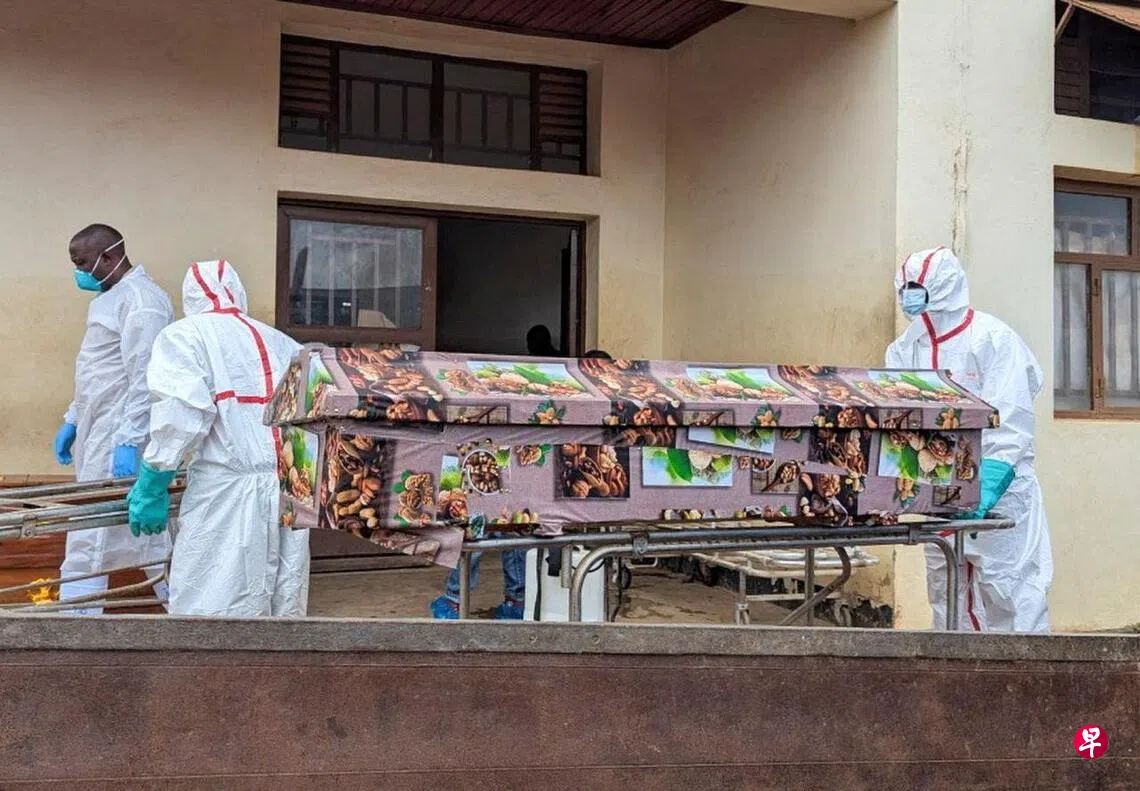
The Ebola outbreak in the Democratic Republic of the Congo continues to spread, with the death toll now exceeding 6,000 in the second-largest outbreak on record.
Reuters reported that the latest figures released by Congolese authorities on Saturday (28 November) showed the outbreak had spread to eight provinces, with the death toll rising to 6,025 and confirmed cases reaching 12,254.
The current outbreak in DR Congo is second only to the 2014–2016 Ebola outbreak in West Africa, which swept through Guinea, Liberia and Sierra Leone, infecting more than 28,600 people and killing over 11,000.
The outbreak, declared on 15 May, is DR Congo's 17th and its worst on record. It is caused by the Bundibugyo strain of the Ebola virus, for which there are currently no approved vaccines or treatments.
Official figures show that the outbreak is spreading and killing people at twice the pace of previous outbreaks. Health experts say chronic funding shortages, public distrust of healthcare institutions and widespread insecurity are the main obstacles to containing it.
The fatality rate remains high at 49%, as many patients reach healthcare facilities too late or avoid seeking treatment altogether. Figures released by the Africa Centres for Disease Control and Prevention earlier in November also showed that more than 60% of deaths were still occurring outside treatment centres.
Deaths in the community are particularly worrying because they mean patients were not properly isolated and may have infected others before they died.
A Reuters analysis of satellite images suggests that the official death tolls in two of DR Congo's worst-hit areas may be significantly underestimated.
