

Eleven European countries have pledged to release 42.6 million barrels of strategic oil reserves by the end of January 2027 to ease upward pressure on energy prices caused by the war in the Middle East. The US has also finalised arrangements to lend about 40 million barrels of crude oil in its latest round of releases.
Following a meeting of EU energy ministers in Luxembourg on Thursday (29 October), European Commissioner for Energy Dan Jorgensen told reporters that 11 EU member states, including France, Germany and Italy, have reaffirmed their commitment to accelerating their release of 42.6 million barrels from strategic reserves over the coming months, of which around half will be diesel.
The EU later confirmed in a statement that 20.5 million barrels of diesel would be released. Besides France, Germany and Italy, the countries making the pledge include Belgium, Denmark, Greece, Latvia, Luxembourg, the Netherlands, Portugal and Sweden. Lithuania also supports the agreement but have yet to sign the joint pledge.
The US-Iran war has triggered a global energy supply crisis, while soaring fuel prices have become a thorny issue in the US midterm elections. To ease domestic pressure, US President Donald J. Trump threatened to ban diesel exports to force European allies to release more diesel from their reserves.
Earlier this month, the Group of Seven (G7) agreed to release 100 million barrels of crude oil and diesel. In the middle of the month, the International Energy Agency (IEA) urged countries to accelerate releases as winter approaches.
US government lends final 40 million barrels of crude oil in October
The Trump administration announced on Thursday that several oil companies had agreed this month to borrow about 40 million barrels of crude oil from the Strategic Petroleum Reserve, completing the release of 172 million barrels pledged by the US under a global agreement reached with IEA members in March.
The US Department of Energy said it issued loan contracts for 16.8 million barrels of crude oil on Wednesday (28 October). Together with the 23.8 million barrels allocated in mid-October, this brings the total to 40.6 million barrels.
The former Biden administration sold large quantities of oil from the US strategic reserve after the Russia-Ukraine war broke out in 2022. The Trump administration tapped the reserve again after the US-Iran war began earlier this year, leaving stocks at their lowest level since 1982.
This time, however, the Trump administration is lending the oil rather than selling it. When oil companies begin repayments early next year, they must return 44 million barrels, with the additional oil serving as interest. The US Department of Energy said this approach would strengthen US energy security and ensure stable strategic reserves.
First Russian diesel cargo after sanctions easing could reach US on 7 November
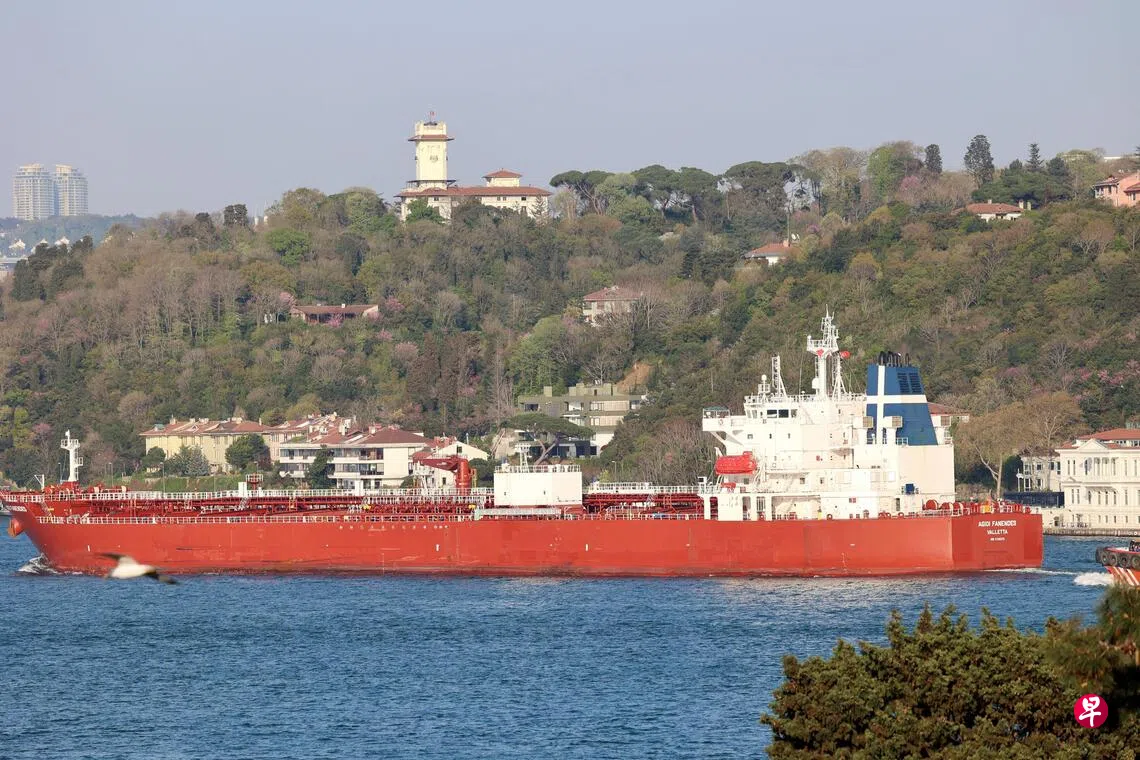
Ship-tracking data from market analytics firm LSEG showed that the Agioi Fanendes, a Malta-registered medium-sized tanker carrying the first cargo of 40,000 metric tonnes of ultra-low-sulphur diesel, left Russia’s Baltic port of Primorsk on 22 October and headed towards the North Atlantic. The shipment follows an agreement reached earlier this month between the US and Russia to ease sanctions on Russia.
The tanker is expected to reach the US on 7 November, but its management company told Reuters that New York had not been confirmed as the unloading destination. The buyer and seller of the diesel cargo are also unidentified.
Nine tankers dock at Saudi Persian Gulf oil terminals, the most since US-Iran war began
Images from the EU’s Sentinel-2 orbiter showed a sharp increase in oil loading activity for export on Saudi Arabia’s Persian Gulf coast on Wednesday (28 October), with nine supertankers docked. They have a combined capacity of about 18 million barrels of crude oil.
Although the nine tankers may not all depart on the same day, this was the largest number of oil tankers docked in the area at the same time since the US-Iran war broke out in late February. Similar images from Sunday (25 October) showed only two tankers docked.
Loading activity was lower at oil export ports on Saudi Arabia’s western Red Sea coast, with only four tankers, just two of them supertankers.
