

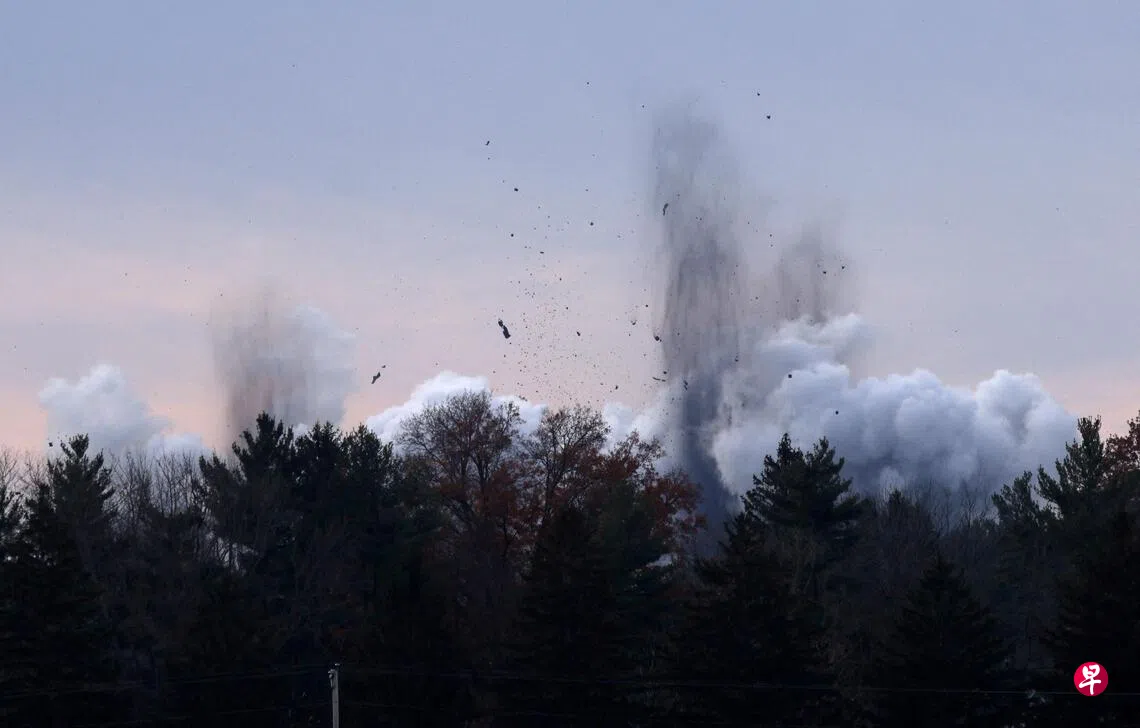
The first soil and water samples collected from surrounding areas after the US military detonated a stockpile of ageing lead-based explosives in Iowa show that pollution from the blast was minimal.
Reuters reported that the US Army on Wednesday (25 November) simultaneously detonated nearly 4,500kg of the highly unstable chemical lead azide, stored in 68 ageing plastic barrels, at an ammunition depot in the small Iowa town of Middletown. Nearby residents had been evacuated as a precaution or told to shelter at home before the blast.
The first post-blast sample results, released by the US Environmental Protection Agency (EPA) on Saturday (28 November), showed that lead concentrations in soil, water sources and drinking water were no higher than before the explosion. No lead was detected in drinking water sources after the blast. Air monitoring over the 30 hours following the detonation also recorded zero readings for lead.
Authorities collected more than 1,600 air, water, soil and dust samples and assessed 187 buildings, including schools and churches. The preliminary report covered results from 88% of the samples.
Army officials attributed the favourable results to a series of containment measures designed to reduce the force of the blast and prevent toxic dust from spreading. Independent experts had earlier noted that lead does not break down once it settles in the environment, and that exposure can cause health problems and disrupt children's cognitive development. They said analysis of samples from water, soil and building surfaces would therefore provide a better picture of the actual impact than air sampling.
The controlled detonation took place after days of public discontent and legal wrangling. The Army said an inspection in March had found the chemicals were on the verge of spontaneous detonation and could not be safely moved or chemically neutralised, making detonation the safer option.
The Army had predicted that lead-containing dust could settle as far as 64km south-west of the blast site, while agricultural officials estimated that 350 farms could be affected. Environmental groups filed a lawsuit challenging the emergency detonation permit issued by the EPA.
US President Donald J. Trump also intervened on Monday (23 November), ordering the Army to suspend the operation pending court approval. Later that day, the United States Court of Appeals for the Eighth Circuit upheld the EPA's permit and lifted an injunction, clearing the way for the military to proceed with the detonation two days later. While relieved by the outcome, local residents remained sceptical about the government's transparency.
