

The Group of 20 foreign ministers’ meeting ended on Saturday without consensus on several key global security issues, overshadowed by the Ukraine crisis and the US-Iran conflict.
Foreign ministers from the Group of 20 (G20) held in-depth discussions on geopolitical tensions, energy security and supply chain resilience during their two-day meeting in Atlanta, the capital of the US state of Georgia. But deep divisions prevented them from issuing a joint communique.
The US, which holds the rotating G20 presidency, released a chair’s statement on Saturday (31 October) evening summarising the talks. It stressed that trade in food and agricultural products must never be used as a tool of economic or political coercion, and that the international community needed to reach a consensus on this.
The statement also called for secure, resilient and uninterrupted energy supplies, including by ensuring safe navigation through waterways.
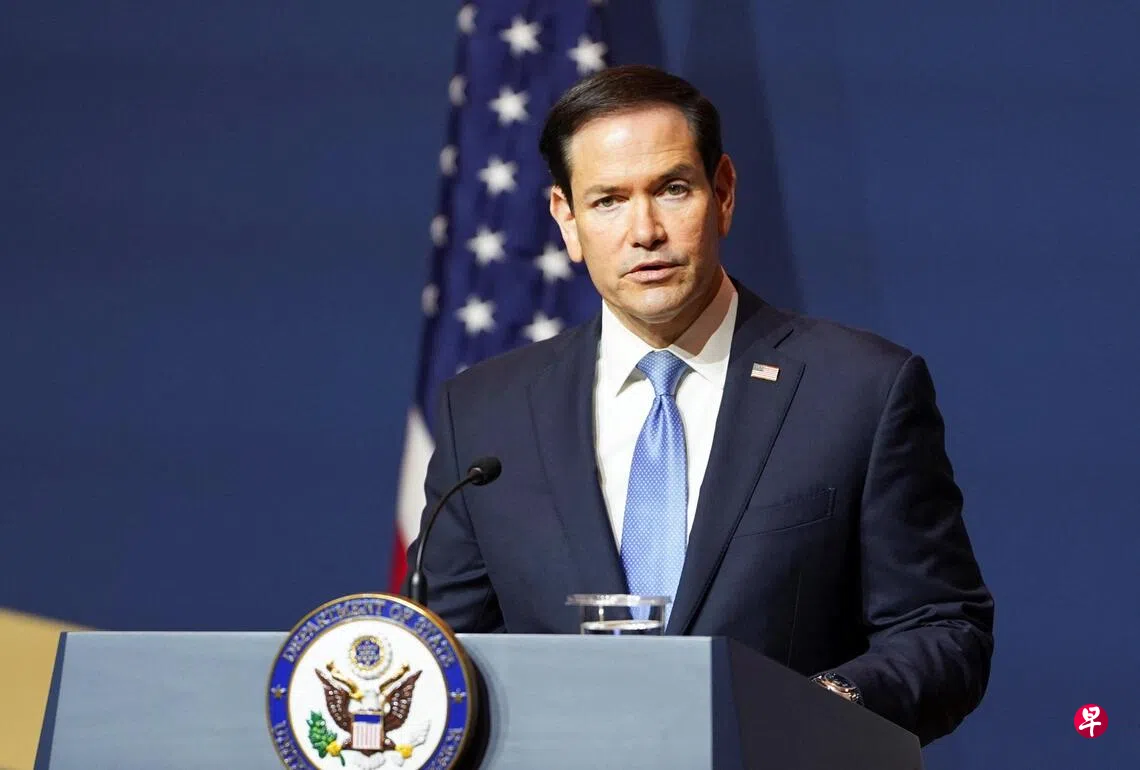
US Secretary of State Marco Rubio, who chaired the meeting, told the closing press conference that repeated attacks on shipping lanes had disrupted global shipments of energy, fertilisers and agricultural supplies, significantly increasing risks to global food security.
He said G20 members broadly recognised the importance of freedom of navigation, critical mineral supply chains and food security. But greater efforts were needed to address these issues, particularly while the US-Iran conflict and the Russia-Ukraine war remained unresolved.
Rubio said, “We are aligned at least in our goal and our understanding that it's a serious problem, although I cannot say we are aligned on how to solve it.”
Invitation to Russia criticised as normalising aggression against Ukraine
The Russia-Ukraine conflict was among the most divisive issues. The traditional group photograph of foreign ministers was cancelled at short notice after some officials refused to be photographed alongside Russian Foreign Minister Sergey Lavrov.
Russia is a G20 member, but European and Canadian officials said inviting it to the meeting amounted to normalising its aggression against Ukraine. European officials also sought to put further pressure on Moscow during the meeting, including by calling for a ceasefire in the Black Sea, a key export route for agricultural products.
Rubio said there was a growing desire within the international community to secure a Black Sea ceasefire agreement to safeguard maritime shipments of food and energy from Russia and Ukraine. “We'd like to achieve it. It doesn't solve the war, but at least it solves a unique aspect of it.”
He also said the US was assessing a proposal by Turkey and India to resume Black Sea grain shipments. At the same time, it remained committed to securing a broader ceasefire agreement.
Rubio also spoke briefly with Lavrov during the G20 foreign ministers’ meeting to discuss the possibility of a meeting between US President Donald Trump and Russian President Vladimir Putin during the subsequent summit.
Putin has yet to confirm whether he will attend the G20 summit in Miami in December. The US has also not ruled out inviting Ukrainian President Volodymyr Zelenskyy.
Addressing the controversy over Russia’s participation, Rubio stressed that a diplomatic solution to the Russia-Ukraine war would be impossible without talks with Russia.
Turkey urges end to attacks on Black Sea shipping
Meanwhile, Turkish President Recep Tayyip Erdogan met the visiting Zelenskyy in Istanbul on Saturday. They discussed Black Sea security, energy cooperation and diplomatic efforts to end the Russia-Ukraine war.
At a joint press conference after the meeting, Erdogan said attacks on Black Sea shipping were unacceptable and urged Russia and Ukraine to act responsibly.
Turkey has proposed that Russia and Ukraine stop attacking civilian vessels, but neither country has acted on the proposal. Zelenskyy accused Russia of complicating the situation in the Black Sea.
Erdogan said Turkey would continue talks on restoring safe navigation in the Black Sea and stood ready to do everything it could to achieve peace.
