

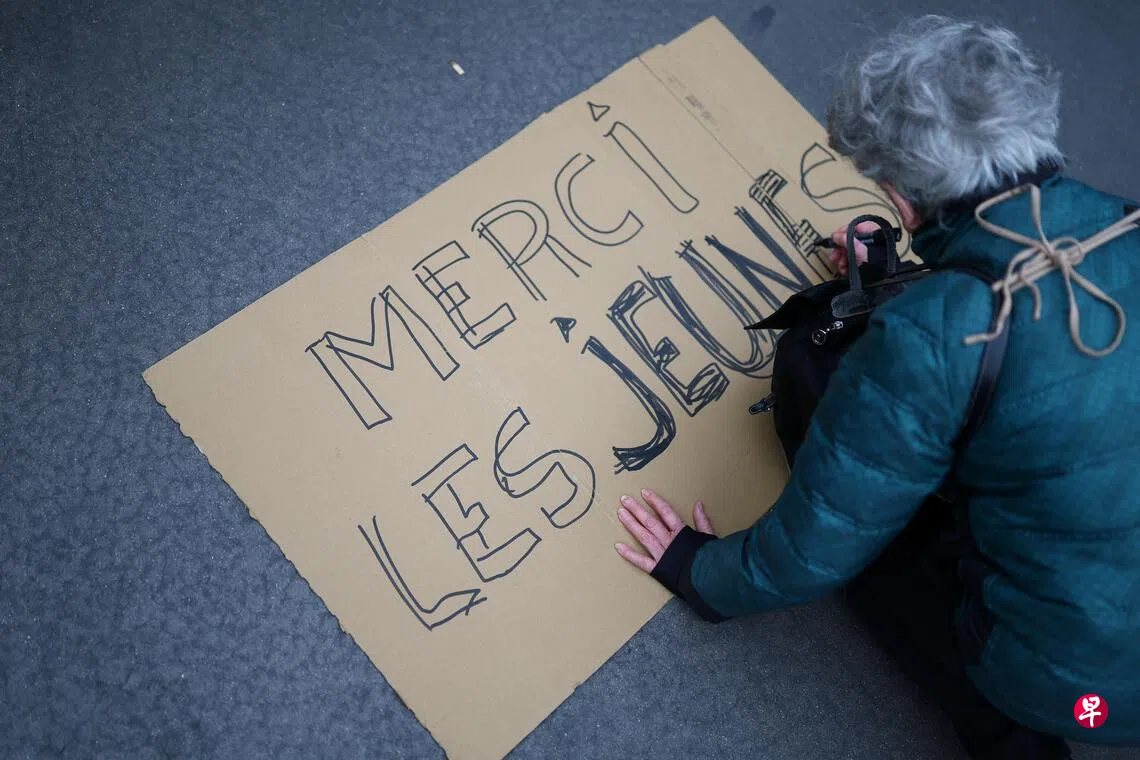
They sit in dilapidated classrooms, learning somewhat outdated material from teachers who may be juggling several jobs. After working hard to enter higher education, they graduate to discover that the salaries earned through more than a decade of study are still not enough to rent a home or start a family, let alone climb the social ladder.
Many protesters believe the government must cut spending to tackle its fiscal deficit but dares not touch pensions, whose recipients form a major voting bloc, and is unwilling to tax the wealthy more. Instead, it cuts into young people’s education and futures, leaving a generation squeezed of resources, even borrowing against its prospects.
The latest “French Fractures” survey, conducted by polling firm Ipsos for French newspaper Le Monde, found that 22% of 18- to 24-year-olds believe they are the group most affected by growing social inequality. Nearly a third believe schools fail to give everyone equal opportunities; about half of those holding this view have a higher education qualification.
The report, released on 16 November, also found that more than half of young people (53%) experience fear every day, closely linked to their deeply critical views of their own prospects and injustices in France’s social system.
They are also the most likely to report that climate change affects their daily lives and health, and that they have experienced discrimination and disrespect because of their gender, social status or background.
Too little funding for education and investment in the future
To understand young people’s discontent, it is important to remember what sparked this wave of protests before it grew into mass demonstrations across France and Europe: secondary school students demanding better teaching facilities, and school staff campaigning for better pay and conditions.
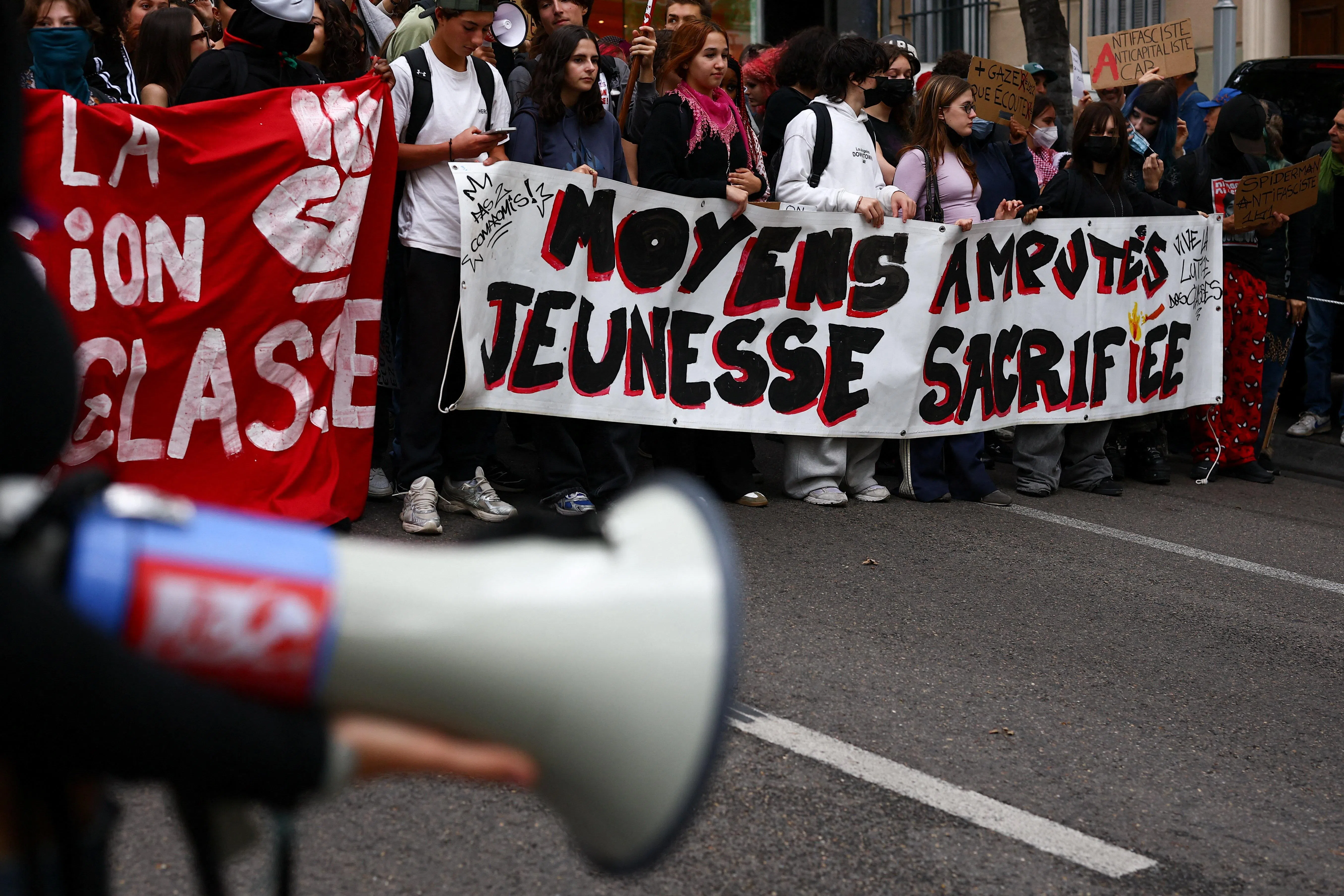
Many French state schools are more than a century old. Funding shortages have left buildings in disrepair, with leaking roofs and classrooms that are too cold in winter and too hot in summer. Some schools cannot even provide every pupil with a desk and chair in good condition.
Students’ academic performance has also deteriorated year after year. In the latest Programme for International Student Assessment (PISA) results, released in September this year, French students’ scores fell to record lows, with sharp declines in both mathematics and reading.
This means French students, especially those from ordinary or poor families, are losing opportunities for upward mobility and gradually losing their competitive edge internationally.
The decline in both teaching and learning quality is linked in part to inadequate pay and conditions for teachers.
Decades ago, teaching was a respectable profession in France. After successive rounds of pay cuts, however, many new teachers now earn only slightly more than the minimum wage. Staff departures have sharply increased the workloads and stress of those who remain.
In an interview with Lianhe Zaobao (LHZB), Huang Yuchen, a postdoctoral researcher at the University of Neuchâtel in Switzerland, noted that discussions about shortcomings in education generally concern the state system serving the vast majority of ordinary people.
“This is where the class divide becomes apparent. Elites who can afford private institutions or gain admission to a grande école are not greatly affected. But for ordinary people, the route to upward mobility through education is being blocked. That is a very serious problem.”
The crux of the problem is that funding is not reaching the areas where it is most needed. On paper, the French government’s allocation to the Ministry of Education in its 2027 budget is substantial, at €89.1 billion. Yet about a third goes into a special account for state civil servants’ pensions, leaving only two-thirds for education and investment in the younger generation.
Alexandre Lourié, international managing director of French non-profit organisation Groupe SOS, wrote in an article in Le Monde that for every euro France now invests in future-oriented areas such as education, family policy, research and innovation, it spends two euros on pensions.
“How far will the sacrifice of the younger generation go? It is urgent to bring this ratio back to one-to-one, in favor of youth. Political leaders’ refusal to acknowledge the problem will neither quell young people’s anger nor restore public finances to health.”
Young people use social media to spread the protests rapidly
Young people are protesting in their own way.
In an article, BBC Europe editor Katya Adler noted that, unlike the large rallies traditionally organised and coordinated by trade unions, many youth-led gatherings are spontaneous and scattered.
Social media platforms such as TikTok and Instagram have helped these scattered protests spread rapidly. French students were the first to take to the streets, soon followed by students in Belgium, Ireland, Spain, Portugal, Italy, Greece, Serbia and Albania, among other countries.
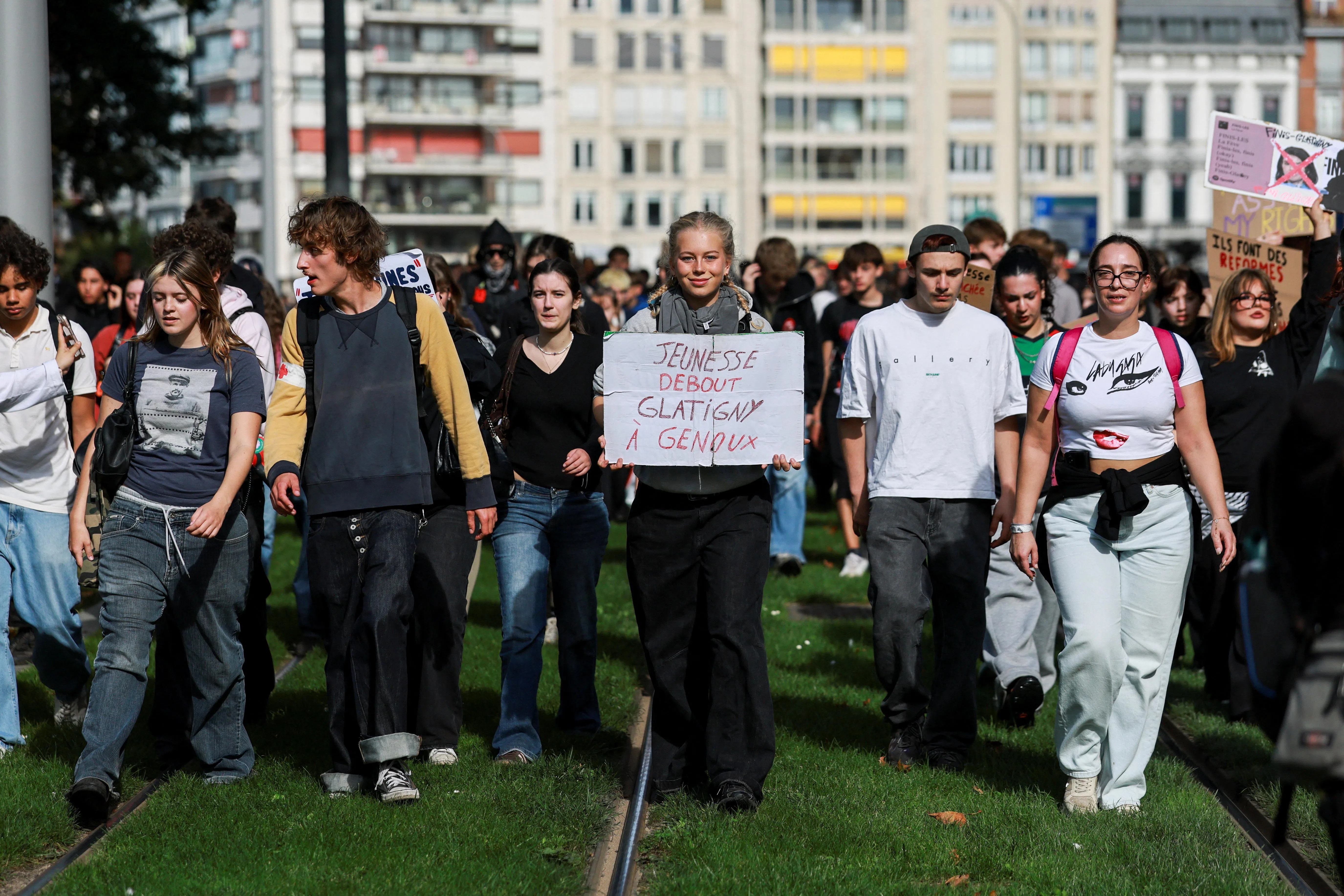
Some countries already had other protests under way, and some demands differed from those in France. Even so, the wave of protests swept across Europe amid chanting and singing.
Pascal Vennesson, a senior fellow at the S. Rajaratnam School of International Studies at Singapore’s Nanyang Technological University, said in an interview that when people see education in crisis and wages being squeezed, a deep sense of frustration can bring workers and students together.
“When rent and heating consume every euro, minor shocks trigger immediate mobilisation.”
Vennesson also said traditional strikes usually seek measurable compromises, such as pay rises or pension adjustments. By contrast, this wave of protests reflects a younger generation’s eroding trust in state institutions and public services, creating greater uncertainty for the government as it negotiates and responds.
Huang, herself a member of Generation Z, is less concerned about how the protests will end. Peaceful demonstrations have long been a familiar form of expression in France, and prolonged protests are not unusual.
“Most protesters are ordinary people. They chant slogans, sing, have dance battles and even flirt on the sidelines... They protest for themselves and speak up against injustices suffered by others. It is part of life.”
She added that France’s revolutionary tradition has given some young people, particularly those on the left, a belief that the old must be dismantled before something new can emerge. “They think that if the existing system is no longer sustainable and change must happen, then let it happen, and let a new beginning follow.”
Welfare, violence and a social contract under strain
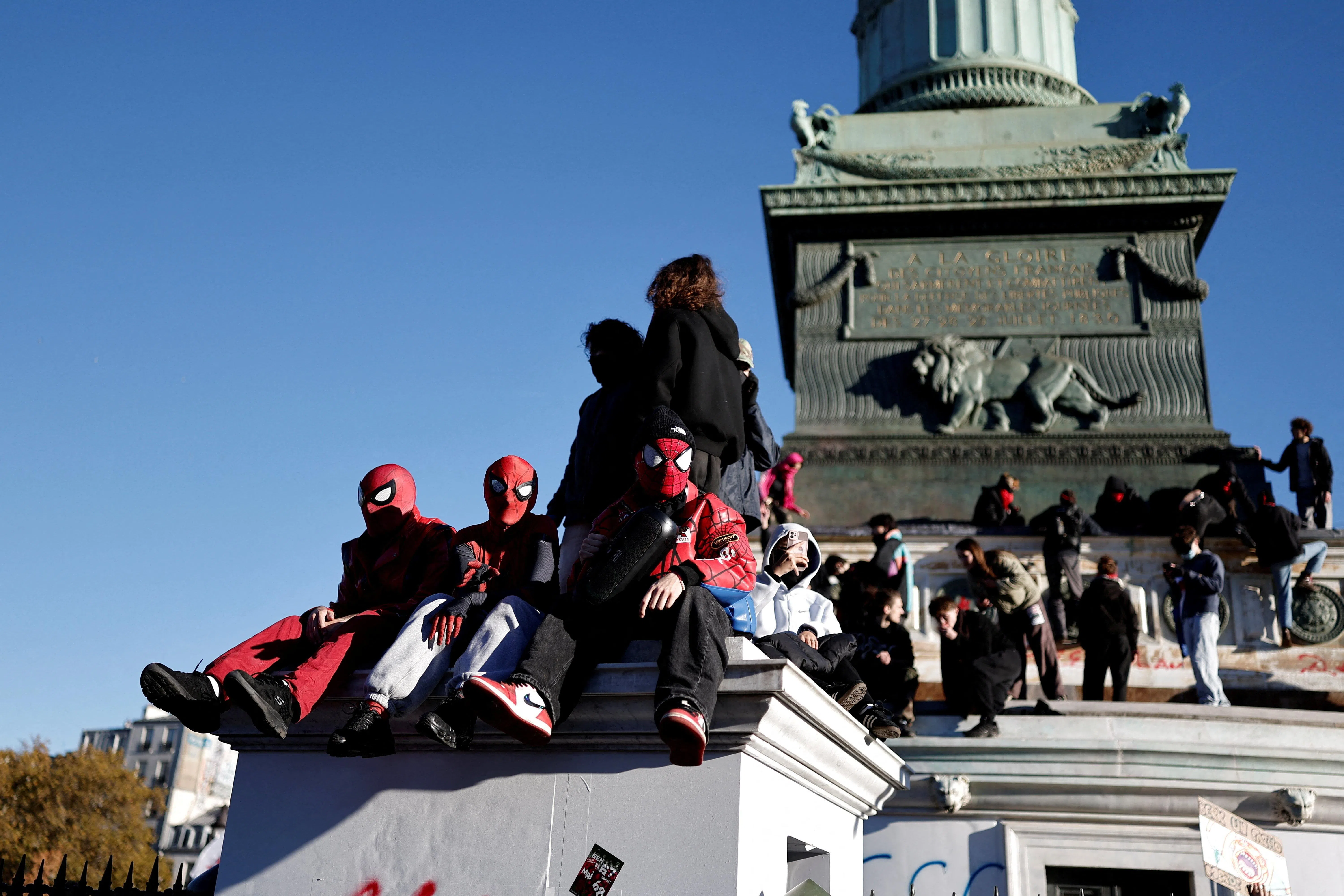
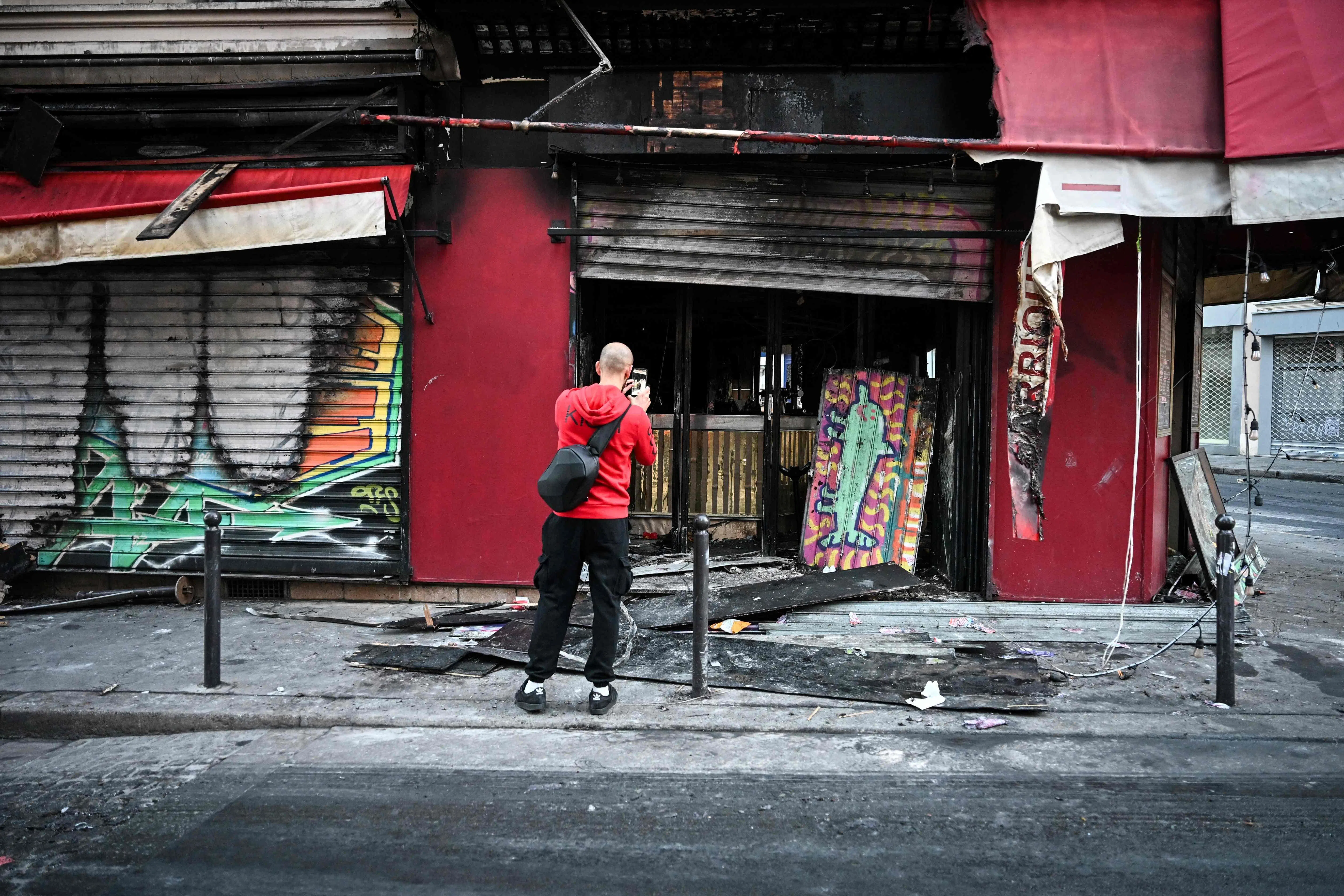
Although demonstrations are not uncommon in European countries, the widespread violent clashes and opportunistic looting during this wave of French protests have shocked Europe and the wider world. Vehicles and historic buildings have been engulfed in flames, with shattered shop windows leaving glass strewn across the streets.
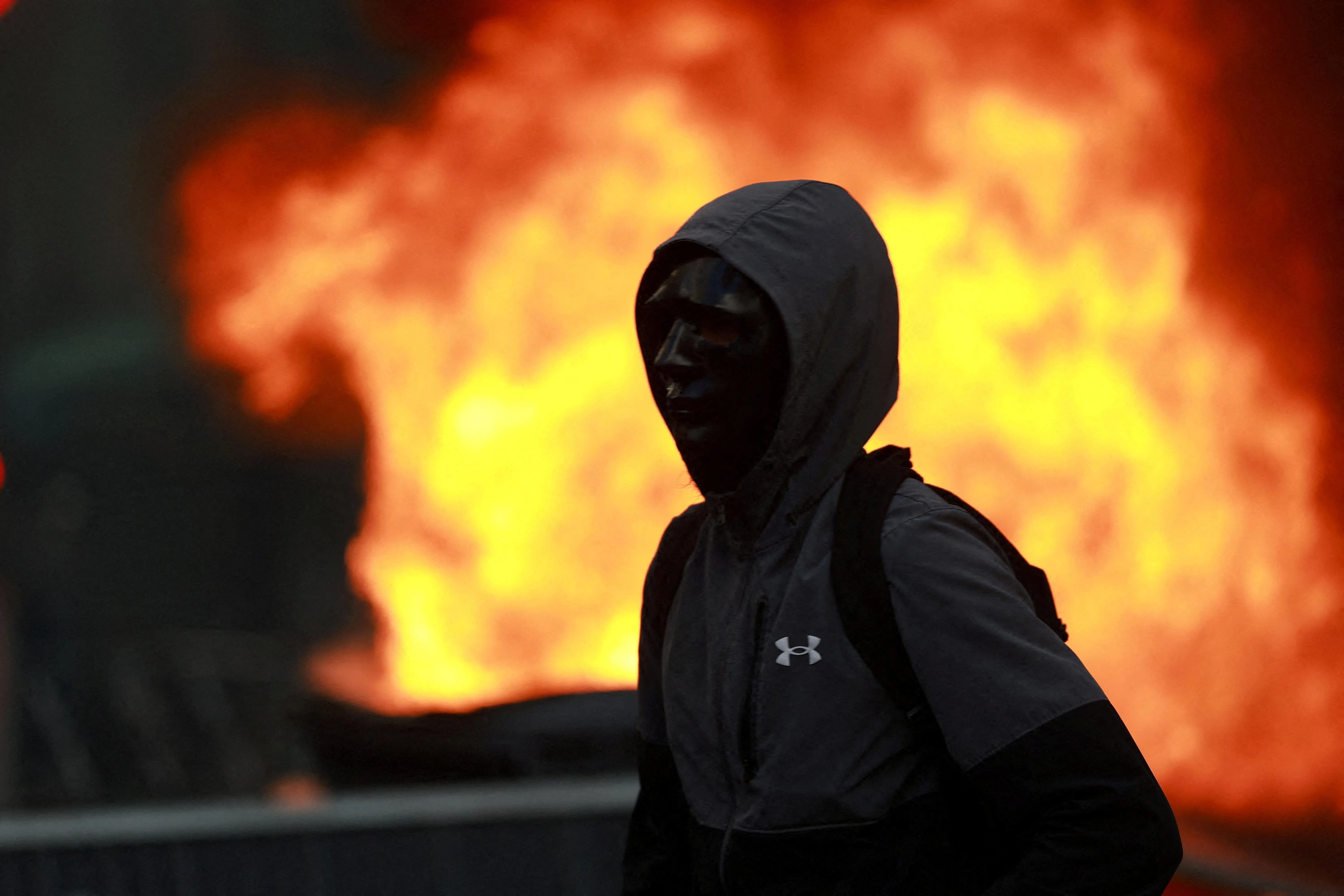
French law enforcement officers arrested 2,700 people nationwide on 17 October alone. Arrests gradually declined over the following weeks as the authorities deployed more police, but at least 219 people were still arrested during protests on 15 November.
French Justice Minister Gérald Darmanin said on 17 November that police had arrested or detained about 15,000 people over the preceding weeks. Of these, 7,184 were involved in cost-of-living protests, while about 8,000 others were arrested over protests about school conditions and education funding.
Although the authorities have sought wherever possible to distinguish lawful, peaceful protesters from opportunists engaging in vandalism and looting, the unrest has inevitably affected public perceptions of the demonstrations and added further instability to France’s politics, society and economy.
Debt forces the government to cut spending and welfare, triggering protests that further undermine its credibility and the economy. This vicious cycle has raised concerns that France’s social market economy, also known as the Rhenish model, in which social security and welfare underpin social harmony and stability, is beginning to unravel.
Is violence the only way to be heard?
Vennesson said many protesters have deeply contradictory attitudes towards violence. On the one hand, they advocate peaceful demonstrations and reject violence. On the other, the president and government’s refusal to heed public opinion seems to make violence the only way to be heard.
The Le Monde survey bears this out. Among all respondents, 34% saw the violent clashes on 17 October as an expression of intense social anger. Among young people, the figure was as high as 51%.
For some young people who feel marginalised, street vandalism brings rare attention. The urgency of having their demands heard leads nearly two-thirds of young people to believe that protests should always be allowed, even if they risk causing disorder and violence.
This social climate has come as a considerable shock to some foreigners living in France. Ilya Noor, a 36-year-old chef who moved from Singapore to France in 2021, said in an interview that protests should not be held if they cannot be kept under control, or that age restrictions should be imposed on demonstrators.
“However I was deeply saddened and disturbed looking at news and reports the day after, after learning that so many small independent business owners lost their entire livelihood overnight because of the looting and violence. Some might think it as "collateral damage" for the bigger cause but in my opinion nothing warrants this kind of devastation for innocent people.”
Police violence draws criticism
Alongside the opportunists engaging in vandalism and looting, police have also drawn criticism for excessive force. This has even sparked fresh demonstrations, including protests last weekend against a new bill that would grant officers who open fire a “presumption of self-defence”.
29-year-old university lecturer Alix, who has taken part in various protests since she was 14, said in an interview that she had never witnessed violence on the scale seen on 17 October. It came not only from the vandalism and looting after nightfall, but also from police who were already on high alert during peaceful daytime demonstrations and even used tear gas to disperse crowds.
Alix said candidly: “Honestly, I don't feel safe the way I used to and even decided not to go to one protest because of that.”
She also noted that night-time vandalism and looting dominate the headlines, diverting public attention from the protesters’ actual demands.
Thousands of protesters have been injured since this wave of demonstrations began, including people seriously injured or permanently disabled by excessive police force. In Lens, for example, a 15-year-old boy lost a hand to a police stun grenade.
According to French media reports, some victims plan to sue the interior minister to hold him accountable for police violence. Police have opened more than a hundred internal investigations into the allegations.
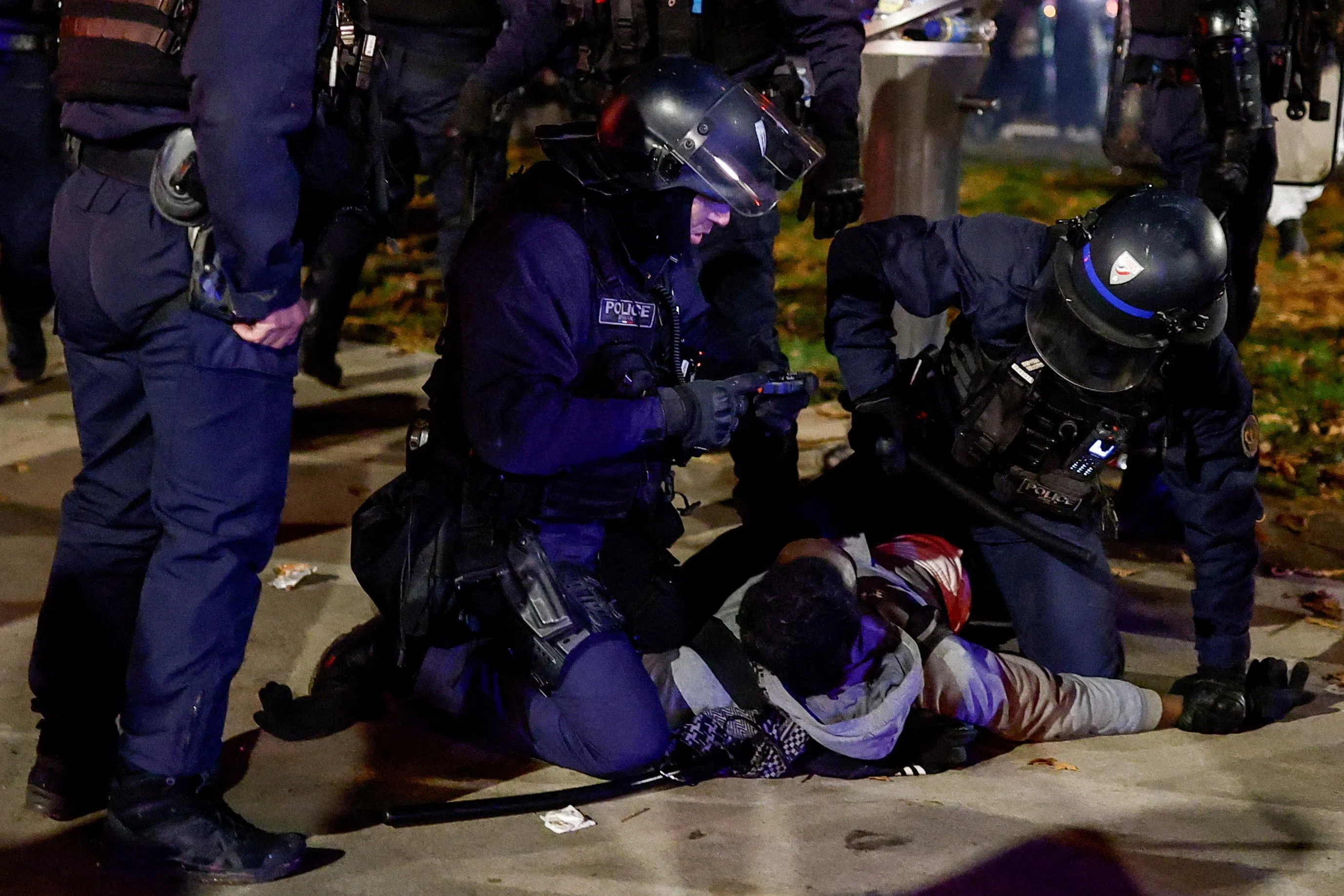
Beyond physical injuries, how to deal with teenagers arrested during protests has also become a challenge for law enforcement agencies. According to France’s interior ministry, police arrested more than 6,700 teenagers during a month of student protests before the large-scale riots broke out. The vast majority had no criminal record.
About 2,200 of them face prosecution on charges including gathering with violent intent, assaulting police and damaging property. The rest were not charged or were given alternative measures, such as attending civic education courses, without receiving a criminal record.
Vennesson said the authorities must show a degree of firmness, but an aggressive approach to prosecuting teenagers could further damage their futures and deepen the marginalisation of their families and even entire communities.
“Treating ordinary high schoolers like hardened offenders fuels resentment rather than deterrence.”
The impossible trilemma of defence, green policies and social spending
The deteriorating finances of France and the wider eurozone are not a recent development. Successive crises and tensions since the financial crisis more than a decade ago have left many European countries heavily indebted.
France enjoyed decades of prosperity after the Second World War. But slowing economic growth and rising social security spending have been chronic fiscal problems since as early as the mid-1970s.
Personal and corporate income tax cuts, stimulus programmes introduced after the financial crisis, and relief measures during the pandemic and war-driven inflation have since pushed deficits higher.
By the end of the second quarter this year, French public debt had reached €3.5955 trillion, about €1.3 trillion more than when President Emmanuel Macron took office in 2017. Public debt stood at 119% of gross domestic product (GDP), second only to the US among developed countries.
Meanwhile, the yield on France’s 10-year government bonds briefly exceeded 5% in late October, its highest level since 2002. This makes it harder for the government to raise funds and means debt interest costs will gradually rise.
International credit rating agency Fitch announced on 30 October that it was maintaining France’s A+ sovereign credit rating but lowering its outlook from “stable” to “negative”.
Fitch said slower economic growth, deteriorating public finances and rising government bond yields made it harder for France to sustain fiscal consolidation and curb rising debt. Persistent political divisions and social tensions further complicate that task.
Strained finances, pressure on its credit rating and a minority government struggling to pass a budget have narrowed France’s scope to respond to protesters’ demands. They also make it harder for the government to balance rising defence spending, a decarbonisation transition that could drive up industrial and transport costs, and social security spending to maintain welfare. It faces an “impossible trilemma” in public spending.
Vennesson, however, believes France’s economic difficulties are not entirely without solutions.
Citing a report on the economics of the climate transition submitted to the government in 2023 by economists Jean Pisani-Ferry and Selma Mahfouz, he said it remained possible to fund the climate transition and defence upgrades without dismantling the existing welfare system.
To do so, the government must combine various policy tools. These could include a temporary or one-off wealth tax, using carbon tax revenue for targeted subsidies to low- and middle-income households, boosting competitiveness through industrial policies that prioritise green research and development, and investing in the labour market and energy self-sufficiency.
He said the actual economic costs of investment in decarbonisation and long-term resilience were far lower than political rhetoric suggested, especially when costs could be shared at the EU level.
Deep cuts to green budgets may seem tempting, but they would turn manageable public investment today into a catastrophic fiscal liability tomorrow.
Vennesson said bluntly: “Extreme weather damages, fossil fuel import shocks, and rising health costs eventually cannibalize the very social welfare and defense budgets governments are designed to protect.”
