

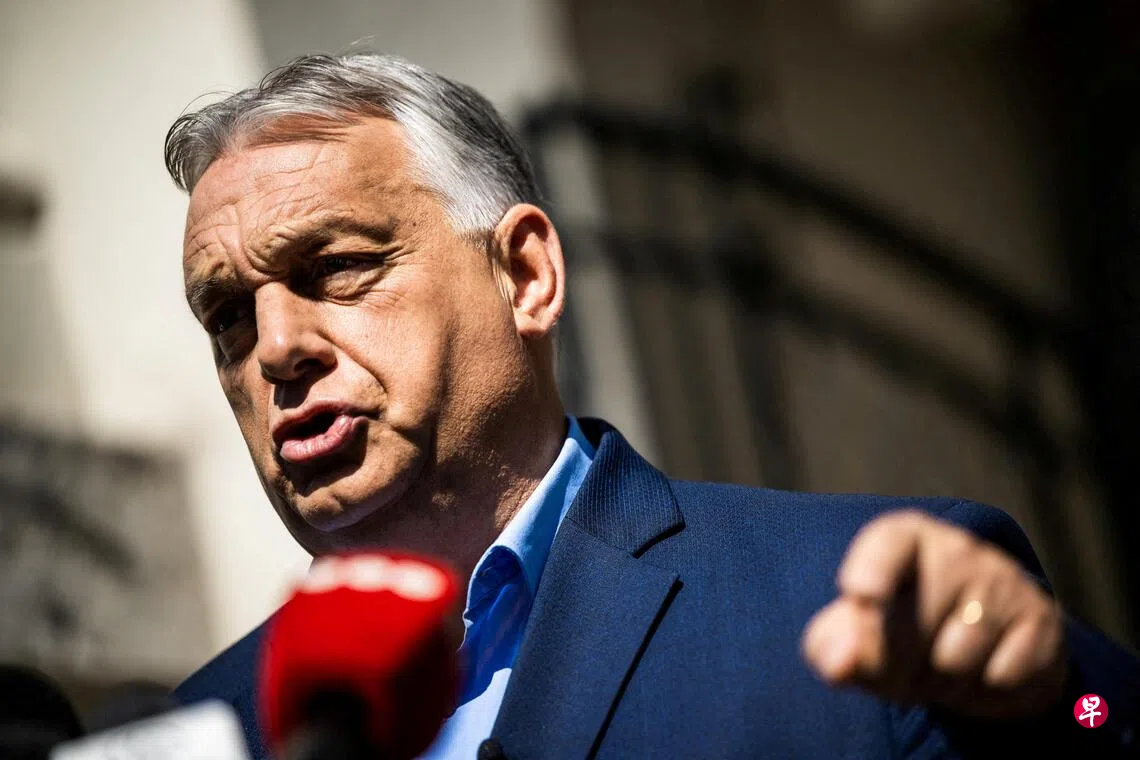
The authorities in Hungary are widening a corruption investigation into allies of former prime minister Viktor Orban. Investigators recently seized nearly US$20 million (about S$25.74 million) in cash hidden in forests, barns and warehouses across the country, marking a major breakthrough in the probe.
Bloomberg reported that Hungary’s newly established National Asset Recovery and Protection Office said in a statement on Saturday (14 November): “Investigators found large amounts of cash buried in forests, in barns and warehouses, hidden in private houses, and stored in an expensive safe hidden in a remote location.”
The investigative agency said law enforcement officers searched Budapest and its surrounding areas, as well as rural counties and towns in northern and south-eastern Hungary. They recovered more than 5 billion forints (about S$19 million), nearly €2.7 million (about S$3.8 million) and nearly US$1.3 million in cash from several hiding places.
The illicit funds are reportedly linked to former national development minister Miklos Sesztak, who has been charged with accepting bribes. Prime Minister Peter Magyar vowed to crack down on entrenched corruption under the previous administration after winning a landslide general election victory earlier this year. Three former ministers who served in Orban’s government have been arrested so far.
Sesztak and the other two former ministers arrested — including Gyorgy Matolcsy, who later became Hungary’s central bank governor — have denied any wrongdoing in their respective investigations. Orban’s younger brother was also detained this week on suspicion of human trafficking.
Orban, who previously held power for 16 years, has accused the authorities of political persecution over the investigations. As recently as a few days ago, he insisted that investigators could not possibly find any evidence of corruption during his long tenure, describing those detained as “political prisoners”.
In an online interview on Thursday (12 November), he also declared that “all of my ministers were immaculately clean” and had never engaged in corruption.
By Friday (13 November) evening, however, Orban’s Fidesz party and its long-standing governing coalition partner, the Christian Democratic People’s Party (KDNP), had issued a less defiant joint statement.
The statement said: “Every elected official in Hungary takes an oath to obey and enforce the law. Fidesz-KDNP can’t have anything to do with those who fail to uphold this. The parties will show them no leniency.”
