

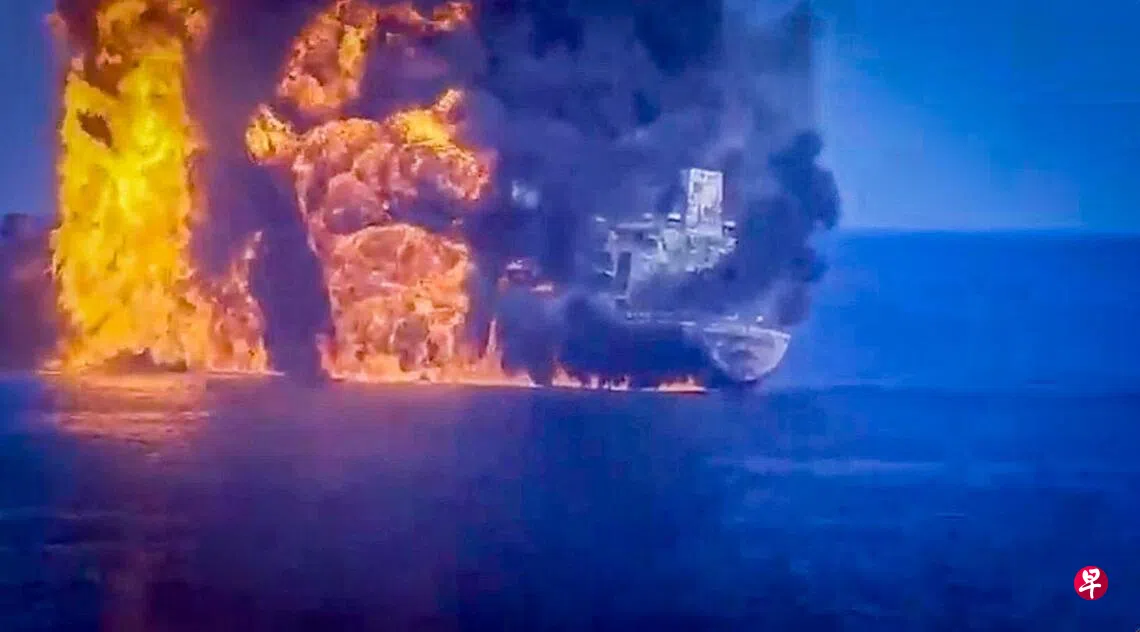
The International Energy Agency (IEA) has warned that the Middle East crisis triggered by large-scale US and Israeli military strikes on Iran in February this year poses the largest threat to energy security in history.
AFP reported that the IEA said in its annual flagship report, World Energy Outlook (《世界能源展望》), on Thursday (19 November) that consumers are increasingly bearing the cost as the world’s options for cushioning the conflict’s impact on energy supplies dwindle. The agency warned that, like previous energy shocks, this crisis would certainly leave “lasting marks”.
After US and Israeli air strikes triggered the crisis, Iran began blockading the Strait of Hormuz and attacking tankers in the area, making it difficult for Gulf countries to export oil. Before the crisis, about a fifth of the world’s oil shipments passed through the strait.
Despite US efforts to escort ships through the strait, energy supply routes remain severely disrupted.
“The Strait of Hormuz crisis has created the largest threat to energy security in history, one that dwarfs the scale of the oil shocks of the 1970s,” IEA Executive Director Fatih Birol wrote in the report’s foreword.
Birol noted that countries had taken steps to shield households from the impact, including increased supplies from oil-producing countries, the use of alternative transport routes and reduced Chinese purchases on international markets.
“Governments have intervened to try and provide some shelter for consumers, but they have nonetheless faced higher prices and, in some cases, shortfalls of supply,” he wrote. Elsewhere, the report also noted that as other cushioning measures are gradually exhausted, consumers are increasingly bearing the impact through higher prices.
In July this year, Birol had struck a more optimistic tone, writing that oil markets were still benefiting from “several cushioning factors”.
The report comes as countries gather in Turkey for the 31st UN Climate Change Conference (COP31). Governments face mounting pressure to tackle climate change after a year of scorching heatwaves and wildfires in Europe and deadly floods in Nepal.
The IEA uses three scenarios to assess the energy outlook: one incorporates policies already in force; another considers policies announced by governments, including measures not yet implemented; and a third envisages the world achieving net-zero emissions by 2050.
Under the second scenario, the IEA forecasts that global oil demand will peak around 2030 before declining slowly, while natural gas demand will continue to grow until around 2035.
This report also introduces two additional scenarios exploring what could happen if the Middle East crisis persists.
“While the energy sector and the global economy have shown considerable resilience, the longer the crisis lasts, the deeper the effects will be,” Birol said in a press release.
He also said: “And I don't see any credible pathway for the energy world to return to the way it was before.”
