

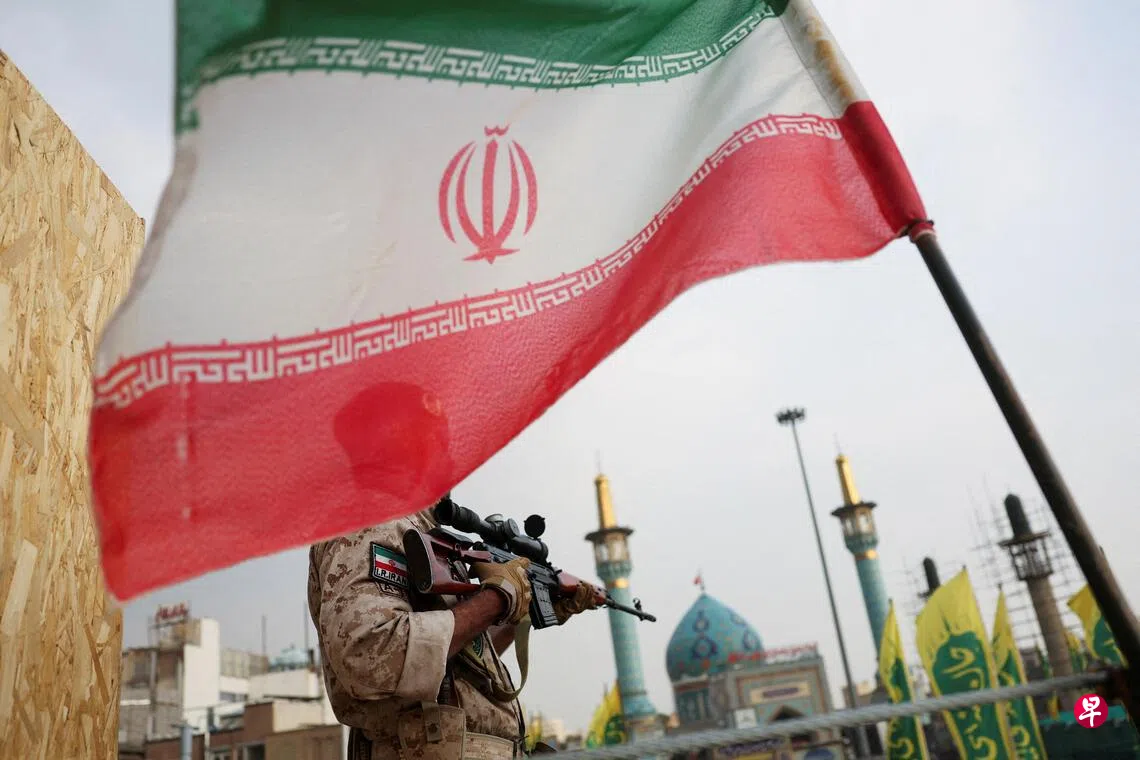
As efforts intensified to prevent a resumption of hostilities, Iran confirmed on Monday (2 November) that it was conducting “intensive” indirect exchanges with Washington through mediators, and proposed reopening the Strait of Hormuz under strict conditions.
AFP reported that Iranian Foreign Minister Abbas Araghchi told the Islamic Republic News Agency (IRNA) that the US and Iran were holding indirect talks through mediators.
He said: “Given the sensitivity and gravity of the current situation, consultations and deliberations are very intensive……Qatar and Pakistan are playing a very active mediating role in these negotiations.”
Officials familiar with the negotiations said on Monday that Iranian negotiators had left Qatar on Sunday (1 November) after three days of talks with Qatari mediators. A draft agreement is being circulated between the two sides, and follow-up talks may be held.
US news website Axios had also reported that US Vice-President JD Vance had written to Rezaei, secretary of Iran’s Supreme National Security Council, to explore the possibility of a new round of talks. This was the highest-level contact between the two sides in months.
Iranian First Vice-President Mohammad Reza Aref described the message received from the US as “an acknowledgement of our victory”.
Meanwhile, China also urged the US and Iran to return to the negotiating table, while Iran’s national security chief discussed the conflict with Russian President Vladimir Putin.
With Qatar mediating, Iran on Sunday (1 November) also proposed a “two-day plan” to reopen the Strait of Hormuz, a shortened version of an earlier seven-day plan. Under the proposal, if the US implemented a series of measures meeting Iran’s demands on the first day, Iran would reopen the strait on the second day, restoring normal shipping traffic.
Iranian Ministry of Foreign Affairs spokesman Esmaeil Baghaei told a press conference that the plan was “further proof of Iran’s goodwill”.
He stressed that everything depended on whether the US accepted Iran’s demands. “Only then can we discuss arrangements for the subsequent stages.”
The intensified diplomatic push comes ahead of the US midterm elections on Tuesday (3 November). American voters’ dissatisfaction with the war and high fuel prices are putting heavy pressure on US President Donald J. Trump’s Republican Party.
US President Donald J. Trump also shifted his stance on resuming military strikes against Iran on the eve of the midterm elections. Asked by reporters on Monday whether he was considering striking Iran after the elections, he replied with a blunt “no”, and said the US might reach an agreement with Tehran.
