

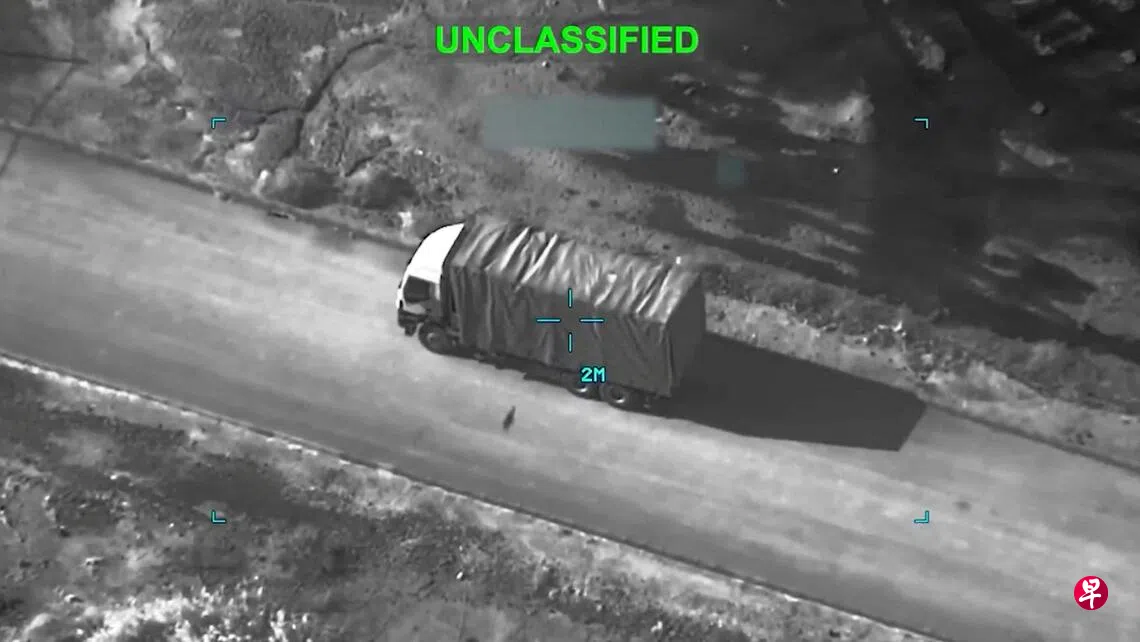
Western intelligence agencies assess that, despite months of air strikes, Iran can still produce about 50 ballistic missiles a month, roughly half its pre-war capacity.
Bloomberg reported that, since the early stages of the war, the US has maintained that Iran’s weapons stockpiles and ability to rebuild them have been severely weakened. In remarks on Tuesday (10 November), US Secretary of War Pete Hegseth reiterated that 80% of Iran’s industrial base had been destroyed.
Iran’s conventional military forces have largely been destroyed by US and Israeli air strikes. However, former CIA analyst Jim Lamson, citing military intelligence reports, said Iran was likely to retain at least 1,700 ballistic missiles and was currently producing them at roughly half its pre-war rate.
Lamson said Iran’s arsenal might also still contain thousands of Shahed-series strike weapons.
The exact numbers of both ballistic missiles and Shahed drones are difficult to establish, as the size of Iran’s pre-war weapons stockpiles is unknown, as is the extent to which depleted stocks have since been replenished.
Meanwhile, although reports suggest that US military stockpiles are dwindling, the US still has hundreds of thousands of precision-guided bombs, thousands of BGM-109 Tomahawk cruise missiles and hundreds of stealthy JASSM cruise missiles.
However, Becca Wasser, head of defence at Bloomberg Economics, noted: “It was never a direct contest between Iran and American missile stockpiles. The US outguns Iran, but Iran’s strategy requires just enough capability to disrupt, impose costs and endure.”
